Archives for 2013

Simple Health Remedies Found In Your Kitchen

Did you know that you can make your own simple preventive medicines and homemade remedies right in your kitchen? These solutions are within reach–on your shelf or in the pantry!

Check out our top 8 essentials for natural medicines. These hardworking ingredients multitask for culinary purposes AND maintaining  your optimal health.

AN IMPORTANT NOTE: Always use caution and consult a medical professional before using any herbal remedy. Remember to do allergy, taste and skin sensitivity tests before applying or ingesting any natural remedy!

Apple Cider Vinegar

For bruised skin: Make a compress for bruises! Soak a cloth in vinegar and apply to reduce the swelling and discomfort.

For fevers: Combine 1 part ACV with 3 parts water.  Soak cloths and wrap around calves and wrists.  Remove once fever is reduces (just a few minutes).  Re-wrap as necessary.

For nosebleeds: Soak a small cotton ball in vinegar and pack it lightly into the nostril. The astringent vinegar may help the blood to clot.

For poison ivy and sumac: To relieve itching, combine equal parts of water or alcohol and apple cider vinegar. Dab on affected areas, let dry, and repeat as often as needed.

For sunburn: Apply a wash of half and half ACV and water to the burn with a spray bottle, or make a cooling compress for a large area to relieve the pain. Keep the skin moistened.

Raw Local Honey

For a sore throat: Mix ¼ cup of apple cider vinegar and ¼ cup of honey. Take one tablespoon every four hours or as needed for pain relief.

For minor burns: Dab honey over the burned skin and cover lightly with a piece of cloth to keep from getting your clothes and furniture sticky!

For an upset stomach: Make a tea by mixing 1 teaspoon fresh ginger juice or freshly grated ginger and 1 teaspoon honey in a cup of boiling water; drink as needed.

Garlic

For earaches: Garlic juice has awesome antibacterial properties! To treat an earache, either nick the tip of a garlic clove and gently place just inside the ear. Or place 2-3 drops of garlic juice into the ear and pack with cotton ball. DO NOT put ANYTHING into the ear if there is concern about or evidence of a ruptured ear drum.

Onions

For asthma: An onion poultice is an effective (but smelly) way to soothe asthmatic breathing. Slice onions, wrap in a thin cloth and crush to create a poultice pack, place on chest, check 10-15 minutes for reactions.

For cough: Make an onion cough syrup. Yes, it looks less appetizing than the traditional red syrupy sweet stuff, but it’s just as soothing and has great antibacterial properties. Simply take a small jar or container, and layer chopped onions with small amounts of sugar or raw honey. The sugar or honey will help break down the onions into juice over two hours, creating a sweet onion syrup. Take 1-2 tablespoons as needed.

Chamomile

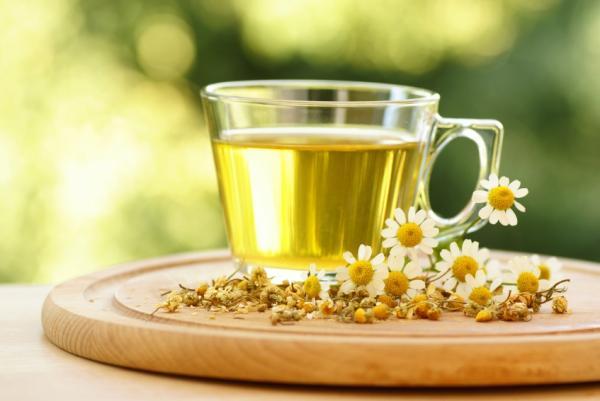
For anxiety or nerves: Chamomile tea has been tested successfully through time to be one of the best calming remedies! Simply steep 1-2 teaspoons of dried chamomile flowers or a tea bag in hot water for 5-7 minutes. Drink up to 3 cups.

For diaper rash, eczema and other irritating skin conditions: Chamomile is soothing for skin. Make a strong chamomile tea or infusion, let it cool, then dip a cloth in it to apply to irritated skin. You can also use dried chamomile in a bath bag or cloth tea bag in your bath to help soothe larger skin areas, or pour a strong chamomile tea straight in the bath.

Cloves

For a toothache: Place a whole clove between the aching tooth and your cheek. It can be held in place by holding your finger on the outside of the cheek. Chew the cloves a little to release their juice, then leave them in place for half an hour or so or until the pain subsides.

(Call your dentist or care provider if you experience severe pain or a fever!)

For cold sores: Applying clove oil in small amounts can help speed up the healing process of a cold sore.

Cayenne

Caution: Do not apply cayenne powder directly to the skin! It will cause severe skin sensitivity and pain, or an allergic reaction.

For congested coughs: Mix ¼  to ½ teaspoon of pepper in a glass of water and use as a gargle.

For arthritis: Cayenne and other herbs such as white willow bark contain salicylates, compounds like those found in aspirin. When diluted in a gentle oil, cayenne can be applied in a salve to the areas around joints to relieve arthritis pain.

Ginger

For cramps or abdominal pain: Add one teaspoonful of powdered ginger root to one cup of boiling water. Drink up to three cups a day.

For sore muscles and arthritis pain: Treat yourself to a rosemary-ginger soothing bath. Make a strong tea with grated fresh ginger, about 1 1\2 cups of water to a tablespoon of ginger. Strain and add to bath water, with 6 drops of rosemary essential oil.

What are your go-to kitchen spices, foods and herbs for medicinal remedies?
 

Can You Obtain Perfect Symmetry in Breast Reconstruction?

This week, Dr. Richard Kline of The Center for Natural Breast Reconstruction answers your questions.

Q: I looked at your gallery  and I’m concerned about what I see as a mismatch in the photo examples. Is this not something you try to achieve?

A: Thank you for your wonderful question!

By “mismatch,” I’m assuming you mean the two breasts do not look the same when reconstruction is completed.

Firstly, we have many patients with very symmetrical breasts following reconstruction, and we could easily put only their pictures on our website, if we wished.

Thus far,  we have chosen to put less-perfect results on our website as well, believing it serves our potential patient population better, for the following several reasons.

In the real world, many patients will not be able to achieve a highly symmetrical result due to prior conditions, or will choose to not go through the multiple surgeries that will be required to get them as close to perfect symmetry as possible. If all patients came to us before their cancer was removed, we would coordinate their surgery with one of our highly experienced breast surgeons, they would nearly all receive nipple-sparing or at least skin-sparing mastectomies, and they would then have the greatest potential for good symmetry in the end.

In actuality, we see many patients from out of town who have already had non-skin-sparing mastectomies (often when nipple-sparing or skin-sparing mastectomies would have treated the cancer just as effectively). In this scenario, they have little potential to have their scar pattern converted to a more favorable one, and commonly need a lot of extra flap skin left in place in the breast. Occasionally a temporary tissue expander can be used to reduce the size of the skin paddle, but this does not always work, especially in radiated patients. If they chose to have a contralateral prophylactic mastectomy, they could then of course choose to have the same type of mastectomy on the other side (which would help symmetry), but many patients understandably do not want to do any more damage to their healthy breast than they have to.

Additionally, many patients are left with permanent changes in their skin from radiation, which can cause permanent color mismatches, as well as excessive tightness in the skin. This can make it very hard to match a radiated side to a non-radiated side, more so in some patients than others. The more times we can operate in this situation, the closer we get, but sometimes ideal symmetry remains elusive.

We want ladies who have already had aggressive mastectomies, who are left with significant radiation damage, or who don’t want to go through many, many surgeries in pursuit of ideal symmetry to know that there is still help for them, without implying to them that they will get a result that is probably not realistic. All busy reconstructive practices have these patients, but not all choose to put them on their websites. It may not be a good marketing decision for us, but we feel it is the most honest way to deal with our prospective patients.

We’d enjoy any feedback you’d care to give us on this topic, as we argue about it a good bit amongst ourselves.


Dr. Richard M. Kline, Jr.

Center for Natural Breast Reconstruction

Have a question about breast reconstruction you’d like answered from our surgical team? Just ask us!

Join Us at the SHE Event on September 27-29th

A celebration of everything woman, SHE is three days of events just for her!

Plenty of style, food, entertainment, arts and crafts, shopping, and healthy living.

The Center for Natural Breast Reconstruction will attend, and we’ll be at booth #858. Stop by and say hi!

Located at the Charleston Area Convention Center at 5001 Coliseum Drive in North Charleston, SHE opens at 10 a.m. each day and runs through 8 p.m. Friday, with an opening night party beginning at 5:30. Saturday’s hours are 10 a.m. to 6 p.m., and Sunday’s hours are 11 a.m. to 5 p.m. Tickets are $8 for adults, $4 for children, and $5 for military and college students with ID. A two-day pass is $12, and the group discounted rate for 10 or more is $5. Parking is free.

Events include:

  • A fashion show for mothers and daughters on Sunday at 2 p.m.
  • Wine and cocktail tastings Friday and Saturday from 3 p.m. to 6 p.m. and Sunday from 2 p.m. to 5 p.m.
  • A workshop on how to use color effectively in your home on Saturday at 2:30 p.m.
  • Various hands-on workshops with local artisans all three days
  • A heart health survey from Trident Health, available throughout the event
  • And much more.

Sponsors for the event include Girl Go Lightly, Center for Women, Style for Hire, and Charleston Magazine. Close to 100 vendors will be at the event and include Aloette Cosmetics, Bits of Lace, Christian Royal Pottery, Healthy Home Foods, Vintage Affair Studio, and Kangen Water.

What are you most looking forward to?

Achy Joints? Try These 5 Tips for Relief

Sore, stiff, and tired joints can make you feel old before your time. Joint pain is caused by several conditions, such as arthritis, sprains, and gout, so make sure you are following your doctor’s instructions.

When you can’t move freely and painlessly, it’s difficult to enjoy life and do as you please. Relief is just a few tips away.

Try an OTC pain reliever.

If you have swelling and moderate to severe pain, you can use over-the-counter nonsteroidal anti-inflammatory drugs (NSAIDs), such as aspirin, naproxen, or ibuprofen. Milder cases of joint pain, or those without swelling, can be treated with acetaminophen. Some have found ongoing relief from the natural supplements glucosamine sulfate and chondroitin, taken together for best results.

However, depending on your situation, your doctor may opt to prescribe a muscle relaxer, a Cox-2 inhibitor, or a stronger opioid for pain.

Apply pain relief from a tube.

Topical creams often provide soothing and / or cooling relief from joint pain. You’ll find plenty of ointments, creams, and balms at your local drugstore. Chat with the pharmacist to see what he or she recommends.

One ingredient we’ve continually read good reviews on is capsaicin, found in cayenne pepper. It appears to stop the transmission of pain signals along the nerves.

Go old school with your remedies.

Try icing or heating the joint, wrapping it in an ACE bandage, or resting and elevating it. If you choose to rest it, don’t let it sit for too long, or you risk it becoming so stiff that it won’t move.

Watch what you eat.

While this may not apply to you, we have heard that eating dairy, wheat, and foods from the nightshade family (potatoes and eggplant) can worsen joint pain. If you suspect this might be true for you, keep a food diary and note when pain occurs.

Eat more of vitamins C, D, and K, and up your intake of Omega-3 fatty acids. These foods relieve inflammation and help relieve pain.

Move the right way.

Often we hurt because we’re putting too much strain on a joint or using it incorrectly. Talk to your doctor or to a physical therapist about body mechanics and moving your joints properly. Straining the joints can lead to extreme pain and even cartilage damage or loss.

Joints need to move to stay supple. If you have pain, you’re not moving them enough to keep them in good shape. These ideas will hopefully help you to lessen the pain so you can move your body and keep it limber.

What Should I Do If An Abnormal Lymph Node Has Been Detected?

This week, Dr. Richard Kline of The Center for Natural Breast Reconstruction answers your questions.

Q: My sister had breast cancer. She completed DIEP flap surgery and a lymph node transfer. A knot has now appeared under her arm. She had a sonogram completed and found an abnormal node. I am really concerned that my sister’s lymph node has died or the cancer has returned. Your insight would be greatly appreciated!

A: We have not run in to that scenario (yet), but I can offer some thoughts. When we transfer lymph nodes we move only a very small amount of tissue (typically 15-20 grams), and even if it dies, it’s unlikely it would be noticed. If more tissue is transferred (as in, a lot of fat with the lymph nodes), and it dies, it could well produce a “knot” as you describe. This would typically become evident a few weeks after surgery, or possibly a little longer. If your oncologist or surgeon is concerned, a PET scan would probably differentiate dead tissue from active cancer in this area.


Q: How long after breast reconstruction do I need to wait to drive a car?

A: After flap surgery we usually recommend waiting at least a month, but everyone is different. If you’re having implant reconstruction, you may well be able to drive much sooner.


Dr. Richard M. Kline, Jr.

Center for Natural Breast Reconstruction

Have a question about breast reconstruction you’d like answered from our surgical team? Just ask us!

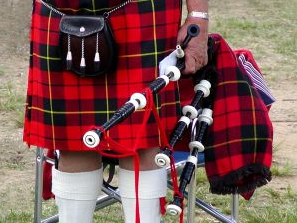
Join Us for the 2013 Scottish Highland Games

The 42nd Anniversary of the Charleston Scottish Highland Games will be Saturday, September 21, 2013 at Boone Hall Plantation in Mount Pleasant.

The Honored Clan is MacKenzie, and the Honored Guest is the 5th Earl of Cromartie.

Sponsored by the Scottish Society of Charleston, the field opens to clans, participants, and visitors at 7 a.m. All events are held regardless of weather. Tickets are $4 for children aged 6–12 and $17 for adults. Parking is $5. A scotch tasting will be held on Thursday, September 19, and costs $35. On Friday, September 20, the Tartan Ball will be held, which requires a Copper Sponsorship package for one. The fee is $50.

Over 50 clans will be in attendance, including Clan MacFie, Clan Ramsay, Clan MacDougall, and Clan Ogilvie. Games include 28 lb. and 56 lb. Clachneart, 56 lb. Weight Throw, 56 lb. Weight Toss for Height, 22 lb. Hammer Throw, Sheaf Toss, and Caber Toss.

Typically, over 20 bands attend the Games and play traditional Scottish music such as the 2/4 March. The Scottish Country Dancing competition is a popular part of the Games, and it dates back to the 11th and 12th centuries. Entertainment includes Smithfield Fair, Colin Grant-Adams, and Rathkeltair.

Other events include a Border Collie demonstration, Irish Hurling exhibition, face painting, Highland wrestling, Scottish crafts, and Build-A-Kilt.

For more information on the Games, visit http://charlestonscots.org/index.html.

Budget Boot Camp! How to Make a Monthly Budget (And Stick to It)

When it comes to money, we all have to decide what to spend and what to save. A monthly budget can be very helpful, but often we don’t know where to begin—or we’re afraid to face our spending head-on. Perhaps these ideas will help you start.

Track what you spend in a month.

Carry a small notebook with you, and write down every penny you spend for a month, even if it’s just a dollar for a candy bar. You’ll see where the pennies go, which will help you deal with where the dollars go.

Download some help.

Find and print a budget worksheet like the one here. [Link tohttp://frugalliving.about.com/od/moneymanagement/a/Budget_Form.htm] It will help you track your spending and determine where you need to focus your money. You’ll write down all of your monthly living expenses and discretionary money spent, such as entertainment or hobbies. You’ll see in black and white where your money goes each month.

Look at your income.

How much do you bring in every month? Write it down. Compare it to the total expenses you recorded in your worksheet. Where do you stand? This step will either make you smile or make you frown. If you’re smiling, just keep doing what you’re doing, and creating a budget may make you smile more.

If you’re frowning, you have some work to do. Keep reading. Is there a way you can bring in more money? Perhaps take a second job or sell some items you no longer need or use? Make a list of 10 ways you could bring in more income. Ideas might include starting a small business (tax write-offs abound!), renting out a spare bedroom, picking up extra hours at work, or doing a paper route in the mornings.

Look at where you can cut back.

Where can you reduce your spending? Could you start taking a lunch instead of going out every day? Can you reduce your insurance premiums on your home or car? Do you really need all those TV channels?

Look hard at every expense with the idea of cutting it by at least 10%. You’ll find some expenses that you can eliminate, freeing up even more money. You’ll see how you can juggle your expenses, so play with it and see what your options are.

How’s your debt?

Do you have credit card debt? If so, paying that off is one of the best things you can do for your budget. Interest rates are high, and chances are you’re paying now for things you used months or years ago, such as dinners and gas for the car.

If credit cards are a problem, cut them up or put them in a bowl of water and freeze them. Reducing your debt (and building your savings) will give you tremendous peace of mind.

Are you saving?

For your own security, you should have an emergency stash of cash or easily available money equal to at least three months’ living expenses. If you don’t have that much built up, start paying yourself first and socking it away. A good place to start is 5% of your net income.

Try different scenarios.

This is your budget, and you make the decisions about where your money goes. Your priorities will dictate what you spend your money for, and there are many possibilities. Don’t be afraid to try new ways to use your money.

What Is My Best Reconstructive Surgery Option After Lumpectomy and Radiation?

Sometimes, the answers we need are found in unexpected places. Our team is happy to share our information…wherever we go!

This week, Dr. Richard Kline of The Center for Natural Breast Reconstruction answers your questions.

Q: I had a lumpectomy on my right breast in 2007. My oncologist has given me the green light to plan reconstructive surgery. I’m hoping to have some sort of reconstructive surgery to balance both breasts. I’m 69 years old. The odd part of this request is that a close friend of mine sat next to Dr. Kline on a flight from Louisville to Charleston!

A: It was a pleasure talking with your friend on the plane, she seemed extremely nice, and immediately mentioned you when she learned what I do for a living.

There are potentially several reconstructive routes one can go after lumpectomy with radiation, depending on your present situation and your goals. As you probably know, your chances of successfully tolerating a breast implant in the radiated breast, while not zero, are much diminished due to the radiation.

If it’s OK with you, I’d like to have our nurse Chris or P.A. Kim call you, and get a few more details about your situation. After that, we can chat by phone, and I’ll give you my honest opinion about which potential interventions might be best for you.

Dr. Richard M. Kline, Jr.

Center for Natural Breast Reconstruction

Have a question about breast reconstruction you’d like answered from our surgical team? Just ask us!

Soothing Remedies for Menopause Hot Flashes

Hot flashes are sudden and unexpected sensations of warmth or heat, typically along the upper body. They are part of menopause for many women and can occur at any time of day. They can be uncomfortable, and they can cause profuse sweating and irritability. Several remedies exist for hot flashes, and here is a partial list. Hope these help!

Hormone therapy and antidepressants

Many women are uncomfortable with this, but supplementing with estrogen and/or progesterone can reduce hot flashes. The trick is to use the lowest dosage that works. Your doctor can test your hormone levels and determine the best course of action.

If you’d rather go a more natural route, a compounding pharmacy can create bioidentical creams if you’d rather not take pills. Eating soy, which contains a plant estrogen, is a common remedy in Asian countries.

Some common antidepressants at low doses, such as Prozac and Paxil, can reduce hot flashes, but they may have more side effects than simple hormone therapy.

Staying cool wherever you go

Simply wearing layers of light clothing can help hot flashes. Thin t-shirts or tank tops keep you covered but allow air to get to your skin, cooling you off. Keep ice-cold water handy to sip on if you feel a flash coming on. If you can, keep a personal fan with you, and stay near open windows.

While sleeping (a common time for hot flashes), sleep on a cool pillow, and keep the room at a low temperature. Reduce bedcovers to only a couple of layers in case you need to get rid of them.

Any way you can alter your environment to stay cool will reduce the severity of hot flashes.

Avoiding hot flash triggers

Hot flashes can be triggered or worsened by anything that causes inflammation or heat in the body. Avoid spicy foods, alcohol, caffeine, heat sources, and stress. If you smoke, quit.

Health-food store remedies

Hot flash herbs and natural remedies are available in most health-food stores. Kava, dong quai, and black cohosh help with those feelings of heat.

If you’ve been through menopause, what helped you with the hot flashes?

Happy Labor Day!

Our booth at the recent Survivors Conference in Tennessee!


Happy Labor Day from the team at Center for Natural Breast Reconstruction!

We hope you have a relaxing Monday with friends and loved ones.

Our Center is so grateful for the doctors and staff that keep it running every day. Let’s take a moment to thank those who stand by us as we work, those who support us in our hardest moments, and those who wait for us at the finish line.

“Hard work and togetherness. They go hand in hand. You need the hard work because it’s such a tough atmosphere… to win week in and week out. You need togetherness because you don’t always win, and you gotta hang though together. ”\

–Tony Dungy
Former Professional Football Player And Coach