Archives for 2014

Fort Sumter’s Role in the Civil War

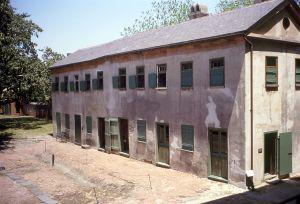
Fort Sumter is located in Charleston Harbor, and is known as the site where the Civil War began. On April 12, 1861, the first shots of the war were fired upon the fort.

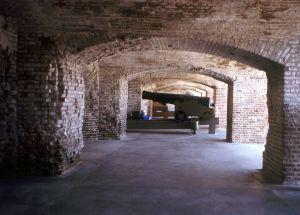
Built in 1829 (or should we say construction began in 1829, as the fort wasn’t completed by 1861), Fort Sumter was one of several forts built along the southeastern coastline of the U.S. An imposing structure, it is 190 feet long with five-foot thick walls and was built to house over 600 men and 130 guns when filled to capacity.

South Carolina seceded from the Union in December of 1860, and Union forces held Fort Sumter under the command of Major Robert Anderson. Confederate Brigadier General P.G.T. Beauregard was not amused, and demanded the fort be surrendered. Anderson refused, and early in the morning of April 12, 1861, the Confederates opened fire on the fort.

The battle continued for almost 36 hours, and in the end, the weakened Union forces surrendered without bloodshed. However, the terms of surrender allowed the Union to fire a 100-gun salute before leaving the fort, and an accidental explosion took the life of one gunner and critically wounded a second. Fort Sumter was and still is considered the site upon which the war began.

In 1863, Union forces twice attempted to retake Fort Sumter, once under the command of Rear Admiral Samuel Francis DuPont and once under Major General Quincy A. Gillmore and Rear Admiral John Dahlgren, but both attempts failed. The Confederacy had been busily fortifying and arming the fort with slave labor. The fort boasted over 40 pieces of artillery, including some of the deadliest guns known at the time.

During the war, Fort Sumter had been badly damaged and was restored by the U.S. Army. For a time, it was used as a lighthouse, but is now a popular tourist attraction.

Have you visited the fort?

Why Avoiding Sugar is Good for Your Health

We all know sugar isn’t good for us, especially in excessive amounts. But do you know why avoiding sugar is one of the smartest health decisions you can make? Following are just a few reasons why you might want to leave the candy and cakes at the store and not put them in your shopping cart.

Sugar has no nutritional value.

You do not need to ingest sugar. Yes, your body runs on glucose, but it can get that from vegetables, fruit, and any other naturally occurring carbohydrate. Your body can also make glucose from protein and fat if necessary.

There is no reason to eat sugar other than to satisfy a sweet tooth. Sugar is nothing more than empty calories with no nutritional value whatsoever. And high fructose corn syrup (HFCS) is one of the worst things you can eat. The added fructose turns to fat in the liver.

Sugar raises your blood sugar levels.

When your blood sugar levels are high, your pancreas pumps out extra insulin to drive the sugar into your cells to be used for energy. However, prolonged high blood sugar levels and prolonged insulin release cause the cells to become resistant to insulin.

When the cells become resistant to insulin, the pancreas churns out even more insulin, and the cycle continues. The beta cells in the pancreas become damaged and unable to produce insulin, which leads to type II diabetes. Avoiding sugar stops this cycle.

When you eat sugar, you want more, and you’re rarely satisfied.

You can become addicted to sugar. Just as with other addictive substances, eating sugar causes a dopamine release in the brain. This pleasurable sensation causes you to seek out more sugar, and similar to other addictions, you must eat more and more to get the same dopamine “high.”

When you stop eating sugar, you stop the addiction from developing or getting worse. To stop sugar, first record how much of it you eat in a week. Focus on serving sizes—many of us eat more than one serving of foods at a time.

Gradually cut back on sugar, as quitting cold turkey can cause you to feel worse before you feel better. Find natural foods to substitute for the junky sugar stuff.

Visit our Facebook page and tell us how you reduce or eliminate sugar from your diet!

How Long Do I Need to Wait To Have a DIEP Flap Procedure After Radiation?

This week, Dr. James Craigie of The Center for Natural Breast Reconstruction answers your questions.

Q: How long should I wait to have a DIEP flap after radiation?

A: Radiation therapy is part of the treatment of breast cancer and will affect the results of breast reconstruction. The treatments can miraculously kill some growing cancer cells but they also change the area of the body left behind after surgery.

All of the elements of the body can be affected: blood vessels, scarring, healing function, and appearance.  The effects of radiation occur in two phases. Short term occurs during and immediately after the treatments. Elective surgery at this time is not possible, for obvious reasons. The long term effects develop after the early “burn-like” injury “settles down.” The long term reaction occurs for approximately the first six months.

The experience can be widely different from one person to the next. We have experienced difficulties with the receiving blood vessels after radiation when we did not wait for the body to recover from both long and short term damage. These types of problems could possibly increase the chance for the new breast to fail. Avoiding these problems may be possible by waiting and that is why the long recovery is needed before reconstruction is started.

Dr. James Craigie

Center for Natural Breast Reconstruction

Have a question about breast reconstruction you’d like answered from our surgical team? Just ask us!

Famous Buildings in Charleston

Charleston is home to many famous buildings that have played a starring role in the city’s rich history. Here are three buildings you may have heard of (or would like to visit!)

Old Exchange and Provost Dungeon

A National Historic Landmark, this colonial American building was constructed by the British in 1771 due to a growth in trade in Charles Town (Charleston). During the Revolutionary War, patriots were detained in the Provost.

From http://oldexchange.org/:

“…Charleston was the namesake of one of the most hedonistic of English monarchs, and its unspoken mission was to build a miniature aristocratic London in the midst of a recreated English countryside inhabited by a landed gentry.

How did the vulnerable Charles Towne, the only fortified city in English America, become Charlestown, fourth largest, most beautiful, and wealthiest city in colonial America? The answer lies in the shipping trade. Rice, indigo, and slavery (“black ivory”) were the major ingredients in the original Low Country recipe, and it was on that simple but powerful economy that colonial Charlestown was built.” –Robert Rosen, A Short History of Charleston

The Powder Magazine

Known as the oldest public building in the Carolinas, the Powder Magazine was the storehouse for the powder that defended Charleston during the American Revolution. The Magazine has been restored to its original appearance and serves today as a National Historic Landmark.

From http://www.nscda.org/museums2/sc-powdermagazine.html:

“Holding about five tons of gunpowder, this building was dangerous, but necessary. Gunpowder was needed to supply the fortifications that surrounded colonial Charles Town. Early threats included the Spanish, French, pirates, slave rebellion, and native attacks.

The walls of The Powder Magazine are three feet thick solid brick…this facility was used as an arsenal from 1713 – 1748 and then temporarily reinstated by the Continental Army during the American Revolution in 1780.”

Morris Island Lighthouse

The Morris Island Lighthouse is near Folly Beach and is one of Charleston’s best known buildings. It is recognized as one of the top 100 cultural sites in the state of South Carolina, and a brief history is below.

From http://www.savethelight.org:

1673 Three years after Charles Towne (Charleston) was founded, records show a navigation aid on Morris Island consisting of a raised metal pan filled with pitch and set afire at night.

1767 The first lighthouse, 42 feet tall, is built on Morris Island.

1838 A second, taller tower (102 feet tall) replaces the first lighthouse.

1862 The Civil War begins in 1861 and the lighthouse is destroyed in 1862 to prevent its use by Union troops as a lookout tower.

1876 The new Morris Island Lighthouse is illuminated on October 1, 1876.

1938 The Morris Island Lighthouse is now at the water’s edge.

1962 The Lighthouse is decommissioned and replaced by the new Sullivan’s Island Lighthouse. 1965 The lighthouse is sold to a private citizen by the Federal Government as surplus property.

1999 Save The Light, Inc. buys the historic lighthouse to preserve it for the people of South Carolina. In 2000, the lighthouse is transferred to the State of South Carolina through the Department of Natural Resources.

2007–2008 Save The Light, Inc. completes Phase I of the Morris Island Lighthouse preservation with the help of the Army Corps of Engineers.

2010 Save The Light, Inc. begins Phase II of the Morris Island Lighthouse preservation.

Have you visited any of these historic places?