Archives for 2015

5 Simple Ways to Conquer Information Overload and Get More Done

guy multitasking

Have you ever woken up with a to-do list the length of a CVS receipt—only to go to bed with a to-do list that’s the length of a CVS receipt? We’ve all experienced it…the perils of information overload…the excruciating analysis paralysis.

With today’s technology at our fingertips, information and distractions abound. It can feel impossible to focus on our accomplishing our goals for the day.

Want to get back in the driver’s seat and steer your day the productive way?

A quick way to begin driving toward productivity is to implement these tips below.

Tip #1: Stay Organized

Before the next day comes crashing down upon you, get ahead by getting organized.

Where will you be the next day—the office, playing chauffeur to your kids, meeting an important client for lunch?

Save crucial addresses or phone numbers in your phone (or somewhere equally handy) so you’re not scrambling the next day for directions or contacts.

Make sure you have that report ready to go or your kids’ baseball equipment packed in the car.

Having these items organized beforehand saves time and energy, and prevents headaches.

Tip #2: Write a List

If you’re like me, you’ve gone mostly digital, but you’re holding out on the sticky notes. I love my sticky notes. Whatever your preference though, write down your list or type it out.

On one sticky / digital note, write down the things you HAVE to get done by day’s end. These are tasks that are time-sensitive and nonnegotiable. These are your priorities.

Separately, write down the things you’d LIKE to get done—time permitted.

Tip #3: Do the Hardest Work at the Beginning of the Day

You’re using Tip #1 to stay organized, and you’ve done Tip #2 and written your list…but sometimes you still don’t know where to begin.

We tend to be fresher in the morning—more alert and energized. So harness that energy and pour it into the hardest task you’ve got for the day.

Knock it out in the beginning, and save the less daunting stuff for afterwards.

Tip #4: Take Breaks

Have you seen that viral video of the little boy asking his sister if she’s had her nap today? NO?! Check it out here—it’s only 14 seconds—it’s cute and hilarious and HAS A VALID POINT. [And look—I’m giving you a little break 😉 ]

While we can’t all doze off for a midafternoon nap, we can and SHOULD take breaks throughout the day. Recharge your batteries. Stretch your legs. Go outside.

Taking breaks (even if they’re short!) can increase productivity. In fact, taking just one microbreak (defined as anything from 30 seconds to 5 minutes) can increase mental acuity by an average of 13%. Check out this infographic for more information.

Tip #5: Keep Multitasking to a Minimum

We may believe multitasking propels us closer to our goals. More times than not, it simply bears bleak, dull results for each individual task.

And according to OnlineCollege.org, only 2% of people can multitask effectively.

This doesn’t mean we can’t get multiple things accomplished in one day.

Just try focusing on one task at a time—seeing it through before jumping to the next one.

Keep these 5 tips in mind when you’re preparing for the day’s activities. You’ll be able to get your mind focused and gain clarity on your goals.

 

Ask The Doctor-Will you help me find somewhere that I can have a mastectomy and reconstruction surgery at the same time?

bee on a flowerThis week, James E. Craigie, MD, of The Center for Natural Breast Reconstruction answers your question.


Question: I’ve just found out I have breast cancer and have to have a mastectomy.  There is no one in my little city that does the DIEP surgery.  Can you help me find somewhere to go so I can have my mastectomy and reconstruction at the same time?

Answer: Thanks for your question. There are specialized types of breast reconstruction that may not always be available to patients in every city. It is very common for patients to travel out of state to our practice because of our specialized training and the procedures we perform. When someone has to have a mastectomy, it may be possible to start the reconstruction at the same time. The advantages are several and include fewer surgical procedures, saving your breast skin and nipple sparing mastectomy. We use a multi- disciplinary approach and work with expert breast surgeons who can evaluate our patients to ensure they are having the most up to date treatment and are ok to have the mastectomy and reconstruction together. If it is determined that radiation treatments are needed after mastectomy, then we might recommend reconstruction at a later time when the radiation is complete. At the appropriate time, it can still be possible to have natural breast reconstruction and the most up to date breast reconstruction procedures. 

Our practice is committed to taking care of women who must go through a mastectomy and who desire knowing all their possible options for breast reconstruction. 

We make ourselves available to patients with time sensitive needs and will do anything we can to help people who may need to travel out of town for specialized state of the art breast reconstruction.

Have a question about breast reconstruction or post-surgical you’d like answered from our surgical team? Just ask!


Natural Breast Reconstruction: Your Questions Answered

FAQ on keyboard

Each week, we have women from all over the state, region, and country reaching out to us with questions on whether or not natural breast reconstruction is right for them. We understand there are a lot of factors to consider, and it’s important to find a resource you can trust.

Our doctors at The Center for Natural Breast Reconstruction—and our staff—do our very best to answer all questions we receive. Our team’s goal is to be as helpful as possible during this process and help you make the decision that’s right for you.

In the spirit of educating you and your loved ones, our doctors came up with this list of the most frequently asked questions just for our blog readers.

[Note: If you have a question you’d like answered, Click here to fill out our Ask the Doctor form!]

How long after chemotherapy or radiation should I wait before reconstruction?

Breast reconstruction cannot be performed until 6 months after a patient’s final radiation treatment. However, chemotherapy varies. Some women have mastectomy and reconstruction immediately and do not start chemotherapy until after that is completed. Some women have to do chemotherapy first and then have mastectomy and reconstruction. Others have their mastectomy, have chemotherapy, and wait to have reconstruction. Planning and timing is based on the type of cancer, pathology, oncology recommendation, and the patient preference.

Can natural breast reconstruction be done if my mastectomy was last year?

Although immediate reconstruction has advantages, procedures can also be done years after a mastectomy.

Will the areas where tissue was removed look different?

Although scars will be present, the shape may be improved. Many of our “flap” procedures involve the removal of tissue from other parts of the body. The resulting “tummy tuck” or “buttocks lift” can re-contour these areas for a more youthful, attractive appearance.

Is natural breast reconstruction covered by insurance?

The Women’s Health and Cancer Rights Act of 1998 provides protection to patients who choose to have breast reconstruction in connection with a mastectomy. The federal law applies to those covered under group health insurance plans and those with individual health insurance coverage. You should check with your insurance provider for coverage details. Our administrative staff can also help you with reimbursement questions.

To learn more, click here.

Always consult with your doctor if you have any questions or concerns. Make an appointment with one of our physicians today.

Ask The Doctor-What is the best next step after losing an implant on the radiated side?

pink flowerThis week, James E. Craigie, MD, of The Center for Natural Breast Reconstruction answers your question.
Question: I had both breasts removed with stage 4 cancer. The left breast with the silicone wouldn’t stay closed, so the plastic surgeon did a tram flap with muscle from my abdomen. So now one breast has silicon and the other has muscle from my adomen. I didn’t get nipples on my breast. Is there anything else I can do to improve this mess.

Answer: Thank you for your question. After losing an implant on the radiated side, the best next step is to reconstruct that breast with natural tissue. Which you did. As you are aware complications with implants increase when radiation is needed. Since you already have an implant on the other side. it will tend to be different from the tram side. Options include adjusting the shape of both breasts vs. replacing the other implant with natural tissue from another area of your body. We recommend doing this without using any of your muscles, only skin and fat either from the thigh area or buttock area. If you are happy with the implant breast reconstruction and don’t want to start over and go through another extensive reconstruction using natural tissue then it may be possible to adjust the TRAM reconstruction in a way that helps. You can always have nipple reconstruction if you desire, and that can be done as a minor procedure alone or possibly combined with revision of the reconstruction. I could give you more specific information about your options if you would like to give me a few more specific details. Thanks again for the question, let me know if I you would like more information.

Have a question about breast reconstruction or post-surgical you’d like answered from our surgical team? Just ask!

“A Learning Experience” In HIS Words

by:  Richard M. Kline Jr., M.D.

learning is a giftI think the biggest thing I learned was how important it is to have providers you trust when you are facing surgery. For me, this was relatively easy, as my wife worked with these people all the time, and I found them immediately likeable when I met them. But how is a lay person to know who to place their trust in? I think the initial step is selecting your surgeon. He or she should immediately look you in the eyes, really listen to everything you say, answer questions honestly, and never be afraid to say “I don’t know.” I think it can help if they have already operated on people you know (as I mentioned, this surgeon had operated on my Dad), but that’s usually not going to be the case. Once you have found a surgeon you trust, the rest should start to fall into place, because they will select the best team they can to help them take care of you. As it turned out, my surgery took longer than expected because it they couldn’t do it laparoscopically, and had to “open me up.” This bothered my surgeon, but it didn’t bother me. I had trust in my team, and felt that however it worked out, it was for the best.


I also noticed that, by and large, everyone I came in contact with on the day of my surgery seemed to be “tuned in” to how I was likely feeling at an unusually vulnerable time. I had previously lacked firsthand experience of the importance of that empathy to patients.


I think that I also gained some appreciation for how the patient can sometimes contribute to a good outcome. I think my preoperative efforts to lower my blood pressure and improve my overall fitness were helpful.  On the morning of surgery my blood pressure was normal, and I think my postoperative course might have been a little easier because I was in a little bit better shape due to the exercise.


And I will still prescribe to my patients those Lovenox shots, because I care about their safety – but I will do it with much more sympathy.

Hey doc how are you

6 Steps to Rock a 5K

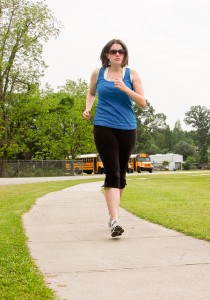
lady jogging on sidewalkYou’ve decided you want to run a 5K. (Whoo hoo! Good for you! Pat yourself on the back!)

If it’s your first 5K, or it has been a while since you’ve run a race, it’s difficult to determine just where to start and how to properly prepare.

With races, such as Susan G. Komen Lowcountry’s Rock Pink 5K coming up on May 23 here in Charleston, we thought it was the perfect time to share 6 steps to rocking out a 5K!

1.    Register for a run

Why register for a run that you haven’t started training for? This ignites the fire under you to get your rear end in gear. When you have a clear-cut goal to work towards, you are less likely to cop out of your runs.

2.    Create a training calendar working up to 5k

Especially if this is your first 5k, create a training calendar to work up to this distance. Each week, add extra distance to your run.

Be sure to pencil in stretches and muscle building exercises, which are also an important part of training. Building up endurance is the key to a successful 5k, but don’t forget to include a rest day each week so your muscles can recuperate.

3.    Choose appropriate gear

Just as a football player needs the best helmet and shoulder pads, runners need the appropriate gear as well. Worn-out running shoes can cause damage to your joints and muscles. This being said, don’t show up to race day with a fresh-out-of-the-box pair of shoes—be sure to break them in a bit before a big race. Don’t forget to check the weather the week up to the race, so you’ll be prepared with the appropriate workout clothes to wear.

4.    Create a music play list

Create the ultimate playlist that will keep you moving! Make sure this playlist lasts for the duration of the run. Our recommendation: make a few, and alternate them so you’re not tired of the songs by race day.

5.    Find a running buddy

When you’re not feeling like jumping out of bed before dawn or dragging yourself out after work, it makes all the difference when you have a running buddy. You’re more likely to head to a workout when you know someone else is counting on you. When choosing your exercise partner, be sure you are both at about the same running level so that you can push each other.

6.    Eat the right food before and after runs

What you put into your body is the fuel for your workouts. Your body needs different things before a run versus after a run. However, this isn’t marathon training—no giant bowls of mashed potatoes and macaroni and cheese on these lists! Just small, healthy snacks to boost your energy.

Pre-Run:

  • Berries and low-fat cottage cheese
  • Honey and Greek yogurt
  • Carrots and hummus

Post-Run:

  • Bananas
  • Protein bars
  • Fruit smoothies

Support the Susan G. Komen Lowcountry Foundation, at the Rock Pink 5K on May 23.

Ask The Doctor-Do you accept Advicare Medicaid?

monsoon white flowersThis week, Gail Lanter, CPC, of The Center for Natural Breast Reconstruction answers your question.

Question: Do you accept Advicare Medicaid?

Answer: Thanks for reaching out to us.  We only recently heard of Advicare and have not been approached to contract with them.  I’ve tried calling them and haven’t received a response to my inquiry yet.  I’ve also asked them if they can tell us who is currently within their network that might perform the types of breast reconstruction surgeries that we do and can’t seem to get them to give me a list, they just tell me to have the member call in to inquire.   I am hoping to get a call back from one of their representatives very soon in the hope that I might be able to give some good alternatives to ladies who’ve contacted us.  I will be certain to keep on my list to contact as soon as I know something more. Thanks again!

Have a question about breast reconstruction or post-surgical you’d like answered from our surgical team? Just ask!


Recovery daze…..

By:  Richard M. Kline Jr., M.D


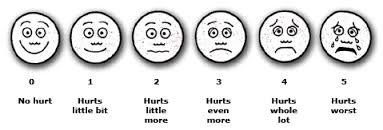
pain scaleI woke up and wasn’t sure where I was. I thought about it a while, and finally asked. A nurse said “the recovery room.” I asked how long I had been there, and she said “30 minutes.” I asked how long the surgery took, and they said “about two hours”. I knew this was longer than was planned, but I didn’t worry about it, as I felt pretty intact. They asked what my pain was on a scale of (0-10), and I said “3.5.” She asked if I wanted some Dilaudid, or if I wanted to go back to the room without it. I said I wanted it, so they gave me 1 mg i.v. While the pain hadn’t been terrible, it was significant, and the Dilaudid did a great job of reducing it. It didn’t get rid of it completely, but it did produce a kind of “warmth” that made me not care too much about the residual pain.

I then went back to the same room I’d been in before surgery, and stayed only briefly before deciding I was ready to go home. When I got up to get dressed, I immediately got nauseous. The bubbly i.v. specialist nurse was there again, and she came over and held an alcohol wipe to my nose until the nausea went away. Then home I went, happy that it was over, and not feeling too badly.

For the first few days it hurt to get out of bed. I would lie there thinking about getting up for several minutes, planning the best way to do it, and only then proceeding. Once I was up, though, moving around wasn’t bad.

About two weeks postop, I noticed that coughing or sneezing didn’t make my incision hurt any more. I started walking on the treadmill at the gym. It hurt a little, but not bad. After that, I started to forget about the surgery.

The final installment of this 4 part series will post April 30.

What’s New In Breast Reconstruction: Online Event

 logo pink flowerRound up the girls, bring the cheese and wine, and join our doctors, Dr. Kline and Dr. Craigie, on Thursday, April 30, 2015, at 6:30 p.m. Eastern to hear all about what’s new in breast reconstruction and have your burning questions answered LIVE by the doctors.

We understand all the information on breast reconstruction out there is overwhelming. Our commitment at The Center for Natural Breast Reconstruction is to provide you with the information you need so you can decide if natural breast reconstruction is right for your unique situation.

When you register for this online event, we will update you on the latest options for breast reconstruction, answer your specific questions, and help you understand all of your options.

During this hour-long, no-cost event, you will discover:

  • What’s new in natural breast reconstruction, including new donor sites and tissue expanders.
  • Exactly how fat can be removed from your body and used to reconstruct your breast.
  • How natural breast reconstruction can correct implant problems and help women who have undergone mastectomies and who are unhappy with the results.
  • The concept of multiple donor site breast reconstruction, and if this is an option for you. 

**BONUS: You can ask questions before the webinar for the doctors to answer—or simply show up and ask your questions LIVE.

Ask your question here, and you’ll gain access to the live call and maintain access to watch the replay at your convenience!

Ask The Doctor-Can I have reconstruction surgery with a low immune system and infection?

purple flowerThis week, James E. Craigie, MD, of The Center for Natural Breast Reconstruction answers your question.
Question: I have had three surgeries already: 2 to remove cancer and 1 reconstruction. I can’t have the last one because of infection in left breast where the cancer was, plus I keep getting sick because my immune system is low. Is this common if I just had radiation in the infected area?

Answer: I’m sorry you are having problems. If you are having an infection after radiation it would definitely be best to hold off on your reconstruction until your immune system has recovered and the infection is gone. Radiation treatments definitely increase the chance of getting an infection. If you have an implant in place already it may need to be removed to resolve any infection. Once that has occurred you can still proceed with breast reconstruction at a later time when you have recovered.

Have a question about breast reconstruction or post-surgical you’d like answered from our surgical team? Just ask!

*Before we post to the blog, we double check to ensure we respond to each person who submits a question personally so that you receive the information you need first.