Is a DIEP Flap Reconstruction Right for You?


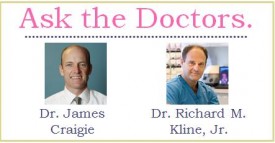
The below question is answered by Dr. Richard M. Kline, Jr., of The Center for Natural Breast Reconstruction.

My plastic surgeon told me that I did not have enough excess tissue in my abdomen to have a DIEP. What can I do now?

That’s a common question, thanks for asking. Many women wonder themselves if they actually have enough tissue for DIEP flap reconstruction, and others are told by their plastic surgeon that they do not. When assessing whether or not a patient’s abdomen can meet their reconstructive needs, several factors need to be taken into account.

First, are we talking about reconstructing one breast, or both breasts? Obviously, reconstructing both breasts takes twice as much tissue as reconstructing one breast. When only one breast is needed, it is possible to use both sides of the abdomen to reconstruct just one breast. This is called a “stacked flap,” which utilizes both sides of the abdomen, with two separate blood supplies, to make just one breast. We routinely do this procedure for patients who just need one breast reconstruction, but require both sides of their abdomen to get the size breast that they desire. It’s more complicated than connecting just one blood supply, but our practice has performed this operation well over a hundred times, with excellent success. In fact, we believe that stacked flaps may be less susceptible to fat necrosis (a complication of DIEP flaps where some of the fat, usually on the edge, dies and gets hard) than ordinary DIEP flaps.

Second, in trying to answer this question, the patient’s desired breast size must be taken into account. A patient who wants both breasts reconstructed to size “D,” but who does not have enough abdominal tissue to make a” D” size breast on each side, might have adequate tissue to make a “B” sized breast on each side. In this situation, if “B” sized breasts would not be acceptable to the patient, then we would usually recommend using the buttocks (a GAP flap) as the donor site.

Use of the buttocks for breast reconstruction, particularly for reconstructing both breasts at the same surgery, is significantly more complicated than using the DIEP flap. Fortunately, we have extensive experience with this procedure, having performed it several hundred times with a 99% success rate. If a patient did not wish to use their buttocks as the donor site, then they would still have the option of accepting a smaller breast size from the abdomen, or they may possibly decide to use implants, foregoing autologous reconstruction altogether.

Finally, for the patient who is told by their surgeon that they do not have enough tissue for a DIEP flap, it is worth noting that it can be extremely difficult for a surgeon who does not routinely perform DIEP flaps to properly assess the amount of donor tissue a patient has available in her abdomen. The thickness of the subcutaneous fat, which is the thickness that can be “pinched” between the skin and the muscle of the abdominal wall, is of paramount importance in assessing how large a breast can be made from the DIEP flap.

In addition, the maximum height of the flap also plays a role in determining what size breast can be made. In assessing how “high” a flap can be safely harvested from the abdomen, it is important to look at how much loose skin is present between the belly button and the bottom of the ribs.  If there is a lot of loose skin in this area, then it will stretch downward more easily to close the lower abdominal wound after harvest of the flap, thus allowing for a larger flap to be obtained. Again, precise assessment of the availability of abdominal donor tissue requires a significant amount of experience on the part of the surgeon, and is ideally performed while examining the patient in person, as opposed to simply looking at photographs.

In closing, to determine if a patient has “enough tissue for a DIEP flap,” we must ask these questions:

  • Are we reconstructing one or both breasts?
  • What size breast are we attempting to reconstruct?
  • What is an experienced surgeon’s assessment of how much tissue can be removed from the abdomen?

Only by taking all of the above into account can a meaningful answer to the question be obtained. We believe that effective communication between the patient and the reconstructive team, in this situation and in most others, is often the key to a successful and happy outcome.

—Richard M. Kline, Jr., M.D.

Fabulous Shopping for a Fabulous Cause: The Second Warriors Wear Pink Event

Image to the left taken from WarriorsWearPink.com.

Support a great cause by coming out to the 2nd Warriors Wear Pink MoBo event, happening Thursday, April 7 from 5:30 p.m. to 8:30 p.m. The event takes place at the Tanner Hall Amenities Center in Tanner Hall Plantation and features fabulous guests including the Charleston Style Concierge, Lee Heyward; Elizabeth Quinton of EQMake Up; Sumner Little of Stella & Dot Jewelry; and the Rosita Jones Studio.

This is going to be an amazing night full of fun, shopping, and socializing! Those who attend the event will be helping to support local breast cancer survivors and those affected by breast cancer. Attendees can shop some great deals for an exceptional cause while listening to great music, socializing with family and friends, and enjoying a glass of wine and snacks.

Some of the items being sold at this event will include high-end, gently used clothing and fashionable accessories at great deals. Part of the proceeds will be given to locals affected by breast cancer, as well as the Warriors Wear Pink Foundation. Lee Heyward, the Charleston Style Concierge, will offer style expert assistance to shoppers looking to get some insight on wardrobe creations and pairings.

Don’t miss out on this great event to help support our brave local survivors and give to a wonderful cause!

For additional questions about the event, contact Leslie Crawford Moore at 843.708.1918.

Who’s on Your Team?

breast surgeonsGO TEAM! Lots of phrases are used to describe a team concept. Some people call it “Multidisciplinary Breast Team, “Breast Cancer Team Conference,” “Breast Health Team,” “Cancer Clinic Team,” or, the one I like the LEAST, “Tumor Board” (ick!).

These teams are the groups of doctors, P.A.s, nurses, and therapists—basically everyone who would be involved in treating a patient with a breast cancer diagnosis—who meet to coordinate the best care for you. Yes, YOU and your unique self! They talk about your individual case, bounce ideas and treatment plans off of one another, and come to a consensus about what treatment would be best at beating your type of breast cancer. All of the members of this team may not necessarily be the providers treating you, which is a good thing for a wide perspective of opinions, but may include breast radiologist, general surgeon, breast surgeon, surgical oncologist, plastic surgeon, pathologist, medical oncologist, oncology nurse, radiation oncologist, social worker, financial aid counselor, and an oncology psychiatrist.

If you are in a community that does not have a team or you would like to be presented to a team prior to beginning treatment, just ask that one be found for you. Most hospitals have one and some exist that are composed of a group of providers in the community with a particular interest in breast cancer and breast health.

What is A Breast Cancer Navigator?

A breast cancer navigator is a term that hopefully most of us don’t know and won’t learn in our lives. But simply stated, this person, usually an oncology nurse, is there to help you from the time of your breast cancer diagnosis through the treatment maze to the end of your breast cancer journey. Consider her the person who reads the map while you are trying to drive the car, or perhaps if we keep in line with navigator, she sits on the stern of the boat and tells you when and how to row.

We like to think of her as more of a concierge at a really cool classy hotel (no tips required!!). She’s right there at check-in if you need her. But when you want to leave the hotel, she’s the go-to girl. She’s informative and has all the great information on the BEST places to go in town. Sometimes, she might even give you a little side information on the places that people have given her rave reviews about.

The Center for Natural Breast Reconstruction now has a new breast cancer navigator on board at our favorite “hotel,” the new East Cooper Regional Medical Center. We’re confident that once gets the hang of the lowcountry, she’ll be the best concierge in town! You’ll be able to call her for the best rates during your stay, ask her about what kind of post-op care you might need, and what types of support services are available during your time in Charleston. She’ll always be available to our clients.