How to Maximize Insurance Coverage and Discover the Full Range of Benefits

health insuranceHealth insurance coverage can be confusing, and often patients don’t know what is covered, which can lead to problems and extra expense. Following are three ways to maximize your insurance coverage and get the most for your money.

Premium cost isn’t the only consideration.

Many employers offer only one health insurance policy, but you do have the option to purchase coverage elsewhere. If you choose to purchase privately, look at more than the monthly premium before buying. Plans vary widely in their coverage and total cost, and some will be a better fit with your family’s health situation and desired coverage.

You should consider several things when buying health insurance:

  • Coverage should be adequate for any current health issues, including paying for prescriptions, medical equipment, and services such as physical therapy and nursing care.
  • Pre-existing condition coverage varies, but normally there is a waiting period before insurance will cover those health issues.
  • Deductible is the amount you pay each year before insurance goes into effect. This may be separate from your copayment.
  • Coinsurance is the percentage you pay after insurance kicks in. This typically varies from 10–50%.
  • Maximum out-of-pocket expense is the maximum dollar amount you will pay each year. Once you have reached that amount, insurance pays 100% up to the maximum plan dollar limit.
  • Maximum plan dollar limit is the most the policy will pay. Plans may have an annual and / or lifetime maximum dollar limit.
  • Copayment is the amount you pay at the time you visit the doctor, pick up a prescription, or enter the hospital. This payment may or may not count toward your deductible.

You will also want to check whether your doctors and pharmacies are listed in the insurance company’s network of providers. If they are, your visits and prescriptions will cost less. If they aren’t, you’ll pay considerably more—and some plans will not cover any care given out of network.

Read your policy thoroughly.

It’s not exciting reading, but familiarizing yourself with your policy will avoid nasty surprises and extra cost and hassle later. Speaking of surprises, you might find services and products are covered that you never thought of, such as alternative treatments and over-the-counter medicine.

Insurers send updated policies regularly, so be sure to read those as well, and keep the summary of benefits handy for quick reference.

Double-check your policy before, during, and after you receive care.

Make sure that everything you need is covered by your policy. Check whether you will need referrals from your physician or authorizations from the insurance company before you go in for care. Every insurance company has specific procedures they follow, and straying from them can cost money or time.

Any time you receive care, you need to be proactive about ensuring that your doctor’s office is coding and submitting your information correctly. Afterward, carefully check all bills to see that the insurance company is paying them. Don’t be afraid to talk to the insurance company directly and do what you can to maximize your coverage.

Sign up for our RSS feed to receive instant updates.
How to Make Sure You and Your Doctor Communicate Effectively

breast reconstructionYour relationship with your doctor is a partnership, and one of the best ways you can help each other is to communicate effectively. You’ll avoid misunderstandings and hurt feelings, and the two of you can quickly move forward in your treatment. When it’s time for your next appointment, using the following tips can make a positive difference in your relationship.

Always be as honest and as specific as possible.

Even if you’re uncomfortable, tell the truth—your doctor can’t successfully treat you otherwise. If you’re not sure how to answer a question, say so instead of guessing. Your answers should be as specific as possible, even if you need to add more information or ask questions before replying.

Don’t be afraid to ask or tell your doctor anything—he or she has literally heard it all.

Listen, and then ask questions.

Sometimes while the doctor is talking, patients have an emotional reaction that prevents them from hearing the rest of what the doctor has to say. Listen to everything the doctor says, try not to react right away and let it process for a moment, and then ask questions.

Note anything unusual, and write down your questions before you go.

Keep a calendar or day planner with you, and jot down any symptom that is unusual for you. The night before you go to the doctor, make a note of these symptoms as well as questions you have. Often we go to the doctor with a list of questions in our head, and then forget what we wanted to ask. This step will save time for both of you during the appointment.

Never ignore unusual pain, discharge, or bleeding. Contact your doctor immediately.

Tell your doctor about everything you take.

Make a list of your medications and any dietary supplements you take, including vitamins and aspirin. Be sure to note dosage size and frequency. Give the list to your doctor for your file, and send a copy to your pharmacist. Update these lists at least once or twice a year.

Don’t be offended by non-medical questions.

Your doctor might ask about your job or what you do on weekends, and this is not to pry, but to evaluate how your lifestyle might be affecting your health. Stress, eating habits, and alcohol consumption may be factors in your condition.

Let your doctor know if he or she doesn’t communicate well with you.

Your doctor needs to know if his or her communication style isn’t effective. Think back on your last few appointments. Did he or she say anything that upset you, and was everything explained in a way you could understand? Were you comfortable talking with him or her?

Give your doctor specific suggestions to improve your partnership. If you’re not comfortable doing that in person, send an email or leave a voice mail after hours on the doctor’s private line.

Your doctor is there to help you—and he or she can do a much better job when you have built a relationship based on trust and good communication. This process can take a little time but is well worth the effort.

What do you and your doctor do to create effective communication?

How to Talk to your Spouse about Health Concerns without Scaring Him

health concernsYou need to talk to your husband about your health, but it scares him when you bring it up. You need to have a strategy for talking to him. You can’t stop him from fearing for you—he loves you and wants you healthy and safe—but you can minimize his anxiety with a few simple tips.

Be clear on what you need to tell him at this point.

One of the worst things you can do is to throw a worst-case scenario at him from the start. That would unnecessarily scare anyone. If you’ve found a lump, tell him you’re going to have it checked out. Answer his questions, but don’t put thoughts in his mind that don’t need to be there at this time.

Have the facts in front of you, and keep it short and to the point.

Men often respond better when they can see the facts. Show him studies, doctors’ websites and blogs, WebMD—anything that clearly states the facts so he can see for himself. Practice what you’re going to say, and focus on being clear and succinct.

When you talk to him, get right to the point and then stop. If you ramble, his attention may wander, or he may tune you out right when you need him to listen. Ask him if he has any questions, and answer them honestly—but again, keep it short.

Try to keep your emotions in check during the discussion.

When women are upset or crying, their husbands feel powerless and unable to solve the problem, so they become frightened and angry. If you can hold your emotions just until you’ve finished telling him what you need to, he’ll hear you more clearly.

We’re not saying you need to stifle your emotions, but give him a chance to hear and comprehend what you’re saying without becoming frightened because you’re upset.

Have the doctor explain it to him.

If you’re not comfortable talking to him, or you think he might have questions you can’t answer, have the doctor call him at home. If you take him to the doctor with you, his mind will run wild while you’re in the waiting room, and he’ll scare himself. Leave the room while he’s on the phone, and do not have the doctor call him at work unless it’s good news.

Give him time to process.

After you’ve talked to him, go to another room for a while to let him sort through his thoughts. He needs time to process what you’ve told him, and he needs to be alone. Tell him to take his time. It might be five minutes or five hours, but give him the time he needs.

What strategies have you used when talking to your husband about your health?

Will My Insurance Company Pay for a Mastectomy to Reduce My Risk of Breast Cancer?

health insuranceWe’re putting a little twist on our Ask the Doctor post today. We receive lots of great questions from patients; some are medical while others pertain to insurance, billing, and other-office related information. Today, I will be answering a popular question we receive regarding insurance.

I’d like to have a mastectomy to reduce my risk of breast cancer.  Will my insurance company pay for it?

Most insurance companies do have criteria under which they will consider a prophylactic mastectomy medically necessary—as a reminder, if they pay for your mastectomy they must also cover a reconstructive procedure of your choice. There are always exceptions to this rule, as outlined in WHCRA 1998, but this law does protect the majority of women insured in the United States.

I’ll highlight some of the actual criteria obtained from medical policy documents from some of the nation’s largest insurers. This is a pretty comprehensive list but it’s always a good idea to consult your plan’s medical policy documents to determine their specific coverage criteria prior to undergoing any medical / surgical procedure.

“BIG INSURANCE CO #1” covers prophylactic mastectomy as medically necessary for the treatment of individuals at high risk of developing breast cancer when any ONE of the following criteria is met:

Individuals with a personal history of cancer as noted below:

Individuals with a personal history of breast cancer when any ONE of the following criteria is met:

  • Diagnosed at age 45 or younger, regardless of family history.
  • Diagnosed at age 50 or younger and EITHER of the following:
    • At least one close blood relative with breast cancer at age 50 or younger.
    • At least one close blood relative with epithelial ovarian, fallopian tube, or primary peritoneal cancer.
  • Diagnosed with two breast primaries (includes bilateral disease or cases where there are two or more clearly separate ipsilateral primary tumors) when the first breast cancer diagnosis occurred prior to age 50.
  • Diagnosed at any age and there are at least two close blood relatives* with breast cancer or epithelial ovarian, fallopian tube, or primary peritoneal cancer diagnosed at any age.
  • Personal history of epithelial ovarian, fallopian tube, or primary peritoneal cancer.
  • Close male blood relative with breast cancer.
  • An individual of ethnicity associated with higher mutation frequency (e.g., founder populations of Ashkenazi Jewish, Icelandic, Swedish, Hungarian, or Dutch).
  • Development of invasive lobular or ductal carcinoma in the contralateral breast after electing surveillance for lobular carcinoma in situ of the ipsilateral breast.
  • Lobular carcinoma in situ confirmed on biopsy.
  • Lobular carcinoma in situ in the contralateral breast.
  • Diffuse indeterminate microcalcifications or dense tissue in the contralateral breast that is difficult to evaluate mammographically and clinically.
  • A large and / or ptotic, dense, disproportionately-sized contralateral breast that is difficult to reasonably match the ipsilateral cancerous breast treated with mastectomy and reconstruction.
  • Personal history of epithelial ovarian, fallopian tube, or primary peritoneal cancer.
  • Personal history of male breast cancer.

Individuals with no personal history of breast or epithelial ovarian cancer when any ONE of the following is met:

  • Known breast risk cancer antigen (BRCA1 or BRCA2), p53, or PTEN mutation confirmed by genetic testing.
  • Close blood relative with a known BRCA1, BRCA2, p53, or PTEN mutation.
  • First- or second-degree blood relative meeting any of the above criteria for individuals with a personal history of cancer.
  • Third-degree blood relative with two or more close blood relatives with breast and / or ovarian cancer (with at least one close blood relative with breast cancer prior to age 50).
  • History of treatment with thoracic radiation.
  • Atypical ductal or lobular hyperplasia, especially if combined with a family history of breast cancer.
  • Dense, fibronodular breasts that are mammographically or clinically difficult to evaluate, several prior breast biopsies for clinical and / or mammographic abnormalities, and strong concern about breast cancer risk.

Who is a close blood  relative? A close blood relative / close family member includes first- , second-, and third-degree relatives.

A first-degree relative is defined as a blood relative with whom an individual shares approximately 50% of his / her genes, including the individual’s parents, full siblings, and children.

A second-degree relative is defined as a blood relative with whom an individual shares approximately 25% of his / her genes, including the individual’s grandparents, grandchildren, aunts, uncles, nephews, nieces, and half-siblings.

A third-degree relative is defined as a blood relative with whom an individual shares approximately 12.5% of his / her genes, including the individual’s great-grandparents and first-cousins.

GET IT IN WRITING: Some of the above criteria may sound like Greek to most of us.  Ultimately the key to finding out if your insurance will consider prophylactic mastectomy in your individual case lies in the hands of your physician and you. A comprehensive set of medical records clearly outlining your particular risk along with a request made to your insurance company for written pre-authorization or pre-determination of benefits is the best thing to do to assure if your insurance company will consider your procedure medically necessary.

–Gail Lanter, CPC, Office Manager

A Journey You Don’t Have to Take Alone

breast cancer survivor

Shirley's book cover

Dear Sister in this Journey,

My name is Shirley. I have just undergone a double mastectomy and breast reconstructive surgery as a result of having breast cancer. I am one of the fortunate ones who did not have to endure chemotherapy, as well.

My cancer was in my left breast, but I chose to have a double mastectomy to mitigate future risk of recurrence.  Based on the reputation and firsthand knowledge I had of Dr. Kline and Dr. Craigie, I chose the Center for Natural Breast Reconstruction to take care of my small, but precious bosoms.

Once the decision was made to move forward with bilateral DIEP reconstruction surgery, I was given a patient handbook that provided information about what to do pre and post surgery. No offense to the medical team that put together a technically comprehensive document, but boy did they leave out a lot of information that would have been helpful! The kinds of things that, really, only a patient would know.

So, I thought I’d write about my personal experiences to share with others—maybe it will help those who are about to undergo a DIEP reconstruction procedure to be more prepared and know more about what to expect. If you would like a copy of my booklet, get in touch with the center at www.naturalbreastreconstruction.com, they’ll be happy to give you one.

It’s all from my perspective and I hope it helps in understanding what will happen. And I hope it helps keep others positive as they face the surgery.

Good luck on your Journey!

Most sincerely,

Shirley Trainor-Thomas

Breast Cancer Survivor

Hodgkin’s Lymphoma Survivor

Reconstruction Success Story

Did you find Shirley’s story inspirational and know of others who will? Share it with your friends on Facebook.

Exercising as Fun Rather Than Drudgery

We all know exercise is a vital part of creating a healthy life, but often, we see exercise as another chore we need to finish. Following are some ideas to help you play and have fun with exercising instead of putting it off or dreading it. No matter which exercise you choose, set realistic goals for yourself and focus on fun.

exercisePlay. Do what you enjoy.

If you pick an activity you like, you’ll look forward to doing it regularly, and you’ll be more likely to stick with it long term. It doesn’t matter what it is as long as you’re moving, so be creative. Is there a sport you’ve always wanted to try, or perhaps a form of dancing you enjoy? Did you love to roller skate as a kid? There’s no reason you can’t learn a new sport, dance, or roller skate now.

If you prefer being indoors, you might like weight lifting, yoga, swimming, or Zumba dance. If you’re an outdoors person, try rock climbing, skiing, bicycling, or simply walking. The more you love what you’re doing, the more often you’ll do it, and the more benefits you’ll reap from it.

Make a fun date with yourself.

Decide which time of day you would most enjoy moving, and schedule it in writing. Be realistic—if you’re not a morning person, don’t plan a 6 a.m. workout. Would you enjoy going to a yoga class after work, or taking the dog for a walk after dinner? Decide which days and times suit you best, and start there.

Think of this time as “I get to . . .” instead of “I have to . . .” because your attitude before you exercise will dictate your frame of mind while you’re doing it.

Take it easy at first, and then challenge yourself to do just a little more.

Don’t expect miracles the first day or the first week. Again, be realistic with yourself. Start slowly, and do what you can. If five minutes is your limit today, great—you might be able to go just a little longer tomorrow and do 5 ½ or 6 minutes. By starting slowly, you’ll have a sense of accomplishment without hurting yourself by doing too much, too soon.

Find an exercise buddy.

If you have a friend who makes you laugh or is fun to be with, maybe he or she would like to exercise with you. If you’re going for a walk, take the dog, or walk with your spouse or children. Exercise time can double as family time, and it’s easier to stay motivated when you have other people to exercise with.

Variety is the spice of life.

Nowhere does that saying apply more than to exercise. Varying your workout with new activities will not only keep you motivated, but changing your routine also works different parts of your body. Try something new once a month, and have different activities for the seasons.

What do you do to keep exercise fresh and fun?


The Three Stages of DIEP / GAP Free Flap Breast Reconstruction

The below question is answered by Christina Hobgood Naugle, PA-C, of The Center for Natural Breast Reconstruction.

charleston breast surgeons

Christina Hobgood Naugle, PA-C

What are the stages involved in DIEP / GAP free flap breast reconstruction?

The stages of breast free flap reconstruction at our facility can vary depending upon what time in the treatment process we initially meet the patient. The best scenario occurs when the treatment is mastectomy, alone. In those patients, we are able to discuss a skin and possible nipple-sparring mastectomy. This approach means that there is a possibility that the patient would only require one step, although most women are not opposed to a second stage when liposuction, “body contouring,” is involved. Many patients do not have this opportunity, so for them, this process usually involves three stages.

The first stage, being the most involved, is the “technical” stage—the microsurgery element.  After meeting with one of our physicians and discussing the best donor site tissue (tummy, buttocks or inner thigh) the process begins and we relocate the tissue to form a new breast mound. Only the donor site fatty tissue and the blood vessels that nourish that tissue are removed. NO muscle is sacrificed. This blood supply is separated from the body and reconnected to the vessel in the chest wall that once nourished the native breast.

Since the new breast mound is solely relying on the tiny vessels we reconnected initially, we keep you in the hospital for four days to monitor the blood flow into the relocated tissue. This stage of the procedure can require about a six to eight week recovery period, depending upon healing. It varies greatly when women are feeling well enough to return to work or resume the activities they enjoyed prior to surgery.

About three months after Stage One, we may begin discussing each specific patient’s Stage Two.  Three months is the minimum amount of time that we allow. In some cases, we recommend waiting slightly longer than three months (example: radiated tissue, healing issues, or unilateral reconstruction).

Stage Two could be described as the “plastic surgery” side of the breast reconstruction. This is the stage where we fine tune everything that was accomplished in the first procedure, and attempt to improve upon your concerns and how clothes fit. During the first stage, we try our best to achieve symmetry between the two breasts, but sometimes the doctors are limited on the shaping that they are able to accomplish because of the microsurgery portion. Stage Two is about improving symmetry between the two breasts, re-building a nipple if needed, and improving the donor site. This is usually an outpatient hospital procedure but, on the rare occasion, the patient may need to stay overnight.

The procedures performed during this stage vary from person to person, according to their needs. Recovery time varies, too. It could be as little as a day or two weeks, according to the procedures that need to be performed to achieve your desired result.

Three months after your second stage, it is time for your areola tattoo, Stage Three. Women who were able to save their nipple / areola complex at Stage One do not require this stage and are complete at Stage Two. The tattoo is performed in the office under local anesthesia. There is really nothing to this phase. You may drive yourself to the office and expect to be out in one to two hours. It’s really a lot like a social visit and other than exposing your newly tattooed area to public bodies of water like swimming pools, lakes or beaches, there is not much aftercare to speak of. Simple local wound care is all that is required. The risks are minimal and infection and complications are rare.

Many women think of the tattooing as the final hurdle. The best comment I’ve heard was from a woman who stated that after the tattoo healed, she got out of the shower one day and upon looking in the mirror, felt like everything was behind her.

A few other things to keep in mind:

  • Scars look their worse at about three to six months, from that point they should steadily lighten and become less noticeable. It’s hard, but be patient. It takes a while for scars to fully mature and everyone is different.
  • You’ll meet with your surgeon and discuss the best case scenario for you and how to get your breast reconstruction accomplished in as few steps as possible. It is important, even though you are plagued with so many other physicians and concerns, to meet with your surgeon before you have your mastectomy to keep the surgical stages to a minimum. At this point, we’re able to discuss with you your breast surgeon incision site techniques and helpful concepts to improve you final outcome. We also ask your surgeon to weigh the amount of breast tissue removed. It helps for our reconstructive surgeons to know how much breast tissue was removed with your mastectomy and use that number to work toward  rebuilding your new breast, hopefully achieving a symmetrical result earlier in the process to minimize the number of surgical stages.

  • Most patients after the first stage have breast mounds and feel comfortable in clothing. If they must delay State Two of their procedure to undergo chemotherapy, build up time off from work, or just desire time with their family, they are not on a time restriction. (Do keep in mind your deductable.)

  • Vanity is not even a consideration in the breast reconstruction process and these surgeries are not cosmetic plastic surgical procedures. It all comes down to trying to get your body back together and make you as happy as possible, so you can move forward with your life and not have the reminder of everything that you have been through and overcome.
  • Procedures in the breast not affected by breast cancer are insurance covered reconstructive procedures, too. When patients have unilateral reconstruction, achieving symmetry is a little bit more complicated. We have to let the newly relocated tissue settle and heal. The second stage surgical procedures in this case can include, breast lift, reduction, and / or minor procedures to fine tune and attempt to achieve symmetry between the native and reconstructed breast.

We like our patients to discuss with us the things that bother them about their reconstructive result. There are usually things we can improve upon, whether it’s a local procedure in our office or an additional stage. The three stages described in this piece are an outline to the overall process.

Breast reconstruction cases vary and affect each individual differently based upon a number of factors. Some people require one stage and others two or three outpatient or minor procedures to return their bodies back to where they are comfortable and confident.  After you overcome the first stage, the rest are just fine tuning by standard outpatient procedures and local procedures. It is all about making you as comfortable and confident as possible.

—Christina Hobgood Naugle, PA-C

A Look at the Second Annual Warriors Wear Pink MoBo Event

Guest post by Lee Heyward, owner of the Charleston Style Concierge.

Lee attended the Second Annual Warriors Wear Pink MoBo Event, and was one of the speakers.

See below for Lee’s guest post:

Last week I was honored to be a part of the 2nd Warriors Wear Pink MoBo, where shopping was not only fun, but went to a great cause.  Attendees shopped through a great selection of designer denim, fun accessories, and great spring wardrobe updates to benefit local “warriors” fighting breast cancer. I had the privilege of helping shoppers find and put together great spring outfits.

warriors wear pinkImage to the left of Lee Heyward at the Warriors Wear Pink MoBo Event.

The MoBo was a great way to add fun spring wardrobe updates on any budget. I always teach my clients to keep an open mind when shopping because you never know what you are going to find, and the MoBo was the place to find so many great deals. Shopping here was a fun way to add new pieces to your wardrobe while benefitting an amazing cause.  Pictured here are a few of the many MoBo racks.

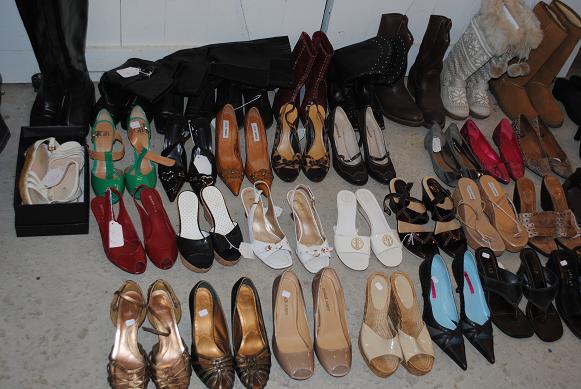
Below are images taken at the event of some of the clothing, jewelry, and shoe racks:

breast cancer events

charleston style concierge

Charleston personal stylist

I’m so honored to have had the opportunity to become involved with the Warriors Wear Pink organization. After speaking for only a few minutes with Leslie Moore, the organization’s founder, I had chills and knew I wanted to help however I could. Leslie is a breast cancer survivor and founded Warriors Wear Pink to give other pink warriors inspiration, hope, advice, and a community to reach out to.

breast cancer awareness

For more information about Warriors Wear Pink visit the Warriors Wear Pink Promise Blog or get involved with them on Facebook.  I hope to see you at the next Warriors Wear Pink MoBo!

To find out more about Lee and the Charleston Style Concierge, click here to visit her website.

Therapeutic Ways to Relieve Stress

meditationReducing stress is one of the most effective steps you can take to improve your health, and it can be one of the most challenging. Stress is a constant in our lives, but if you’re proactive about managing it, you’ll be surprised at how much better you’ll feel. This post will discuss three very effective ways to relieve stress and reduce health issues.

Yoga

Body postures of varying difficulty and controlled breathing exercises increase your physical flexibility, while meditation helps you focus on being peaceful and calm. This powerful mind / body combination makes yoga an extremely effective stress reliever. Yoga practitioners also enjoy increased strength and balance. Prominent medical facilities such as the Mayo Clinic recognize the role of yoga and meditation in health promotion and stress management.

In yoga, movements are precise and require concentration, which draws your attention away from your hectic life and quiets your mind, so you release tension and anxiety. In addition to reducing stress, yoga has been proven to help with insomnia, depression, and fatigue. Yoga also lowers blood pressure and is used as a weight loss aid.

Journaling

Often we hide thoughts and feelings that cause stress, and we do our best not to think about them. However, stress is like any other untreated wound in that it becomes larger and more damaging if we don’t take care of it. Journaling, which is simply writing down your thoughts, allows you to express those feelings and understand their effects on your health.

When you see those thoughts on paper—especially after the strong emotions connected to them have passed—they lose their power to upset you, and their hold on your mind is broken. The stress these thoughts caused dissipates as a result. When you look objectively at what is going through your mind, you can define what is causing your stress and take steps to remedy it. For many, the act of writing helps them process their feelings, and that alone helps their stress levels.

Meditation

A quick and easy way to reduce stress, meditation is one mental technique of focusing your attention away from stressful thoughts and situations, giving you a sense of balance and peace. In addition to stress relief, the Mayo Clinic has found that meditation helps with pain management, allergies, binge eating, and sleep problems.

When you meditate, you intentionally move your mind into a new state of relaxation that extends throughout your body. Stressful feelings and thoughts are released as you move into a deeper state of awareness. As you become more proficient in meditation, you control your conscious thoughts more easily and relax more quickly.

To learn yoga, journaling, or meditation, search for classes in your area. Look at the instructors’ websites, or call them, and decide who seems knowledgeable and approachable. Often instructors will offer a class or a visit for low or no cost. Don’t be afraid to try something new to reduce your stress.

For more helpful tips on health and wellness, Like us on Facebook.

What is Fat Necrosis and Should I Be Concerned About It?

The below question is answered by Dr. James Craigie of The Center for Natural Breast Reconstruction.

Dr. James Craigie

After my stage one DIEP surgery, I have some lumpy areas that I am told are fat necrosis.  Do they go away or what can you do about them? I am due to have stage two of my surgery soon.

Fat necrosis is a generalized term that results following injury or surgery when fat no longer has an adequate blood supply to survive. When fat does not survive and is in the breast the body develops scar or firmness as part of the healing process. A small amount of fat necrosis may go away on its own and larger amounts may persist indefinitely making the breast feel hard.

Following a DIEP or other muscle sparing breast reconstruction some of the fat transferred to the breast may not receive enough blood supply to survive the healing process. When this happens you may feel small lumps in the new breast about 1 – 2 months after the first surgery, sometimes sooner depending on where the lump is. These are usually small areas that can be removed at the second stage without affecting the end result. This is the most common situation we encounter.

On a larger scale, if something has occurred during the course of surgery and the tissue was transferred with an inadequate blood supply, the entire breast or a major portion of it could develop into fat necrosis. This is the most severe situation and would be considered a major complication or even failure of the procedure. Fortunately, in our experience, this situation is rare and the surgeon will know this has happened and should discuss options for correction.

If someone has a new breast lump and has a history of breast cancer, they are likely to undergo biopsies or have some concern over the area. Lumps that are fat necrosis may make breast exams more difficult or confusing and increase the chance that a new cancer or recurrence goes undetected. So anytime there is obvious fat necrosis after the first stage of surgery, we would make attempts to remove it. Initially, when a patient states they feel a firm area, I always remind them that what they feel on the outside will feel larger than the actual amount of fat necrosis tissue because the body is creating a reaction to the tissue trying to dissolve it.

It should be stressed that even patients who have undergone breast reconstruction should continue to do breast self-examinations. Any surgery on the breast will cause swelling and scarring. In many women who undergo reconstruction with breast implants, the body creates a capsule in response to these implants and all of these scars, capsules, or post surgical changes can feel like lumps and bumps following surgery. Therefore, it is important to know that fat necrosis may become apparent soon after surgery and should stay the same and not enlarge as time goes by. Alert your doctor regarding any breast lump that seems to enlarge. It is also important to know that breast exams will not be useful until after stage one and two are completed and the breast has had several months to recover from the surgery.

Once the reconstructive process is complete, things should not be changing. Patients should become familiar with any area that feels firm. If there are scars remaining after surgery, the patient should keep track of where they are and monitor them for changes. Changes in size or significant changes of any type should always be brought to the attention of your physician even in a reconstructed breast.

—James Craigie, M.D.

Follow us on Facebook to see more questions answered by our doctors.