Archives for 2011

Why It’s Important to Get Out of the House and Experience Life

happy lifeIt’s been said that as you get older, you won’t regret what you’ve done, but what you haven’t done. It’s easy to stay home and hibernate, and you certainly need time alone to reflect and think, but you also need to connect—with people, with things, with places, and most important, with yourself.

Life is full of abundance and beauty, and it always has exciting adventures for you to discover. Some are as simple as hearing the tinkle of children’s laughter or watching a tulip emerge from the frost. Other experiences, such as camping in the mountains or going to a rock concert, fill all your senses with wonder and delight. Trying something new is stimulating and memorable, and it makes you feel truly alive as it enriches your life.

It’s easy to fall into the rut of staying in the house and watching TV or reading, and the thought of trying new things can be daunting. However, when you’re ready, adventure begins the moment you open your door. New experiences don’t have to be complicated or expensive. Anything you haven’t seen, heard, felt, or tasted is brand new to you. Following are ten simple and inexpensive ideas to try.

  • Take a different route when you run errands, and try a new store or dry cleaner.
  • Plan a short road trip, and discover an area of your city or county you’ve never seen.
  • Drive with some friends or family to a nearby town and park your car, get out, and explore.
  • Go window shopping.
  • Plant your favorite flowers in your yard or in a window box.
  • Call a friend and try a new coffee shop or restaurant. Splurge on food or drink you’ve never tasted before.
  • Go to the theater and watch a movie from a genre you’re not familiar with. Try a new snack while you’re there.
  • Think about attractions or landmarks your town is famous for. Have you ever seen them? If not, go.
  • Take a class in something you’ve always wanted to learn, such as a foreign language, cooking, or writing.
  • Imagine yourself doing an activity you’ve always been hesitant to try, such as riding a roller coaster or racing go-karts. Then do it.

Once you start exploring the world around you, you’ll be hooked and want more. What adventures are you ready to try?


 

Is a DIEP Flap Reconstruction Right for You?


The below question is answered by Dr. Richard M. Kline, Jr., of The Center for Natural Breast Reconstruction.

My plastic surgeon told me that I did not have enough excess tissue in my abdomen to have a DIEP. What can I do now?

That’s a common question, thanks for asking. Many women wonder themselves if they actually have enough tissue for DIEP flap reconstruction, and others are told by their plastic surgeon that they do not. When assessing whether or not a patient’s abdomen can meet their reconstructive needs, several factors need to be taken into account.

First, are we talking about reconstructing one breast, or both breasts? Obviously, reconstructing both breasts takes twice as much tissue as reconstructing one breast. When only one breast is needed, it is possible to use both sides of the abdomen to reconstruct just one breast. This is called a “stacked flap,” which utilizes both sides of the abdomen, with two separate blood supplies, to make just one breast. We routinely do this procedure for patients who just need one breast reconstruction, but require both sides of their abdomen to get the size breast that they desire. It’s more complicated than connecting just one blood supply, but our practice has performed this operation well over a hundred times, with excellent success. In fact, we believe that stacked flaps may be less susceptible to fat necrosis (a complication of DIEP flaps where some of the fat, usually on the edge, dies and gets hard) than ordinary DIEP flaps.

Second, in trying to answer this question, the patient’s desired breast size must be taken into account. A patient who wants both breasts reconstructed to size “D,” but who does not have enough abdominal tissue to make a” D” size breast on each side, might have adequate tissue to make a “B” sized breast on each side. In this situation, if “B” sized breasts would not be acceptable to the patient, then we would usually recommend using the buttocks (a GAP flap) as the donor site.

Use of the buttocks for breast reconstruction, particularly for reconstructing both breasts at the same surgery, is significantly more complicated than using the DIEP flap. Fortunately, we have extensive experience with this procedure, having performed it several hundred times with a 99% success rate. If a patient did not wish to use their buttocks as the donor site, then they would still have the option of accepting a smaller breast size from the abdomen, or they may possibly decide to use implants, foregoing autologous reconstruction altogether.

Finally, for the patient who is told by their surgeon that they do not have enough tissue for a DIEP flap, it is worth noting that it can be extremely difficult for a surgeon who does not routinely perform DIEP flaps to properly assess the amount of donor tissue a patient has available in her abdomen. The thickness of the subcutaneous fat, which is the thickness that can be “pinched” between the skin and the muscle of the abdominal wall, is of paramount importance in assessing how large a breast can be made from the DIEP flap.

In addition, the maximum height of the flap also plays a role in determining what size breast can be made. In assessing how “high” a flap can be safely harvested from the abdomen, it is important to look at how much loose skin is present between the belly button and the bottom of the ribs.  If there is a lot of loose skin in this area, then it will stretch downward more easily to close the lower abdominal wound after harvest of the flap, thus allowing for a larger flap to be obtained. Again, precise assessment of the availability of abdominal donor tissue requires a significant amount of experience on the part of the surgeon, and is ideally performed while examining the patient in person, as opposed to simply looking at photographs.

In closing, to determine if a patient has “enough tissue for a DIEP flap,” we must ask these questions:

  • Are we reconstructing one or both breasts?
  • What size breast are we attempting to reconstruct?
  • What is an experienced surgeon’s assessment of how much tissue can be removed from the abdomen?

Only by taking all of the above into account can a meaningful answer to the question be obtained. We believe that effective communication between the patient and the reconstructive team, in this situation and in most others, is often the key to a successful and happy outcome.

—Richard M. Kline, Jr., M.D.

Fabulous Shopping for a Fabulous Cause: The Second Warriors Wear Pink Event

Image to the left taken from WarriorsWearPink.com.

Support a great cause by coming out to the 2nd Warriors Wear Pink MoBo event, happening Thursday, April 7 from 5:30 p.m. to 8:30 p.m. The event takes place at the Tanner Hall Amenities Center in Tanner Hall Plantation and features fabulous guests including the Charleston Style Concierge, Lee Heyward; Elizabeth Quinton of EQMake Up; Sumner Little of Stella & Dot Jewelry; and the Rosita Jones Studio.

This is going to be an amazing night full of fun, shopping, and socializing! Those who attend the event will be helping to support local breast cancer survivors and those affected by breast cancer. Attendees can shop some great deals for an exceptional cause while listening to great music, socializing with family and friends, and enjoying a glass of wine and snacks.

Some of the items being sold at this event will include high-end, gently used clothing and fashionable accessories at great deals. Part of the proceeds will be given to locals affected by breast cancer, as well as the Warriors Wear Pink Foundation. Lee Heyward, the Charleston Style Concierge, will offer style expert assistance to shoppers looking to get some insight on wardrobe creations and pairings.

Don’t miss out on this great event to help support our brave local survivors and give to a wonderful cause!

For additional questions about the event, contact Leslie Crawford Moore at 843.708.1918.

Celebrating Those Who’ve Won the Battle Against Breast Cancer

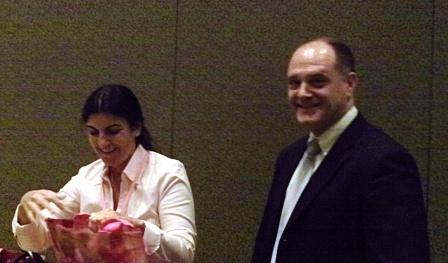
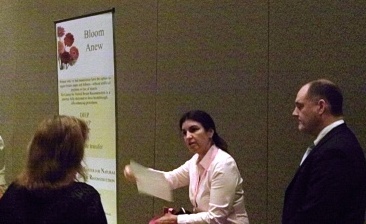
It was an afternoon of motivation, education, and celebration at the Annual Komen Lowcountry Survivor Celebration held at the Embassy Suites Convention Center in Charleston, SC, on March 27. Survivors, along with their friends and families, gathered together for some afternoon tea to celebrate those who have won the battle against breast cancer—both here, in the Lowcountry, and around the world.

Guests enjoyed entertainment by singers from the Charleston County School of the Arts and Jazz Saxophonist Devon Gary. Survivor, Alex Costanzo, provided some laughs and good cheer with her “Top 10 Perks of Being a Breast Cancer Survivor.” Dr. Gretchen Meyer from Lowcountry Hematology & Oncologist provided the medical update portion of the program while Mona Palmore-Haynes stirred the crowd’s hearts and minds with her motivational speech about her own breast cancer experience.

The program closed with a moving candle lighting ceremony honoring the survivors in attendance. Congratulations to Gene Glave, who was the well deserved recipient of this years’ Charlene Daughtrey Award for her work with the Susan G. Komen for the Cure—Lowcountry Affiliate.

Thanks to Susan G. Komen for the Cure—Lowcountry Affiliate for such a truly beautiful and memorable day and The Center for Natural Breast Reconstruction for their sponsorship.

See more images from the event below:

breast cancer events


breast reconstruction surgeon

Dr. Richard Kline and Chris Murkami RN

Dr. Richard Kline

Dr. Richard Kline and his nurse, Chris Murkami RN

Visit our Facebook page to view videos from the event!

Who Can Have a Skin-Sparing and Nipple-Sparing Mastectomy and Why?

**We are delighted to introduce our guest blogger, Dr. Paul Baron, MD F.A.C.S of Cancer Specialists of Charleston. Dr. Baron shares with us his insight on who can have a skin-sparing and nipple-sparing mastectomy and why.

See below for Dr. Baron’s guest post:

The best cosmetic results from breast reconstruction are clearly in patients who still keep much of the original skin of the breast. It leads to a more normal shape, appearance, and texture. In the past, the fear was that the cancer overlying a breast tumor needed to be removed; even if the cancer was far away from the skin in the back of the breast. All mastectomies were done with a large horizontal elliptical incision that removed a large segment of skin extending from the sternum to the lateral chest. The nipple and areola were removed at the same time as there was concern that the cancer could march up the ducts and be left behind if the nipple is left behind.  As a result, there was not enough pliable tissue to allow placement of an implant or tissue flap under the skin. The reconstruction could only be done by stretching the skin first with a tissue expander or leaving a large island of skin with the attached underlying flap of tissue (TRAM, latissimus, DIEP, or GAP). The result was a very unnatural breast reconstruction.

We now know that in most mastectomies, virtually all the skin overlying the breast can be left behind as long as the cancer is not immediately underneath it. In this case, we still remove a small patch of overlying skin. The most common incision for a skin-sparing mastectomy goes just around the areola with an extension inferiorly (kind of like a tennis racket shape), or a horizontal ellipse that is half the distance of the more traditional mastectomy incision. The resulting reconstruction is more natural in appearance as there is a very small scar and often no visible island of skin.

Another approach gaining in popularity is a nipple-sparing mastectomy. In this case, the entire breast is removed through an incision that completely leaves the nipple and areola intact. There are many ways to make this incision. Clearly these patients have the most normal appearing breast reconstruction. Also, to relieve the concern of cancer cells being left in the ducts, we actually core out the ducts as they enter the nipple. The shell of the nipple is left behind and as a result, often looks better than the nipple reconstruction.

We will not perform a nipple-sparing mastectomy if the cancer is close to the nipple. Also, if a patient had a prior mastectomy in which the nipple and areola were removed with one breast, we will usually remove the contra lateral nipple at the time of prophylactic mastectomy so the reconstruction result is symmetrical. It should also be pointed out that in most cases in which the nipple is left behind, it does not have normal sensation. It can have sensation to touch and temperature, but lose erotic sensation.

We have made huge strides in breast cancer surgery. For patients requiring or choosing mastectomy, the final reconstructed version can have a natural reconstruction as a result of usually leaving the skin behind as part of a skin-sparing mastectomy. We have improved this even more by performing nipple-sparing mastectomies. The optimum result is when the breast surgeon works as a team with the plastic surgeon in planning the type of mastectomy from a cancer point of view, and the orientation of the incision from a cosmetic point of view.

About Dr. Paul Baron:

Dr. Baron is Board Certified in General Surgery and completed a Surgical Oncology Fellowship at Memorial Sloan-Kettering Cancer Center in New York City. He is a graduate from the Boston University Six-Year Medical Program. Dr. Baron subsequently completed a residency in General Surgery at the Medical College of Virginia.

Cancer Specialists of Charleston – www.cancerspecialistsofcharleston.com

Who’s on Your Team?

breast surgeonsGO TEAM! Lots of phrases are used to describe a team concept. Some people call it “Multidisciplinary Breast Team, “Breast Cancer Team Conference,” “Breast Health Team,” “Cancer Clinic Team,” or, the one I like the LEAST, “Tumor Board” (ick!).

These teams are the groups of doctors, P.A.s, nurses, and therapists—basically everyone who would be involved in treating a patient with a breast cancer diagnosis—who meet to coordinate the best care for you. Yes, YOU and your unique self! They talk about your individual case, bounce ideas and treatment plans off of one another, and come to a consensus about what treatment would be best at beating your type of breast cancer. All of the members of this team may not necessarily be the providers treating you, which is a good thing for a wide perspective of opinions, but may include breast radiologist, general surgeon, breast surgeon, surgical oncologist, plastic surgeon, pathologist, medical oncologist, oncology nurse, radiation oncologist, social worker, financial aid counselor, and an oncology psychiatrist.

If you are in a community that does not have a team or you would like to be presented to a team prior to beginning treatment, just ask that one be found for you. Most hospitals have one and some exist that are composed of a group of providers in the community with a particular interest in breast cancer and breast health.

What is A Breast Cancer Navigator?

A breast cancer navigator is a term that hopefully most of us don’t know and won’t learn in our lives. But simply stated, this person, usually an oncology nurse, is there to help you from the time of your breast cancer diagnosis through the treatment maze to the end of your breast cancer journey. Consider her the person who reads the map while you are trying to drive the car, or perhaps if we keep in line with navigator, she sits on the stern of the boat and tells you when and how to row.

We like to think of her as more of a concierge at a really cool classy hotel (no tips required!!). She’s right there at check-in if you need her. But when you want to leave the hotel, she’s the go-to girl. She’s informative and has all the great information on the BEST places to go in town. Sometimes, she might even give you a little side information on the places that people have given her rave reviews about.

The Center for Natural Breast Reconstruction now has a new breast cancer navigator on board at our favorite “hotel,” the new East Cooper Regional Medical Center. We’re confident that once gets the hang of the lowcountry, she’ll be the best concierge in town! You’ll be able to call her for the best rates during your stay, ask her about what kind of post-op care you might need, and what types of support services are available during your time in Charleston. She’ll always be available to our clients.

What Does It Mean to Eat Healthier?

healthy eatingWhat does healthy eating mean to you, personally?

Eating healthier means different things to all of us. For one person, it might mean cutting out animal products and eating strictly organic vegan food. For another, it might mean eating out no more than a couple times a week and learning to cook.

Transforming your eating habits is a process, and you can’t expect to be perfect overnight. Eating healthier means striving to avoid unhealthy food most of the time. Only you can decide what it means to decrease unhealthy food and add healthy food. Your doctor or nutritionist can help, but you must live with your new eating habits, so your plan must be realistic.

We’ve seen people stop eating certain foods cold turkey, and while it works for some, for others it’s a recipe for disaster. When you deprive yourself of foods you love, you may reach a point where you have an overwhelming craving for that food, and then you’re likely to binge, or eat a large amount at one sitting.

We recommend that instead of cutting out favorite foods completely, allow small portions occasionally, or find an acceptable substitute. One example is moving from eating large amounts of milk chocolate daily to small amounts of dark chocolate a few times a week. Another example is limiting yourself to one soda a day.

When you’re ready to change your diet for the better, you can start with these tips:

  • Think about how you eat now. Look at how often you eat processed food, such as frozen pizza, versus food in its natural state, such as fruit. Generally, the less often you eat processed food, the better.
  • Keep a food diary for two weeks. You’ll see where you can improve, and you’ll have a good idea of exactly what you’re eating.
  • Visit www.healthfinder.gov, www.healthypeople.gov, and www.mypyramid.gov for more information on healthy eating and ways to change your eating habits.
  • Decide what you can and cannot live with when it comes to healthy eating, and start with small steps such as reducing sugar intake. Once you’re comfortable with that, add another small change to your diet.

Remember, this is a marathon, not a sprint. Make minor changes gradually, and you’ll still enjoy eating while you work toward your goals. Use your doctor and nutritionist for help and guidance.

What steps to improve your diet are you considering? If you’ve already taken steps to change your eating, please share in our comments section.

What Are My Options If I Develop Lymphedema?

I’ve had breast cancer and developed lymphedema after my mastectomy.  I recently heard about Lymph Node Transfer surgery.  Does it work?  I’m scheduled for a DIEP breast reconstruction, can it be done at the same time?

Question answered by Dr. James Craigie:

Lymphedema is a very difficult problem that results when a patient has had breast cancer and has to undergo surgical removal of the lymph nodes under the arm as part of their surgical treatment for breast cancer. There are other causes of lymphedema but our specific interest has been in patients who have had breast cancer.

Lymphedema can be a very debilitating process; it remains a terrible problem worldwide, for all types of reasons. There is still much to be learned about why some people develop lymphedema and others do not. It appears that lymphedema is directly related to several factors in our breast cancer patients. It is directly related to having the lymph nodes removed from under the arm and seems to develop from the scarring that occurs under the arm following mastectomy and / or axillary dissection.

Undergoing radiation of the arm or axilla increases this risk. However, there are many people who undergo removal of the lymph nodes and radiation that do not develop lymphedema. There are also people who have mastectomy, have lymph nodes removed followed by radiation, and don’t develop lymphedema until many years after their surgery. That is the main reason that patients are warned to pay particular attention to their arm if they have had removal of any lymph nodes.

It is also possible that someone could get lymphedema even after simply having a sentinel node removed. A sentinel node procedure (lymphadenectomy) is a way to examine the lymph node without having to remove more than one or two. The whole idea of examining only the sentinel node is to lower the risk for lymphedema, but even with the sentinel node procedure, there is still a chance of developing lymphedema. Our practice became interested in options to help breast cancer patients with lymphedema as we see many who are suffering from the symptoms of this process while undergoing breast reconstruction.

Our practice specializes in microsurgical free flap breast reconstruction utilizing skin, underlying tissue, and microscopic blood vessels that transport life-giving blood to the reconstructed breast. This procedure is commonly referred to as the DIEP if using the abdomen or a GAP if using the buttock tissue. The muscles of the abdominal wall are left intact as it is the removal of the muscles of the abdominal wall that can lead to problems in the donor area, like hernias and bulging, as well as a more involved extended recovery. The lower tummy wall is the most common area that we transfer and it’s also an area where lymph nodes are present. Therefore, over the first decade this surgery was being done, we would encounter lymph nodes in the area of the blood vessels, as well as fatty tissue.

It became obvious that we could transfer lymph nodes on the blood vessels as we refine our technique for microsurgery. Due to the lack of effective treatment for lymphedema, for years surgeons doing perforator flaps have taken on this challenge and are trying to come up with ideas and techniques to treat it. We began doing an extensive amount of research, spanning the globe, looking for information on procedures that may help these patients. In 2005, we formed a group known as the Group for the Advancement of Breast Reconstruction, known as GABRs, and we included members throughout the world who had had a unique experience with our type of breast reconstruction.

We encountered one individual who had 15-years of experience with what is now known as “vascularized lymph node transfer” for the treatment of lymphedema. Initially, Dr. Robert Allen had attempted lymph node transfer during breast reconstruction and the biggest concern was how to transfer lymph nodes from one area of the body to treat lymphedema but not to create lymphedema in the donor area. In 2006, the GABRs met in Beijing, China and invited Corrine Becker, a surgeon from France who had a long history of experience with vascularized lymph node transfer.

She presented her work and through communication and travel to Paris to work with her, members of the GABRs group began to gain experience and learn more of her technique. The biggest hurdle that we were able to overcome was learning how to select the lymph nodes that could be removed as the donor lymph nodes and use those for breast reconstruction without causing lymphedema of the leg. We spent an extensive amount of time discussing her techniques and reviewing her results, as well as her publications.

We then made arrangements for her to travel to South Carolina and actually performed surgery on our own patients with her as an assistant surgeon. Since that time we have been very encouraged by the results with vascularized lymph node transfer as an effective treatment for reduction of the symptoms of lymphedema. We feel very excited but yet are very cautious about all results. It is important that patients realize that this procedure is still evolving and that there are risks involved, but to date we have had very good results and no serious complications.

Improvement of symptoms with vascularized lymph node transfer can occur immediately; however, they also may take up to 2 years to be appreciated. In most of our patients, the indicators of success are different. For the majority, the goal was to improve the edema, lessen the need to wear compression garments on a regular basis, and to eliminate the risk for frequent infections, which are the typical problems that those affected by lymphedema experience.

In order to lower the risk for complications and to closely study our results in conjunction with other colleagues who perform this procedure, we prefer to perform vascularized lymph node transfer as an isolated procedure. It can be done at the time of breast reconstruction; however, there is a chance that some people with mild lymphedema who undergo breast reconstruction may have improvement without lymph node transfer. Therefore, in order to closely study our results, we perform the breast reconstruction first followed by vascularized lymph node transfer as the second step. When the results are complete, we can determine whether it was the reconstruction or the transferred lymph nodes that gave the end result. It is important again to reemphasize that the main risk for of the surgery is that the transfer may not work. It is possible that if the transfer did not work resulting in more scar, the lymphedema could worsen.

Thankfully, to date, we have not experienced this complication. Other complications are damage to the blood vessels under the arm or the nerves under the arm. Therefore, our preference is to have an oncologic surgeon, who performs axillary dissection, release the scar under arm.  At the same surgical setting, after the scar is released, we perform the transfer by removing very specialized lymph nodes from the outer and lower abdominal wall or outer upper leg. We preserve the lymph nodes of the inside leg. These are the ones that drain the lower extremity and therefore, we feel that the risk for lymphedema of the donor area is reduced.

At this point, we have received some very exciting results along with some mixed results and continue to follow our patients very closely. We have had no patients with any serious complications and no patients at this point with lymphedema of the donor site. We are hopeful that the future holds vascularized lymph node transfer as an effective option for people with lymphedema following breast cancer surgery.

We plan to continue to devote and focus our energies on a surgical solution while simultaneously not exposing people to excess risk of additional problems. Once again, we do have to admit that the surgery, although giving some promising results, is  still evolving at this point and we choose to proceed with caution in the best interest of our patients.

—James Craigie, M.D.

Did you find this post helpful? Sign up for our blog RSS feed to receive instant updates.

Why Microsurgical Breast Reconstruction?

The access to GAP and DIEP procedures is not widespread, only a handful of surgeons have invested the time to learn this intensely specialized microsurgical procedure, and have access to another equally qualified micro-surgeon to provide the required surgical assistance.

To give you an idea of how few of these surgical teams exist, in late 2007 we were one of only three practices in the country that offered simultaneous bilateral GAP reconstruction.  As a result, we see patients from all over the United States seeking this highly successful option, with 30 to 40% of our patients referred to us as a result of repeatedly failed implant reconstructions.

In a critical analysis of 142 GAP procedures published by six physicians at LSU, the GAP procedure is reported as “not easy to learn; however, it does provide a reliable flap and an excellent aesthetic reconstruction.”  The report further states “overall flap survival was 98%”and perhaps most importantly “patient satisfaction with the reconstructed breast and donor site has been excellent.”

A little bit about us:

Co-directors Dr. Richard M. Kline and Dr. James E. Craigie are certified by The American Board of Plastic Surgery. Both surgeons have trained under Dr. Robert J. Allen, a pioneer in breast reconstruction using the DIEP, SIEA, and GAP flaps. Dr. Craigie completed a microsurgical breast reconstruction fellowship dedicated to muscle sparing techniques (directed by Robert J. Allen, M.D.). Dr. Kline completed his residency at LSU while Dr. Allen was developing these techniques.

Our entire surgical team is dedicated to remaining at the forefront of breast reconstruction surgery to provide excellent care and results for each individual patient. Because of this commitment, the practice consistently earns referrals from our patients, as well as from other surgeons throughout the United States.

Knowing the right questions to ask:

When searching for a surgeon to perform your microsurgical breast reconstruction, it’s important to ask him or her the right questions. Below are a few questions to ask:

  • Are you a microsurgeon? Where and by whom were you trained in this specialty?
  • How many microsurgeries have you performed? And how often do you perform them?
  • What is your success rate?
  • Can you arrange for me to speak with some of your patients who have had the procedure I am seeking? (Candidates should speak with people of similar ages and lifestyles).
  • How long do you anticipate I will be under anesthesia for the procedure?
  • How many board certified physicians will be assisting with the first stage of the procedure? Will there be physicians in training (residents) involved with my surgery
  • Will I have to sign a consent that if a physician is unable to complete the procedure, I will have to consent to a TRAM/Free TRAM?