Archives for 2015

Healthy Lifestyle: Why Deep Breathing Is Essential

little-boy-doing-yoga-poses-at-sunset-2-1331159-1279x852

You’ve heard the phrase, “Just take a deep breath.”

But what does deep breathing really do for your health?

According to the American Institute of Stress, abdominal breathing for 20 to 30 minutes each day will reduce anxiety and stress.

Additional benefits include added energy, better digestion, overall relaxation, and an increased ability to focus.

And guess what else?

Deep breathing is FREE (bet you were expecting the secret to great health would involve a pricey gym membership or therapy session!).

Here are 4 more benefits of why deep breathing is incredibly beneficial for our bodies:

Oxygen provides energy

By drawing in a deep breath, your blood flow increases. When your blood flow increases, the oxygen level in your blood provides added stamina and energy. This is why runners are encouraged to breathe deeply into their abdominal region (or abdomen) when they run in order to provide their bodies that extra needed energy.

Less stress

Increasing the flow of oxygen to your brain helps stimulate your parasympathetic nervous system. This helps give you the overall feeling of calm and relaxation. In addition, deep breathing helps you connect your mind and body by bringing awareness to the flow of your breath and taking your mind off worries and negative thoughts. This is why yoga is such a great exercise for those who wish to lessen their stress level, because the exercise focuses on breathing while holding poses. 

Better digestion

When you increase your intake of oxygen, your organs are able to perform at their best. In addition, you’re able to calm down and activate your parasympathetic nervous system, which helps your body to digest food more efficiently.

Focus

Being mentally present in the moment gives your brain added focus. When you breathe and bring yourself back to your center, your productivity and decision-making skills are greatly improved. When you’re having trouble getting through a task at work, take a moment to close your eyes and take 20 seconds to breathe deeply and slowly, and then try the task again.

Interested in discovering more calming techniques? Read this article.

Ask the Doctor-When should a patient should have a flap procedure to rebuild a breast?

pink flowerThis week, James E. Craigie, MD, of The Center for Natural Breast Reconstruction answers your question.

Question: I have been undergoing reconstruction with implants for the last couple of years. My last surgery was January 26, 2015. I have a z-plasty across the breast under the nipple reconstruction scar, not very aesthetically pleasing. Also left with a left small B, right D and pain when I sneeze in the right implant rib cage area. The small B is fine with me. One other issue that has come up is the outbreak of skin blistering which my doctor cannot account for and is ongoing. My question is how do you determine when a patient should have a flap procedure to rebuild a breast given previous medical history?

Answer:  I’m sorry you are having problems with your reconstruction. The issue of when to abandon implant reconstruction and pursue natural tissue reconstruction is sometimes very straightforward (for instance, if you put a tissue expander in a radiated mastectomy wound, and it falls out during expansion), and sometimes less obvious. Although the majority of non-radiated patients reconstructed with implants do well, a significant minority have problems, some such as you have described, and ultimately pursue reconstruction with their own tissue. The decision is often not just a straightforward medical one, but often is very dependent on what your specific goals are for your reconstructed breasts. We would be happy to talk with you more about the specifics of your specific situation, if you wish. Thanks for your inquiry.

Have a question about breast reconstruction or post-surgical you’d like answered from our surgical team? Just ask!

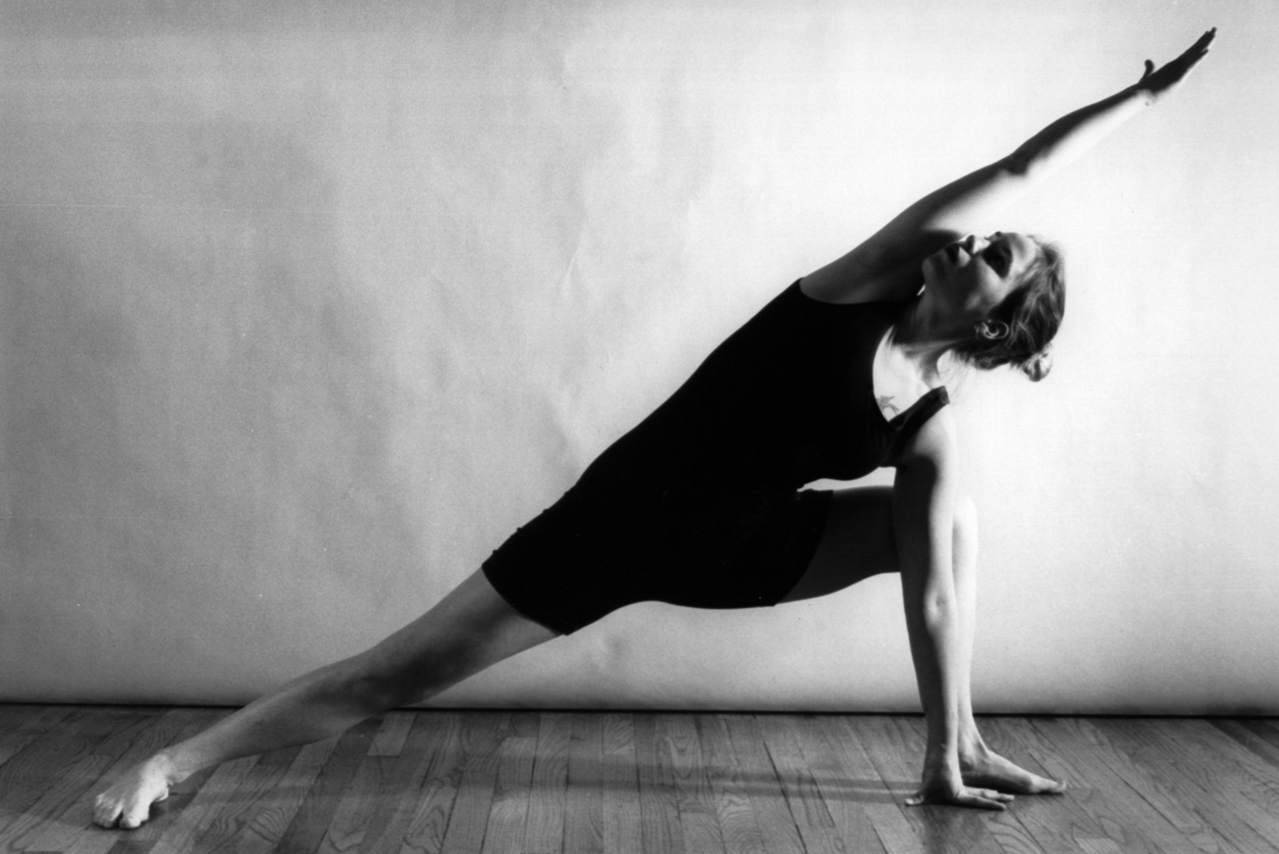
The Actual Difference Between Yoga and Pilates

yoga

Stones vs. Beatles, Yankees vs. Red Sox…yoga vs. pilates?

There are some brand warriors who swear by yoga or pilates.

But we want to know what’s the actual difference between the two?

To us, they both look like a bunch of spandex wearing people contorted into impossible positions—okay, so sometimes we are those people (although, we never seem to look quite like Kate Hudson in the those new Fabletics commercials…).

Even for those of us who have dabbled in yoga and pilates, we still want to know: what is the real difference?

We’ve sent in our private, yoga-pant sporting, detectives to get to the bottom of this never-ending debate.

Yoga

We’ll start with yoga since it’s been around for a couple thousand years. Yoga focuses on flexibility, strength, endurance, and spirituality. Rooted in ancient Indian culture, yoga unites your mind, body, and spirit through movement, breathing techniques, and meditation. Yoga’s primary goal is to concentrate on your breath while deepening into poses.

Pilates

Pilates has been around for about a century, and is also rapidly growing in popularity. Pilates focuses on core strength and precise movements. The majority of pilates takes place lying horizontal on the floor working abdominal muscles, whereas yoga is primarily done remaining vertical—although both include certain exercises that involve the contrary.

PiYo

Here’s a curveball for you—PiYo is an exercise that combines the flexibility of yoga with the muscle sculpting of pilates. Unlike yoga and pilates, PiYo speeds motions up so that you’re not holding positions for a long period of time. For those who get a little impatient with slow movements, this may be the workout for you!

Our Conclusion: Mix it up! Why not reap the benefits of all three? By regularly alternating exercises, you are less likely to get bored and you receive a full body workout.

We’d love to hear your favorite workouts in the comments below!

Ask The Doctor-What can I do about my painful scar tissue?

501787321_335f8e09c7_zThis week, James E. Craigie, MD, of The Center for Natural Breast Reconstruction answers your question.

Question: I have implants over the muscle. One has extreme scar tissue around it that has made it hard and very painful. If I remove them and go under the muscle, is there less chance that this will happen again, and would I need a mesh material to have that procedure performed?

Answer: Thank you for your question. I am thinking that your implants were placed for breast augmentation, please correct me if I’m wrong. In general releasing the scar and repositioning the implants under the muscle may help the problem. Placing the implant under the muscle mainly provides more of your own tissue to cover the implant, which can be helpful for some people. Unfortunately it does not guarantee the problem wont recur. Depending on the cause of the problem this approach may be successful 50% of the time. The use of any type of mesh is not a recommended treatment specifically for scarring around an implant but there are some types of mesh like materials that can help for other types of implant problems. I would need more information about your situation to be more specific. Let me know if you would like to give me some more details. Thanks again.

Have a question about breast reconstruction or post-surgical you’d like answered from our surgical team? Just ask!

Mastectomy: Your Questions Answered

pink flowerYou just found out that you might need a mastectomy.


First, we’re so sorry to hear that. We understand what an overwhelming and emotional time this is for you and your family.

A lot of thoughts and feelings start to rush through your head when you hear the diagnosis, and it’s difficult to focus and ask the questions you need to ask.

In this article, we’re sharing some common questions patients ask about mastectomies so that we can help you get all of the necessary information that you need.

What are the three levels of mastectomy?

Let’s start with understanding the three levels of mastectomy:

1) A total mastectomy removes the breast tissue, nipple, areola, and some skin around the incision. This procedure commonly follows cancers that occur in two or more areas of the breast or those that extend beyond a biopsy’s edges.

2) A modified radical is similar to a total mastectomy, but includes an axillary dissection or sentinel node biopsy. This is now the most commonly performed mastectomy.

3) Previously, the radical mastectomy was the most common procedure—removing muscle, lymph nodes, and skin. However, now this is rarely performed.

Do I really need a mastectomy?

In some cases, a lumpectomy with radiation is as effective as mastectomy.

Given the choice, most American women choose a mastectomy—even when the outcomes of the two procedures will yield the same result. As with any surgical procedure, it’s always advisable to get a second opinion from a surgeon in a different practice.

Recent advances in the mastectomy procedure help save normal body tissue, such as the breast skin and areola, that doesn’t necessarily need to be removed in every patient. Every patient’s circumstances are unique and so are mastectomies. For instance, preventive mastectomies are different than mastectomies for cancer or when lumpectomies don’t work.

Will my nipple be removed, and will there be scaring?

It depends on the individual’s situation, however, it is possible to have a mastectomy and save the nipple.

There are also situations when a mastectomy is done with a “hidden” or “scarless” approach.

Advances in microsurgery and breast surgery allow surgeons to perform mastectomies with hidden scars, similar to a breast lift or augmentation procedure, without leaving scars on the breast skin. Patients who are candidates for this surgery preserve their breast skin—including the nipple and areola.

This technique begins with an incision under the arm, under the breast fold, around the nipple, or down the bottom of the breast below the bra line. Reconstruction involves using a one of the perforator flap techniques (DIEP, SIEA, or GAP), where the relocated tissue fills in and shapes the breast.

Ask if your plastic surgeon works with a breast surgeon who considers these options when planning your mastectomy. Also if a reconstruction is scheduled immediately following mastectomy and you have completed chemotherapy and/or radiation, the mastectomy may be done in a way to make the overall result of your reconstruction better.

Have more questions? Our doctors are happy to provide their expertise.

Ask The Doctor-Can you help with the discoloration around my areolas?

Picture of a roseThis week, James E. Craigie, MD, of The Center for Natural Breast Reconstruction answers your question.

Question: I had a breast augmentation and have scarring/discolorations around my areolas. I have been turned down by another facility because I did not have the surgery performed there. Can you help me? If not, can you tell me where I can go to get help? I just need my areola’s tattooed.

Answer: I would be glad to help. We specialize in plastic surgery of the breast and our nurse and physician’s assistant perform nipple tattoos frequently. The best way to proceed would be to come in to our office for a consultation and then have the procedure. Did you have healing problems after your surgery? When was the surgery? The best time to do tattooing is after 3-4 months to allow any scaring to soften.  Immature scars may be difficult to tattoo.

Have a question about breast reconstruction or post-surgical you’d like answered from our surgical team? Just ask!

How to Start Your Day on the Right Foot

cup of coffee

The way you start the day each morning directly impacts the rest of your day.

That’s why successful people have similar habits that ensure a productive start to their mornings.

Not a morning person? Here are a few tips that will help you start your day on the right foot.

Prepare the night before

Preparation for a great morning begins the night before. If you bring your lunch, try making it the night before. Think you’re too old for a bedtime? Think again. Having a set bedtime keeps you from the “okay only one more show” mindset that inevitably leads to a groggy morning.

Leave plenty of time

Wake up at least one hour before you need to be out the door. Starting the day in a rush leads to stress that will snowball throughout the day. Allow plenty of time to get yourself ready and in a good mindset.

Don’t snooze

It takes some training, but make a mental decision to never snooze your alarm. Decide on what time you’ll need to wake up and stick to it.

Have a healthy breakfast

Food is our body’s energy source. Start your day with a healthy breakfast to get your brain and body moving!

Review your day

Reviewing your day first thing in the morning is one of the best habits of product morning people. Taking a moment (maybe while drinking your morning coffee) to look over your calendar for the day and mentally prioritize is a great method to start your day on the right path.

Think positively!

Make the conscious decision to think positively when you start each day. It will be infectious to those around you and truly impact your daily outlook.

Are you a morning person? We’d love to hear your strategies below.

Ask The Doctor-Should I have a 2nd surgery to remove the scar tissue/neuroma

pink flower This week, James E. Craigie, MD, of The Center for Natural Breast Reconstruction answers your question.


Question: I had a direct implant after a mastectomy, and I have had pain from under my arm to the implant along the scar tissue for 4 months. Should I have a 2nd surgery to remove the scar tissue/neuroma?

Answer: Thank you for your question. It is important for the doctor who did your reconstruction to examine you for any specific causes of the pain. If there is no other reason for you to have surgery on the breast, you could consider a nerve block to see if it is a neuroma. If the block did not last, then considering surgery would be next. If you had any other reason for surgery on the breast (capsular contraction for example), then you might skip the block and ask your surgeon if the scar could be removed during the surgery.

Have a question about breast reconstruction or post-surgical you’d like answered from our surgical team? Just ask!

Traveling Abroad Checklist

3461522090_e21a7d57bd_z

So you’ve decided to finally take the dive and travel abroad.

Exciting!!

Especially for those venturing overseas for the first time, the initial wave of excitement is often followed with an overwhelming feeling of “oh wow, there is so much to do!”

Since we love to travel and know a lot of our patients do to, we put our heads together to come up with everything you need to prepare before jetting off to your fabulous vacation.

Hope you find this checklist helpful and be sure to send us a postcard!

  • Plan well in advance

By picking your exact dates and the location(s) for your trip, you can start narrowing down more details. Not to mention the earlier you book your vacation, the more options you’ll have.

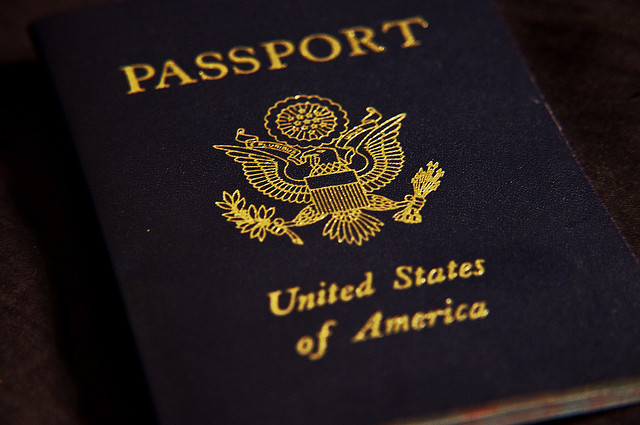
  • Make sure your passport is current

Check your passport expiration date ASAP. Renewing or applying for your first passport can take months and waiting until the last minute may leave you high and dry without a way to leave the country.

  • Buy plane tickets (buying in advance saves money)

Buying plane tickets well in advance helps you plan your trip, as well as save money.

  • Book accommodations

Especially if you’re going in peak season, your top picks for hotel accommodations will fill up rapidly. Researching places to stay is also a great way to get to know the area.

  • Book tours and activities

Although it’s wonderful to participate in spontaneous activities when you’re there, one of our biggest recommendations is to have your activities planned beforehand. That way you can spend your time enjoying activities, instead of stressing over what to do each day—and no one says you absolutely have to stick to the plan—it’s just a great place to start!

  • Create an itinerary

This is a MUST. Between travel plans, multiple accommodations, tours, and restaurant reservations, it’s difficult to keep it straight (or everyone on the same page). Print out a copy for every member of the group, and leave it with someone at home who can always know where to reach you while you’re abroad.

  • Nail down transportation

Research your ideal transportation for your trip. Whether that involves renting a car, looking into public transportation, or buying train tickets, that’s an important factor to be nailed down in advance. Especially when it comes to train tickets, you can receive an exceptionally cheaper deal when bought more than a month in advance. 

  • Print travel documents, make copies of passports, credit cards

Have a copy of all of your travel documents, passports, and credit cards in both your carry on or suitcase in case of an emergency. It’s also important to leave an additional copy with someone you trust at home as a back up.

  • Order appropriate currency

Currency conversion can be an unnecessary extra expense. But some planning can help reduce the cost. Shop around for the best rates before you depart. Warning: the worst rates are at the exchange desks at the airport. Also an important note: give your credit card company a call and let them know where you’ll be traveling abroad.

  • Look into electric adaptors and convertors

Countries have varying power wattages, so be sure to look into what electric adaptors and convertors work in each country you’ll be staying in.

  • Pack

Easier said than done! Start the packing process many days prior to be sure not to forget anything.

  • Have a fantastic time!

We can’t wait to hear all about your fabulous trip!

We’d love to see your awesome pictures! Share them on our Facebook page.

Ask The Doctor-Should I have a 2nd surgery to remove the scar tissue?

2807332883_cd9104dded_m (1)This week, James E. Craigie, MD, of The Center for Natural Breast Reconstruction answers your question.

Question: I had a direct implant after a mastectomy and have had pain from under my arm to the implant along the scar tissue for 4 months. Should I have a 2nd surgery to remove the scar tissue/neuroma?

Answer: Thank you for your question. It is important for the doctor who did your reconstruction to examine you for any specific causes of the pain. If there is no other reason for you to have surgery on the breast, you could consider a nerve block to see if it is a neuroma. If the block did not last, then considering surgery would be next. If you had any other reason for surgery on the breast (capsular contraction for example), then you might skip the block and ask your surgeon if the scar could be removed during the surgery.

 Have a question about breast reconstruction or post-surgical you’d like answered from our surgical team? Just ask!