Archives for June 2011

New Surgery Performed to Help Cure Lymphedema Resulting from Breast Cancer Treatment

breast reconstructionA recent New York Times article discussed an amazing breakthrough in breast cancer treatment: curing lymphedema by transferring lymph nodes from other parts of the body.

Lymphedema is obstruction or swelling of the lymph nodes and is commonly caused by mastectomy with surrounding lymph node removal. As lymphatic drainage of the arm flows through the axillary (armpit) area, removal of lymph nodes there causes arm soreness and swelling because lymphatic fluid cannot move or drain normally.

The procedure, autologous vascularized lymph node transfer, replaces the missing lymph nodes with a small number of nodes from another area of the patient’s body, such as the groin. Surgeons must be careful not to harvest too many nodes from any one part of the body, or they risk causing lymphedema in that area.

The riskiest part of the surgery is removing scar tissue to make room for the new nodes and to improve lymphatic drainage. Critics say removing this tissue may affect the blood vessels and nerves in the arm. However, women with lymphedema often report that dealing with soreness and swelling is worse than coping with the cancer. Proponents of the surgery note that doctors often overlook the physical and emotional effects of lymphedema.

As the controversial surgery is still considered experimental, it is typically reserved for patients who do not respond to other treatments. The procedure’s classification as experimental means it is rarely performed in the United States, and insurance is not likely to cover its high cost. While proponents say it cures some patients and improves the lives of others, opponents counter that its results are inconsistent—it works for some and not for others.

A French physician, Dr. Corrine Becker, is the pioneer of the procedure, and claims a high success rate in Europe and other areas of the world. The surgery gives hope to patients with congenital lymphedema as well as cancer. A double-blinded randomized clinical trial of lymph node transfer will begin in the near future to collect more data on its effectiveness.

Doctors from The Center for Natural Breast Reconstruction observed Dr. Becker during two trips she has made to the United States, and they participated in the meeting and live surgery symposium discussed in the article.

Click here to view the New York Times article.

Step Two in Quitting Smoking: Pick a Time to Stop

quit smokingIf you’ve read the First Step in Quitting Smoking post, (link to first smoking post) you know why you want to quit. Now it’s time to take that step and do it.

Have you decided how you want to quit? You have several options, including pharmaceutical aids such as nicotine replacement therapy or Chantix, hypnotherapy, laser therapy, a telephone quitline, and cold turkey. Any of these methods can work, but only you know what is likely to work for you, based on your previous quit attempts. If you’re not sure which way you want to go, call your state’s quitline, or talk to your doctor.

Once you’ve decided how and why you want to do it, when are you going to do it? If you wait for the perfect time, it may never come. On the other hand, most smokers can remember a time when their minds or bodies were screaming it was time to quit, and they ignored those signals. If a signal comes to you in the middle of the night or while you’re driving home, get rid of those cigarettes immediately, and let that signal be the first moment of your quit.

There’s a reason your mind and body are telling you to quit at that moment—don’t ignore it.

Should you set a quit date?

If you call a quitline, they will ask you to set a quit date so you’ll commit to quitting. Some people question whether that is a good idea. The answer to that is, “it depends.” For some people, having a date is the first goal of their quit plan. They have time to prepare themselves and others for their quit. They can rid the house and car of all smoking paraphernalia, buy any pharmaceutical aids they need, and decide beforehand how to avoid and deal with cravings.

Some ex-smokers swear that picking a quit date wouldn’t have worked for them because it would have added even more stress to the process of quitting. Some people feel a sense of failure if they miss the quit date. Others use the quit date as an excuse to avoid quitting. They’ll set a quit date two weeks away, then as the date approaches, they move it back another two weeks. They tell themselves they need more time to plan, when they need to take action instead.

In the end, you have to decide what will work for you. In the end, it doesn’t matter if you quit on the first or the fifth of the month—you need to quit, and the time is now. If planning your life typically makes you more successful, pick a quit date, but don’t stretch it out more than two weeks. If setting a quit date will make you put off quitting, or if you feel motivated to do it now, seize the moment and get rid of the cigarettes.

Has setting a quit date ever worked for you? Why or why not?

What is a BRCA Test and Do I Need One?

Dear Friends,

Since our physicians and staff members are attending The Joining FORCEs 2011 Conference this weekend, we thought we’d answer a question that pertains to this event.  Hope to see some of you at the conference in Orlando this weekend.

According to the American Association for Clinical Chemistry, “In the general population, the lifetime risk of developing breast cancer is approximately 12% and the lifetime risk of developing ovarian cancer is about 1.4%. The risks increase with age.”

So how can you tell if you are at risk for breast cancer? One way is through a BRCA test.

What is a BRCA test?

There are a variety of BRCA-1 and BRCA-2 mutations present in individuals around the world, and a BRCA-1 and BRCA-2 test is used to detect various mutations in the genes. Some of these mutations are seen in individuals who have a high risk of developing breast and ovarian cancer. If you have a relative who has been diagnosed with breast or ovarian cancer, you would be a good candidate to receive a BRCA test to determine if you carry the same gene mutation. However, a BRCA test is not recommended for the general public. It is only recommended for individuals who have a close relative(s) that has been diagnosed with breast or ovarian cancer, especially before the age of 50.

It’s important to note that there are options for individuals who receive a positive result on their BRCA test and there are ways to help prevent the onset of breast or ovarian cancer. Just because someone receives a positive result on their BRCA test, doesn’t mean they will definitely develop breast or ovarian cancer. The positive result means that they are at higher risk of developing these cancers.

It’s also important to note that if an individual receives a negative result from the BRCA test, this doesn’t completely rule out the development of breast or ovarian cancer in the individual for the future. This is because the BRCA test can only detect if a person has a hereditary breast cancer or ovarian gene mutation.

If you found this post helpful and have more questions about breast cancer and testing for breast cancer, click here to contact us.


How to Log Your Workouts and Food Intake

Nutrition FactsAfter you’ve chosen a method to log your workouts and food intake, it’s time to get started tracking your progress.

Keeping records is a vital part of being accountable to yourself and staying on track. You’ll see your progress every day, week, and month, so you can celebrate your accomplishments. If your program needs changes, or if you’re having trouble in a particular area, your log will alert you right away. The following tips will help you easily track your journey to a healthier you.

Have a realistic goal, and write it down.

Before you begin your program, set your goals in writing. One way to set effective goals is to use the acronym SMART: specific, measurable, attainable, realistic, and time framed. What is realistic and attainable for you? Maybe returning to your weight at age 16 isn’t realistic, but returning to your weight at age 25 is. If you’re just starting a health program and have been inactive for a while, a triathlon may not happen this year—but would be a realistic goal for next year.

When you’ve decided on a goal, log it on your tracking tool. The simple act of writing it down sets it in your mind.

Plan your meals and workouts, and log them.

Setting and keeping a workout schedule and meal plan help you stay on track. The rigidity of the schedule is up to you. You may wish to be very specific and write out a menu and exercise plan every week, or you may simply block out exercise time and decide that day which activity to do. You may want to experiment to see what works well for you.

When you log your workouts, be as specific as you can. Note which machines you used at the gym and for how long, how many reps you did at which weight, or how many miles you walked.

Record not just actions, but also feelings.

When you’re trying to exercise and eat right, your feelings play a major role in your motivation to stick to your program. If you stray from your plan, it’s often because of negative emotions. If you can track those feelings, you can identify when they are likely to occur and plan accordingly.

Use logs to motivate, not discourage.

It’s common to feel discouraged if the scale doesn’t budge or you don’t see any progress. Don’t let it discourage you. It’s common to hit the occasional plateau, which is your body’s way of getting ready to move to the next level of weight loss or to that next exercise goal. Keep going and recording everything, and you’ll hit that next target before you know it. Take pleasure in other numbers, such as your dress size and your blood pressure.

Remember that each day is just that: one day.

You may not hit all your goals each day, and that’s OK. Life happens. The key is to keep a one-day slip limited to that day, and get back on track the next day.

Food intake and workout logs help you to see and understand your behavior, and remind you of your commitment to health. Daily tracking is essential for staying true to yourself and your healthy plan. When you have a system in place for tracking, your results are greatly improved.

How has your healthy progress improved by using tracking tools?

5 Ways to Avoid Diabetes

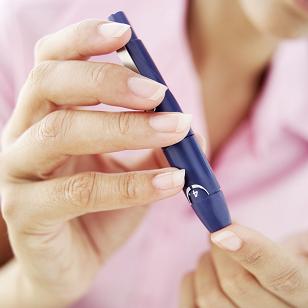
diabetesType 2 Diabetes is one of the most prevalent serious diseases in the United States. Diabetes is responsible for a range of complications, such as blindness, amputation, kidney failure, stroke, and heart disease. The American Diabetes Association estimated that diabetes contributed to over 230,000 deaths in 2007.

Type 2 Diabetes is a chronic metabolic disease caused by insulin resistance. When we digest food, glucose (sugar) enters the bloodstream to be carried to the cells of the body. The pancreas secretes an appropriate level of insulin to help the glucose enter the cells, much like a key fits a lock. High levels of glucose require the pancreas to secrete high levels of insulin.

If there are prolonged levels of high glucose, sometimes the cells become resistant to insulin and the glucose cannot leave the bloodstream, which in turn prompts the pancreas to secrete even more insulin. These elevated blood glucose levels are the cause of Type 2 diabetes.

While being overweight or having a family history of diabetes may raise your risk of developing diabetes, it is preventable with knowledge and just a few lifestyle changes.

Check your glucose and your family history.

Insulin resistance can progress to full-blown diabetes with no warning, so if you’re over age 45, it’s a good idea to go to the doctor at least once a year and have your glucose levels checked. If you have a family history of diabetes, glucose checks should start no later than age 40.

Watch your diet.

Healthy eating is one of the best ways to ward off insulin resistance and diabetes. Eat more fresh fruits and vegetables, and minimize your intake of junk and snack foods. Avoid high-fructose corn syrup and partially hydrogenated oils, and minimize sugary drinks and soda. Choose whole grains such as oats, barley, and wild rice, and buy leaner meat, such as turkey, bison, and fish.

Become a label reader and study the ingredients in the foods you eat. The more real food you can eat, the better. Buy less processed food, and if the label shows ingredients you can’t pronounce, reconsider buying that food.

Do some kind of physical activity every day.

Exercise helps keep your blood glucose low, reduces your risk for diabetes, and keeps your heart and lungs healthy. You don’t have to run 20 miles a day to reap the benefits of daily physical activity, but you do need to move. The key is to do something you enjoy every day, whether it’s playing tennis, walking the dog, or dancing.

Maintain a healthy weight.

Being overweight increases your Type 2 diabetes risk, as well as the risks of heart disease and stroke. Even a small weight loss of 10 or 15 pounds can reduce your risk. Follow the dietary and exercise recommendations above, and set realistic goals for weight loss. Every small step takes you closer to your goal, so keep going even if you get frustrated. Find a support system to help you stay on track.

Stop smoking.

Smoking raises your blood glucose levels and contributes to insulin resistance. This is why people who smoke often aren’t hungry. To stop smoking, call your state’s tobacco quit line. In addition to valuable coaching help to quit, many states offer free or low-cost aids such as nicotine patches and gum. Keep in mind that once you stop smoking, not only does your risk for diabetes go down, but your risks of heart disease, stroke, and cancer are also reduced.

Did you find this information valuable and want to receive more health and wellness updates? Subscribe to our blog.

Don’t Live in Charleston But Still Want a State-of-the-Art Breast Reconstruction?

Chris MurakamiThe question below is answered by Chris Murakami, RN, CNOR, and Clinical Supervisor (seen to the left) of The Center for Natural Breast Reconstruction.

I live in Florida and would like to come to Charleston to have a bilateral S-GAP by Dr. Kline and Dr. Craigie. Do I need to come in for a consultation first and then come back at a later date to have the surgery or can it be done all in one trip? Please tell me how this is typically handled.

Great question! There are many ways to approach this situation and do our best to try to minimize the number of trips you need to make to Charleston. You are more than welcome to come and have a face to face consult with your surgeon and then make a second trip for surgery. For some women, that is the scenario they prefer. However, since many of our patients do have to travel to access the state-of-the-art procedures offered by our expert surgeons, we’re prepared to perform your first consultation by telephone.

During this call, we talk about the procedure you are interested in and ask some screening questions to ensure you have no medical contraindication. Once this has been established, we’ll set up a time for you to talk with the surgeon of your choice and you’ll both decide which donor site might be the best to use for your breast reconstruction. Your next step would be to notify us when you would like to proceed with the surgical procedure.

When we’ve settled on a surgical date, we order as much of your pre-operative testing in your hometown as we can. The results of this testing is sent to our office two weeks prior to your surgery day. These tests include blood work, urinalysis, EKG, and Chest X-ray. Go ahead and schedule a full physical with your family doctor or internal medicine doctor and obtain a statement of medical clearance for your estimated length of surgical time.

While all of this medical work is happening, our administrative staff has been diligently working behind the scenes, checking insurance benefits and completing all of the pre-certification processes your insurance company may require.

We’d like you to arrive in Charleston a day or two prior to your surgery date. If a breast surgeon is needed to perform a mastectomy we ask you to come two days prior. You would meet with him / her on the day you arrive, in case any testing needs to be ordered by their office.

The day prior to your surgery date is usually the busiest for you, but we try to coordinate all of your pre-operative activities to be as convenient as possible. You would have various appointments scheduled for you, including a pre-operative interview at the surgical hospital, an MRA to map the blood vessels we plan to use for surgery, and a pre-operative marking appointment and consultation with our surgeon that day before surgery.

Once the surgery day arrives, you would report to the hospital at 6:00 am. Our staff and physicians will obtain contact information for your caregivers and keep them updated on the progress of your surgery throughout your time in the operating room. Once the operation has completed and you have recovered from anesthesia, you would be transferred to the women’s services floor of the hospital for the remainder of your four-day hospitalization. Each room is private and has a twin bed in case you have someone who plans to stay with you throughout your hospital stay.

When you have been discharged from the hospital, we ask that you stay in the Charleston area for a few more days, just to assure all is well and we are easily accessible to you. We ask you to come to your first post operative appointment two days after your discharge and again on the day prior to your planned return home. You may still have donor site drains that need to be removed when you return home and we are happy to help you find a medical professional to do that for you if you don’t have a physician in your hometown who is willing to help.

Once you are home, we’re available to you 24/7 to discuss any concerns you may have, but generally, at this point, you have a viable reconstruction that should heal uneventfully. You can look forward to another visit to Charleston only when or if you require a second stage of surgery after a three-month healing period. This procedure would typically be an outpatient procedure and you might just schedule yourself some “tourist time” to enjoy our beautiful city.

—Chris Murakami, RN, CNOR, Clinical Supervisor

Know someone who would benefit from reading this post? Share it with them!


Educate Yourself on Breast and Ovarian Cancer at the Annual Joining FORCEs Conference

Image to the left taken from FacingOurRisk.org.

For anyone concerned about hereditary breast or ovarian cancer, FORCE is hosting their annual Joining FORCEs Conference with Moffitt Cancer Center to educate individuals on everything from mastectomy options to genetic basics, and reconstruction options to menopause. This three-day international conference will provide attendees with valuable information and tips for cancer prevention and detection.

Attendees will also learn vital skills such as how to cope with cancer, how to make risk-management decisions, how to discuss cancer with family members, and so much more.

The event takes place from June 23 – 25 at the Hyatt Regency Grand Cypress in Orlando, Florida. And we are delighted to inform you that we’ll be attending the event and featured as one of the exhibitors. In addition to exhibiting, Dr. James Craigie will be on one of the reconstruction Q & A panels, and Dr. Richard Kline will be hosting a table at the Networking Breakfast. We hope to see you there!

See below for an amazing video from FORCE:

Click here to register for this amazing event!

When and Why to Choose Organic Foods

organic foodOrganic foods, generally speaking, are grown with fewer chemicals or hormone treatments than supermarket foods. Typical chemicals and additives include growth hormone, antibiotics, pesticides, and herbicides.

Obviously, we would all like to eat wholesome, naturally-grown foods for every meal, but they can be hard to find. Livestock animals eat unnatural diets to make them heavier and ship them to market sooner, and they’re injected with hormones and antibiotics. Fruits, vegetables, and grains are genetically modified to grow faster and larger, and they’re sprayed to keep pests and fungus away.

Organic foods can be significantly more expensive than supermarket foods, and you may wish to vary your eating with the seasons, as organic produce in season is less expensive. If you have a farmer’s market in your area, you’ll find very fresh, organic produce for a reasonable price. Local sources for meat and dairy products are often organic as well, but may not be available in some areas.

You might be asking yourself whether you have to buy everything organic. Certain foods are treated with more chemicals than others, and these are the foods that you should consider buying organic. For these foods, washing, peeling, and cooking do not significantly reduce chemical residues, so these foods are called the dirty dozen or the crucial dozen:

  • Peppers
  • Celery
  • Grapes
  • Fruits with pits, such as apricots, peaches, and nectarines
  • Farm-raised meats such as beef, chicken and pork
  • Potatoes
  • Dairy products
  • Coffee
  • Berries
  • Apples and pears
  • Tomatoes and carrots
  • Spinach and salad greens such as lettuce and kale

No matter the source, be sure to wash all produce with a fruit and vegetable wash, which can be found at most supermarkets and health food stores.

For foods with low pesticide residue levels, buying organic isn’t as vital. These dozen foods lose the residue with thorough washing, peeling, or cooking:

  • Onions
  • Bananas
  • Kiwi
  • Corn
  • Mango
  • Melon
  • Grapefruit
  • Pineapple
  • Asparagus
  • Broccoli
  • Cabbage
  • Avocados

While organic is ideal, it’s not always necessary to spend the extra money. Which foods do you buy organic, or not?

What is an MRA and What is it For?

Dr. Richard M. Kline, Jr.

The below question is answered by Richard M. Kline Jr., M.D., of The Center for Natural Breast Reconstruction.

Why am I scheduled to have a MRA prior to my DIEP surgery? What is it and what is it for?

Preoperative imaging of perforating vessels by CTA (computerized tomographic angiogram) or MRA (magnetic resonance angiogram) is probably the most significant development in perforator flap breast reconstruction in the last 5 – 10 years.

Some of the potential advantages of preoperative imaging (with CTA or MRA) include:

1. Shortened operating time, due to knowing in advance where the desired perforating vessels are located.

2. Decreased damage to the rectus muscle, due to being able to select perforating vessels with the shortest intramuscular course. This is particularly important because it can decrease the chance of a major motor nerve to the muscle being divided. A few fortunate patients have an unusual anatomic situation in which a large perforating vessel actually goes between the two muscles, which can allow harvest with no damage to the muscle at all; this is instantly recognizable on preoperative imaging.

3. Decreased fat necrosis, due to being able to select the largest perforator.

4. Advanced recognition of those few cases when the SIEA, not the DIEP, might actually be the preferred blood supply for the flap (the same tissue would still be used)

5. Advanced recognition of those very rare instances where the deep inferior epigastric system has been divided form past surgery, or where all usable perforating vessels have been damaged by previous abdominal liposuction.

CTA has the advantage of being most readily available, but also exposes the patient to radiation. MRA does not expose the patient to radiation, but we have found that only a very strong MRI (3 tesla, or 3T) can give us images with enough detail to be really useful for preoperative planning. MRA still requires the administration of intravenous contrast agents, which can rarely have undesirable side effects. On the horizon is MRA without the need for any injection—it’s not quite here yet, but its coming.

We are very fortunate to work with a very skilled group of radiologists with a 3T MRI who are very interested in and skilled at obtaining images for our breast flap patients. We obtain preoperative imaging on all patients preoperatively, whether they are scheduled for a DIEP or GAP flap. If a patient has a contraindication for an MRI / MRA (ferrous metal implanted in the body is the most common), then we obtain a CTA.

—Dr. Richard M. Kline, Jr.

If you loved this post, then why not Like us on Facebook?


Healthy Brunch Ideas

healthy brunch ideasBrunch is the perfect time to eat healthy. From fruit to whole-grain muffins and Canadian bacon to turkey sausage, an endless variety of food works for brunch. We’ve come up with a dozen delicious options to help you stay on your healthy eating plan.

Multi-grain pancakes and waffles contain anything you want them to: oat, buckwheat, whole wheat, cornmeal, flax seed, or spelt. Use whole grains as much as possible, and don’t be afraid to add blueberries to those pancakes!

Whole-grain muffins give you the texture and taste you want in a healthier package. Use applesauce or mashed bananas to replace the fat during cooking, and use all-fruit spreads or nut butters on top.

Turkey bacon and sausage add low-fat protein and delicious flavor to quiches, casseroles, and scrambles.

Smoothies are the perfect way to blend your favorite fruits with protein powder, juice, yogurt, or even ice cream. Try several recipes, as there are hundreds of ways to make a tasty smoothie.

Tofu can replace meat in almost any dish. It can also be marinated and barbecued or used in place of cheese.

Canadian bacon has incredible flavor and one-third the calories of regular bacon. It’s also much lower in fat and sodium.

Vegetables of any kind add nutrition, color, and flavor to egg dishes, salads, and side items. Omelets and quiches are an ideal place for a variety of veggies. Try to eat as many different colors as possible to ensure you’re getting the full spectrum of antioxidants and nutrients.

Fruit is a brunch favorite and is used for everything from fresh-squeezed juice to tarts. Like vegetables, be sure to eat a variety to take advantage of the excellent nutrition fruit offers.

Nut and fruit butters and all-fruit spreads are healthy substitutes for butter and high-sugar jellies and jams. Choose from all-natural peanut butter, almond butter, cashew butter, apple butter, and spreadable fruit. All are available in stores, but read labels carefully: nut butters should have only one ingredient: the nut itself. Ingredients on the fruit butters and spreadable fruit will vary, but there should be only a few ingredients with no added syrup, sugar, or oils.

Quiche is a delicious, healthy main course, perfect for any type of food you want to put in it. Eggs, vegetables, meat, cheese, and tofu are common ingredients, and quiche invites experimentation with flavors, ingredients, and spices. A casserole is also a good option for a quick and easy brunch dish.

Wild or game meat adds unique flavor and healthy protein to any dish. Game is naturally low in fat, and does not receive antibiotics or hormones. Game meat includes venison, elk, bison, moose, alligator, and wild boar.

Real eggs are one of the healthiest foods you can eat and full of protein, vitamins, and minerals. Eggs are versatile and can be cooked a number of different ways: fried, scrambled, sunny side up, hard- and soft boiled, and poached.

Keep in mind that how you cook and serve is just as important as what you cook and serve. Stay away from partially hydrogenated oils, such as margarine. Coconut oil and olive oil are good choices for both cooking and serving. Real butter, low-sugar syrup, and cream cheese in moderation add a delightful taste to the table. And of course, stay away from high-fructose corn syrup.

Like us on Facebook for more healthy eating tips.