Archives for May 2013

Join Us for We Know Women!

We Know Women Event garden partyFor the fourth year, East Cooper Medical Center is hosting an amazing event for women of all ages, the “We Know Women Event: Garden Party” on Thursday, May 9, starting at 5:30 p.m.

This fun event features live music, health demonstrations and screenings, local vendors with products women love, and wellness discussions with doctors including a question-and-answer panel. Wine tasting and delicious food will be provided, and Babies-R-Us will host a car seat installation demonstration.

Vendors include Grill Charms, Relax the Back, Abide-While, Silpada Designs, The Foot Store, HandPicked, Jonathan Green Prints, Miche Bag, No Wheat Treats, and Whaley’s Photos. The vendors will offer discounts and a variety of giveaways.

The physicians in attendance include Dr. James Craigie and Dr. Richard Kline from The Center for Natural Breast Reconstruction, Dr. Terrence O’Brien, Dr. Ross Rames, and Dr. Lynn Crymes. Topics include breast cancer, natural breast reconstruction, heart disease, cosmetic surgery, hormone therapy for women, and bladder concerns.


The “We Know Women Event” is free, but please register by calling 843-884-7031 or by visiting http://www.eastcoopermedctr.com/en-us/cwsapps/findanevent.aspx.

East Cooper Medical Center is located at 2000 Hospital Drive in Mount Pleasant. 
 

Java, Java: The 5 Unexpected Health Benefits of Coffee

For years, we’ve heard physicians warn about the negative health effects of drinking coffee—making every morning cup of joe feel a little like an act of defiance.

You may have heard that coffee will raise your blood pressure, lead to heart disease, give you an ulcer, or make you diabetic. But as more research about coffee surfaces, the more it seems coffee might not be bad for you at all.

In fact, drinking coffee may indeed have some health benefits. So pour yourself a little java and enjoy—this latest research gives you the go-ahead:

Increase Your Life Span. Drink up—researchers from the National Institutes of Health conducted a study that found people who drank three or more cups of coffee a day had a 10 percent chance of living longer than their coffee-abstaining peers. From 1995 to 2008, researchers monitored 400,000 people from ages 50 to 71 years old. At the beginning of the trial, all participants were relatively healthy, with none reporting a history of heart disease, stroke, or cancer. Of that number, 50,000 passed away during the course of the trial—and those who drank coffee had a 10 percent longer life span. Researchers deduced coffee must have protected against various forms of death with the exception of cancer.

Reduce the Risk of Alzheimer’s Disease. Rejoice! The University of South Florida found that of the coffee drinkers followed over the course of four years, not one developed Alzheimer’s disease. The participants in the study were all over 65 years old and were already suffering from slight memory impairment. For those studied who did develop dementia, their blood caffeine levels were 51 percent lower than those whose cognitive impairment remained level.

Decrease the Likelihood of Skin Cancer. Harvard professor Jiali Han conducted a study with her colleagues that found that coffee decreases the risk of developing the most common form of skin cancer, basal cell carcinoma. In fact, the more cups of coffee that you drink, the greater the benefit seemed to be. Han plans to further study whether or not the link is correlative or causative.

Safeguard Against Heart Failure.Elizabeth Mostofskyfrom Beth Israel Deaconness Medical Center and her colleagues found that coffee is good for your heart—until the second American-sized mug. Before that point, however, coffee drinkers had an 11 percent decreased risk of suffering from heart failure.

Lower the Risk of Stroke. Investigators at Cleveland Clinic’s Wellness Institute and Harvard University found that drinking coffee—even decaffeinated coffee—can decrease the risk of strokes, because coffee is filled with beneficial antioxidants. When compared against soda, which elevated the risk of strokes, coffee was associated with a 10 percent decrease in stroke risk.


Celebrate the health benefits of coffee by telling us about the best cup of coffee you’ve had!

The Final Touch: Nipple Tattoo and What You Can Expect

Ask the Doctor Bonus Edition

Our discussion boards have been abuzz recently about the nipple micro pigmentation (tattoo) procedure. Kimberly Kay, PA-C of the Center for Natural Breast Reconstruction provides this comprehensive overview and answers your questions.

The ultimate goal of the reconstructive surgeon is not only to restore the three dimensional breast mound but also to recreate the nipple areola complex.  Some women choose not to undergo nipple/areola reconstruction, it’s a personal choice.

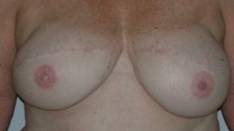
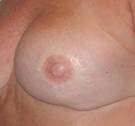
Micro pigmentation (tattoo) is used to re-create the color of the areola and nipple and is often the final step in the breast reconstruction process.   A variety of colors and color combinations are used to create a dimensional or projected look.  Here is a basic idea of what to expect:

1. The entire nipple/areola is shaded with the color you choose.

2. Then the original color is darkened with a slightly darker shade and a special needle is used to create the bumpy “Montgomery Gland” look of a natural breast. 

3. Finally, a little darker shade is used to give the nipple a projected look.

It sounds like a pretty straightforward procedure, right?  Given that the shades you can choose from are numerous, the process itself takes may require some needle changes & stroke techniques to be precise; we like for you to plan to spend at least an hour or two with us on your tattoo procedure day.

Nipple Tattoo Procedure

Be aware, the process is not always painless, so it’s beneficial that the procedure be done in a medical office setting if you think you may require a clinician to administer a local anesthetic prior to the procedure.   The addition of the local anesthetic Lidocaine with Epinephrine has the benefit of reducing bleeding at the tattoo site thus keeping more of the pigment from leaving the tissue.   And the procedure is not without risk.  You should be provided with an informed consent document prior to undertaking this procedure that outlines contraindications and possible complications (i.e. – allergic reaction, contact dermatitis, etc).

Nipple Tattoo 2

Our nurses and PA’s at The Center for Natural Breast Reconstruction receive specialized training through the PMT/Permark Training School Midwest in the Art of Nipple Areola Micro pigmentation.  Their instructor, Kathy Jones, is the Director of the Permark Training School and a board certified plastic surgical nurse with close to 20 years experience in the plastic surgery field.   Since, 1994 she has taught micro pigmentation to hundreds of practitioners in the United States and abroad and is a popular micro pigmentation lecturer.

The tattooing procedure is billed to your insurance company as a part of the reconstruction process since it is performed in our medical facility under the direction of our surgeons.  Touch up procedures may be required as some tattoos tend to fade with time, more so on scarred tissue.  If you have additional questions you’d like answered about the “nipple tattoo” process….please send them in.

Be sure to check out our gallery for more photos!

Have a question about breast reconstruction you’d like answered from our surgical team? Just ask us!

What Form Of Reconstruction Do You Prefer? What Type of Implants Are Best?

Ask the DoctorThis week, Dr. Richard M. Kline, Jr. and Dr. James Craigie of The Center for Natural Breast Reconstruction answers your questions.

Q: What form of reconstruction do you prefer and which requires the least amount of procedures?

A: Our practice specializes in breast reconstruction using your own tissue and without sacrificing important muscles and without implants. Our preferred approach is to give women the option that works best for them! This takes into consideration each person’s situation and body type.

We prefer to transfer skin and fatty tissue from the “donor” area a person happens to have extra tissue. Each person’s body has its own form and shape therefore we prefer to make our recommendations based on where each person’s body has extra tissue to work with. Implant breast reconstruction is usually a shorter recovery because there is no donor site that has to heal. The results with implants are not as natural as using your own tissue and people with implant reconstructions generally have more procedures as time goes by because of changes due to the implants etc..

All types of breast reconstruction may involve multiple steps, usually 2 stages. Sometimes minor adjustments may follow depending on many different variables. I hope this answers your question.

James Craigie, MD

The Center for Natural Breast Reconstruction

Q: Can implants be used for reconstruction for breast cancer patients? If yes, is there a preference among medical practitioners as to whether the implant should be saline or silicone?

A: Implants not only CAN be used, they ARE used the great majority of the time (as opposed to reconstruction with the patient’s own tissue). Natural breast reconstruction with the patient’s own tissue is a longer, more involved procedure than implant reconstruction, with more serious risks, and is not the best choice for everyone.

Patients who have been radiated as part of their breast cancer treatment tolerate implants poorly as a rule, and for them, natural breast reconstruction may be their only hope for restoring symmetry. On the other hand, many patients who could be reconstructed with implants simply prefer to use their own tissue. Breasts reconstructed with your own tissue are warmer, softer, move more naturally, and are generally much closer to the “real thing” than implants. We have made a conscious decision to limit our practice to this type of reconstruction so that we can optimally serve the women who want or need it. However, implants seem to work quite well for the majority of breast cancer patients.

Richard M. Kline, Jr., MD

The Center for Natural Breast Reconstruction


Have a question about breast reconstruction you’d like answered from our surgical team? Just ask us!

Lowcountry Cancer Survivors Celebrate at Dragon Boat Festival

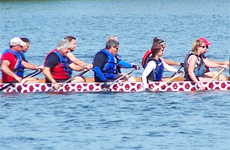
Dragon Boat CharlestonDid you know that the Chinese sport of dragon boat paddling is alive and well right here in Charleston?

Founded in 2003, Dragon Boat Charleston (DBC) aids mental and physical wellness for cancer survivors through dragon boating. According to DBC’s website, the group’s goals are . . .

  • To encourage healthy healing and healthy lifestyles through goal oriented exercise, good nutrition, education, and fellowship.
  • To support the beneficial effects of physical activity in survival through research.
  • To provide a positive model for our community demonstrating courage, determination, and team cooperation.
  • To advance the sport of dragon boating.

For many of its participants, dragon boat paddling is a celebration of life. They love becoming one with the river, using the paddles to break the surface, and experiencing the cool evening air or the sun’s empowering warmth. Paddling any time of day is energizing and helps them celebrate life as cancer survivors. DBC also helps them promote their own health through other programs, such as yoga and nutrition education.

Research shows that physical activity and an active lifestyle may improve breast cancer survival rates as well as help survivors heal emotionally from their ordeal. Dragon boat paddling is unusual, pleasantly strenuous, and a lot of fun!

DBC participates in several races each year, and its members enjoy the camaraderie of other breast cancer survivors and friends year-round. If you walk along the Ashley River, you’re likely to see DBC members doing what they enjoy—paddling hard to prepare for their next race, which is the 6th Annual Charleston Dragon Boat Festival on May 4.

Dragon Boat Charleston

The Festival will be held on the shores of the Ashley River at Brittlebank Park, off Lockwood Drive. You’ll enjoy dragon boating races along with a cancer survivor celebration that includes plenty of food, costumes, and tents. The first heat begins at 8 a.m. While registration is now closed, there is a wait list you can add yourself to by emailing melabriola@gmail.com.

DBC is attempting to raise $100,000 this year, and they are almost halfway there. The funds pay for cancer survivors’ participation in races around the country, year-round paddling several times a week, and the Carolina Celebration Cup.

The sponsors of Dragon Boat Charleston include The Center for Natural Breast Reconstruction, MUSC, Pure Insurance, Roper St. Francis Cancer Center, Piggly Wiggly, and Trident Health.

To find out more, please visit http://www.dragonboatcharleston.org or www.charlestondragonboatfestival.com.


Have you ever paddled on a dragon boat, and what did you think of it?