What Form Of Reconstruction Do You Prefer? What Type of Implants Are Best?

Ask the DoctorThis week, Dr. Richard M. Kline, Jr. and Dr. James Craigie of The Center for Natural Breast Reconstruction answers your questions.

Q: What form of reconstruction do you prefer and which requires the least amount of procedures?

A: Our practice specializes in breast reconstruction using your own tissue and without sacrificing important muscles and without implants. Our preferred approach is to give women the option that works best for them! This takes into consideration each person’s situation and body type.

We prefer to transfer skin and fatty tissue from the “donor” area a person happens to have extra tissue. Each person’s body has its own form and shape therefore we prefer to make our recommendations based on where each person’s body has extra tissue to work with. Implant breast reconstruction is usually a shorter recovery because there is no donor site that has to heal. The results with implants are not as natural as using your own tissue and people with implant reconstructions generally have more procedures as time goes by because of changes due to the implants etc..

All types of breast reconstruction may involve multiple steps, usually 2 stages. Sometimes minor adjustments may follow depending on many different variables. I hope this answers your question.

James Craigie, MD

The Center for Natural Breast Reconstruction

Q: Can implants be used for reconstruction for breast cancer patients? If yes, is there a preference among medical practitioners as to whether the implant should be saline or silicone?

A: Implants not only CAN be used, they ARE used the great majority of the time (as opposed to reconstruction with the patient’s own tissue). Natural breast reconstruction with the patient’s own tissue is a longer, more involved procedure than implant reconstruction, with more serious risks, and is not the best choice for everyone.

Patients who have been radiated as part of their breast cancer treatment tolerate implants poorly as a rule, and for them, natural breast reconstruction may be their only hope for restoring symmetry. On the other hand, many patients who could be reconstructed with implants simply prefer to use their own tissue. Breasts reconstructed with your own tissue are warmer, softer, move more naturally, and are generally much closer to the “real thing” than implants. We have made a conscious decision to limit our practice to this type of reconstruction so that we can optimally serve the women who want or need it. However, implants seem to work quite well for the majority of breast cancer patients.

Richard M. Kline, Jr., MD

The Center for Natural Breast Reconstruction


Have a question about breast reconstruction you’d like answered from our surgical team? Just ask us!

Lowcountry Cancer Survivors Celebrate at Dragon Boat Festival

Dragon Boat CharlestonDid you know that the Chinese sport of dragon boat paddling is alive and well right here in Charleston?

Founded in 2003, Dragon Boat Charleston (DBC) aids mental and physical wellness for cancer survivors through dragon boating. According to DBC’s website, the group’s goals are . . .

  • To encourage healthy healing and healthy lifestyles through goal oriented exercise, good nutrition, education, and fellowship.
  • To support the beneficial effects of physical activity in survival through research.
  • To provide a positive model for our community demonstrating courage, determination, and team cooperation.
  • To advance the sport of dragon boating.

For many of its participants, dragon boat paddling is a celebration of life. They love becoming one with the river, using the paddles to break the surface, and experiencing the cool evening air or the sun’s empowering warmth. Paddling any time of day is energizing and helps them celebrate life as cancer survivors. DBC also helps them promote their own health through other programs, such as yoga and nutrition education.

Research shows that physical activity and an active lifestyle may improve breast cancer survival rates as well as help survivors heal emotionally from their ordeal. Dragon boat paddling is unusual, pleasantly strenuous, and a lot of fun!

DBC participates in several races each year, and its members enjoy the camaraderie of other breast cancer survivors and friends year-round. If you walk along the Ashley River, you’re likely to see DBC members doing what they enjoy—paddling hard to prepare for their next race, which is the 6th Annual Charleston Dragon Boat Festival on May 4.

Dragon Boat Charleston

The Festival will be held on the shores of the Ashley River at Brittlebank Park, off Lockwood Drive. You’ll enjoy dragon boating races along with a cancer survivor celebration that includes plenty of food, costumes, and tents. The first heat begins at 8 a.m. While registration is now closed, there is a wait list you can add yourself to by emailing melabriola@gmail.com.

DBC is attempting to raise $100,000 this year, and they are almost halfway there. The funds pay for cancer survivors’ participation in races around the country, year-round paddling several times a week, and the Carolina Celebration Cup.

The sponsors of Dragon Boat Charleston include The Center for Natural Breast Reconstruction, MUSC, Pure Insurance, Roper St. Francis Cancer Center, Piggly Wiggly, and Trident Health.

To find out more, please visit http://www.dragonboatcharleston.org or www.charlestondragonboatfestival.com.


Have you ever paddled on a dragon boat, and what did you think of it?

Say Cheese: Tips for Being Extremely Photogenic

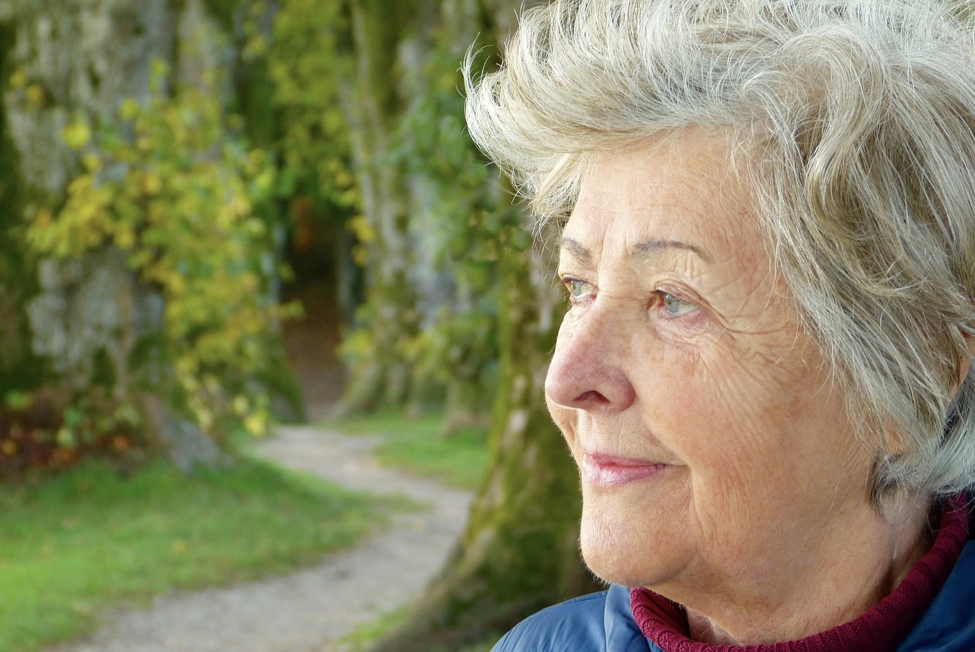
 Tips for Being PhotogenicIn the digital age, pictures are more than a thousand words. On every social media platform, your profile picture is a representation of who you are—so why not make it count?

Follow these 10 styling tips, and you’ll be camera ready in every situation.

Showcase your features. Whether it’s your eyes or your smile, make sure to draw attention to your greatest asset. If you straight, white teeth, give the camera a wide grin. If you have full lips, let the world know with a bright color. If you draw attention to your best feature, you’ll feel and look confident, which makes for a better shot.

Look directly at the camera. Most of us look better—and friendlier—when we’re making eye contact with the lens. That doesn’t mean you can’t tilt your head to highlight your best angle, though.

Improve your posture.When someone is snapping your picture, find a pose that is comfortable, but not slouchy or rigid. The best pictures are always when subjects look natural.

Smile! When the photographer is snapping away, try to think of something that makes you laugh, and give the world a stunning smile.

Hats off. Hats and glasses do look stylish in person, but in photographs, they cast shadows and glares over your most expressive feature—your eyes.

Opt for a (mostly) natural face. Portraits should highlight you, not your makeup. Focus on using just enough eyeliner and mascara to highlight your eyes, which are always the most compelling part of a portrait.

Tame the mane.As a rule of thumb, bigger hair is better in photos because it frames your face. So fluff your locks with your fingers before the shutter clicks.


Got a few portrait tips up your sleeve? Share in the comments below!

Is It Normal to Experience Pain Years After a TRAM Flap Surgery?

Ask the DoctorThis week, Dr. Richard M. Kline, Jr. of The Center for Natural Breast Reconstruction answers your questions.

Q: I had tram flap surgery 6 years ago for one breast in Atlanta at Emory with a good plastic surgeon. I am experiencing horrible pain under my breast and around my upper rib cage where it has been mostly numb for all these years. It feels like 1000 bees are stinging me all the time. It also feels like something has pulled loose. There’s a bruised feeling as well. I wonder if the nerves are just now growing back which is causing the pain? My breast is very heavy. Is it possible to “re-do” this breast to relieve the constant pain? Or is this “normal” after six years? I am miserable.


A:  I’m sorry you’re having so much trouble.

It is certainly possible that something could have “pulled loose,” although, as you might suspect, it would be a little unusual after all this time. Also, while there is no theoretical time limit on how long sensory nerves can take to grow back, it would also be unusual to have that process stretch out this long.

Probably the best idea is to go back and see your original plastic surgeon. She or he may wish to obtain a CT scan, MRI, or some other type of imaging study, depending on your physical findings. If nothing unusual is detected, she may possibly send you to a pain therapist for treatment.

Richard M. Kline, Jr., MD

The Center for Natural Breast Reconstruction


Have a question about breast reconstruction you’d like answered from our surgical team? Just ask us!

Pictures of Promise: An Interview with Photographer Susan Lloyd

Thousands run for Susan G. Komen Lowcountry Affiliate's 2012 Race for the Cure

Today, the team at The Center for Natural Breast Reconstruction is honored to share with you an In Her Words interview with professional photographer Susan Lloyd. Susan works closely with Susan G. Komen Lowcountry as their events photographer.

 Read below for our interview with Susan.

1. Tell us your story. How were you introduced to the breast cancer community?  

I’ve had an interest in photography for most of my life, but never took it seriously until about twelve years ago.  I shot professionally for a time, took another job for a few years, then came back to photography.  I just couldn’t put the camera down!  I started shooting professionally again just a few years ago and have an entirely new appreciation for the craft of photography.  In all honesty, I can’t think of another thing I would want to pursue, career wise.  Oddly enough, though, I studied music education in college, and the first time I came face to face with breast cancer was during that time, over twenty years ago.   A hall mate who became a very close friend of mine our freshman year started college the same year her mother was diagnosed with breast cancer.  For our whole college career her mom battled the disease, and it had a huge impact on my friend.  Just a few years after graduation, her mother passed.  I remember thinking of all the things she was going to miss- her daughter’s wedding, grandchildren, retirement- and how it seemed she was robbed of so much by something that seemed so senseless.  In recent years, I’ve had several friends and one family member diagnosed with breast cancer.

Family Circle Tennis Center at dawn- Race for the Cure 2012

These women are all still living, and living proof that breast cancer awareness, advances in early detection, and more sophisticated treatments ARE making a difference.   But it wasn’t until this past year when I got involved with Susan G. Komen Lowcountry that I really became aware of how far reaching the breast cancer community is.  Patients, family members, concerned citizens- so many people who have been impacted by breast cancer, have come together in support of each other and to continue to move forward towards a cure for all women who are diagnosed.


2. It must be eye-opening and humbling to be a photographer for Komen. How did this happen for you?  
My work was seen online by Jordan Freeman, an employee of Trio Solutions the marketing group that works with Komen Lowcountry.  Jordan had an interest in a band I had done some work for and followed the link on their photos back to my Facebook page.  From there she became a fan of my page, continued to see the work I posted, and when the time came for Komen Lowcountry to find a new photographer to cover their events, Jordan reached out to me.  I was hugely honored and really didn’t hesitate to contribute my time.  One of the goals I had when I started to shoot professionally was to make sure that I was using my skills to help build up my community.  Working with Komen gave me the perfect opportunity to do that.
Susan Lloyd Photography specializes in portraits for women and teen girls- this is one example of a Sono Bella Portrait.
3. Why is the opportunity to photograph for Komen so important to you? Do you have any photography stories to share?   
First of all, I truly believe that to try an exist outside of community is a recipe for disaster- if you live only for yourself and invest only in yourself, you’ve missed a big part of what it means to be alive.  So for me personally, being  involved in something that is bigger than myself, that’s hugely important.  Specifically, photographing for Komen means that people can see there is hope, there are people working very hard every day to make a difference, and there are women who can say ” I made it through”.  There are so many facets of the work Komen does, it would be impossible to capture it all in photos or words.  However, people need to see- they need to know- that getting involved with Komen does make a difference.  Things are changing.  More women are being diagnosed, receiving treatment, and surviving because people are getting involved.
Photographs many times will impact us in ways that words can’t, and I’m happy that I can produce something that might possibly move someone towards action.
 The most exciting thing that I got to witness last year was the start of the Race for the Cure from about two stories off the ground!  Seeing thousands and thousands of people with smiles on their faces, optimistic and solidified in their support of Komen, it was overwhelming and truly amazing.
4. What is the one thing you want all women to know about breast cancer? 
I think the most important thing to know, outside of early detection, is that a diagnosis does not have to bring isolation with it. In fact, because of the work that Komen is doing, a diagnosis can bring you into a new community.  You will not be alone.  There are health care professionals, volunteers, survivors, a whole host of people who will walk with you and support you.   And there is so much compassion in that community- true compassion that says “We are here.  You can fight this fight.   We will fight it with you.”

5. What’s next for you in the world of Komen and photography? Upcoming events? 
I recently photographed the Grants Awards Reception which is such an awesome thing to witness.  The fundraising efforts of Komen Lowcountry throughout the year translate into financial blessing for facilities and organizations that work tirelessly to reach so many underserved women in our area.  When the grant checks are awarded, a recipient representative speaks about what it means to receive that kind of financial support.  That’s when you really understand that Komen is reaching deep into the lives of women throughout the lowcountry, many of them who are uninsured and underserved.

7 Smart Ways to Use Vinegar

Vinegar uses  You may already love vinegar as a condiment, but you’re about to fall in love all over again—and for 7 different reasons.

For starters, vinegar is cheap, widely available, and versatile—the ingredients for a handy household item. It is non-toxic and lasts for a very long time without losing strength, and still it does not pollute land, air, or water. Those of us with children or pets especially appreciate that it’s much safer to have under your sink than bleach, ammonia, or other toxic cleaning products.

Take a look at how vinegar can create a happier, healthier, cleaner environment for you and your family:

1. Clean the windows. Instead of spending money on window cleaning chemicals—especially ones that include potentially toxic chemicals—make your own! Mix 2 tablespoons of white vinegar with a gallon of water, and dispense into a used spray bottle. Squirt on, then scrub with newspaper, not paper towels, which cause streaking.

2. Freshen the laundry. Got grass stains? Make a mixture of one-third cup white vinegar and two-thirds cup water. Apply the solution to the stain and blot with a clean cloth. Repeat this process until you’ve removed as much green as possible, and then launder as usual. Toss in a capful of white vinegar for the rest of your load, and your colors will come out bolder and your whites whiter.

3. Remove carpet stains. Spots in carpets often remove with a simple dilution of one-part vinegar, one-sixteenth part lemon juice, and eight parts distilled water.

4. Rinse the produce. Vinegar can help remove bacteria and pesticide residues from fruits and veggies. Mix three parts water with one part white vinegar, and dispense in a spray bottle. Then rinse with water, and enjoy your bacteria-free produce!

5. Bust sticky spots. Having trouble getting that annoying sticky label residue off a product? Vinegar can be used as a solvent to dissolve many common adhesives, and it’s good at cutting grease.

6. Fight hiccups and cramps. If you often get foot or leg cramps in the middle of the night, you may want to try this remedy: mix 1 tablespoon of apple cider vinegar, 1 teaspoon of honey, and a cup of hot water. Drink before bed for a cramp-free night!

Some have also said they were able to cure pesky hiccups instantly by swallowing a teaspoon of vinegar.

7. Deter territorial cats. At The Center for Natural Breast Reconstruction, we love all animals! But sometimes you don’t want cats doing their business in your flowerbed. A simple solution is to pour vinegar around the edges of the area you want to protect every few months.


What are your favorite uses for vinegar?

I’m Having a Strange Skin Sensation Post-LD Flap Reconstruction. Will This Pass?

This week, Dr. Richard M. Kline, Jr. of The Center for Natural Breast Reconstruction answers your miscellaneous questions.


Is it possible to have a nipple transfer (from someone who has not had breast cancer)? If so will they ‘work’?

Theoretically possible if that someone is your identical twin, but probably not practical even then, as it is easier and generally more successful to reconstruct a nipple from ordinary skin.


I am 4 weeks post-mastectomy and LD Flap reconstruction. I have the sensation that my skin is stuck to my ribs on my back. Will this pass?

In all probablility, yes. Symptoms of tightness and discomfort can persist for months, and occasionally seromas (fluid collections) can persist for over a year, but most people eventually recover completely.


Have a question about breast reconstruction you’d like answered from our surgical team? Just ask us!


The Holy City’s Historic Churches

Cathedral of St. John the Baptist

Photo courtesy of Cathedral of St. John the Baptist.

As one of the oldest cities in the United States, Charleston  abounds with historic architecture and breathtaking sites. Its many historic churches that grace the skyline are the reason for the city’s nickname as “The Holy City.”

Regardless of religious affiliation or denomination, millions of visitors flock to Charleston every year to see the majestic steeples and spires that adorn the city. Many of these churches offer tours certain days of the week so you can explore the intricacies of these incredible sites.

When visiting Charleston, here are some of the historic churches that are sure to fill you with wonder:

Bethel Methodist Church: The Bethel Methodist Church is the third oldest church in Charleston and has remained in its current location since 1880. The church was originally constructed in the gabled meetinghouse style with white clapboards based on a design by Francis Asbury, the first Methodist bishop in the United States. Membership in the congregation of Old Bethel was open to both free blacks and slaves, which adds to this church’s incredible historic significance. Bethel was the only Methodist Charleston historic church that remained open during the Civil War, and it survived the earthquake of 1886 intact. Although there have been interior alterations, the exterior has been well preserved.

Cathedral of St. John the Baptist: The Cathedral of St. John the Baptist is a magnificent brownstone cathedral built on the foundation of the 1854 cathedral that burned down in the Charleston Fire of 1861. Over each entrance are unique stained-glass windows, including the Papal coat of arms and the seal of the state of South Carolina. In the nave you’ll find 14 large two-light windows, representing the Life of Christ from His Nativity to the Ascension. Above the high altar is a five-light window representing Leonardo DaVinci’s “Last Supper.”

The Circular Congregational Church: The Circular Congregational Church, a National Historic Landmark, is one of the few examples in Charleston of the adaptation of the Romanesque style that was made popular by architect Henry Hobson Richardson. The Church, which was constructed in 1892, is an excellent example of this architectural style in its broad roof plane, ribbons of windows and openings, short tower, and large arched entryway. Charleston’s original settlers founded this protestant, or dissenting, church in 1681, though its earliest meeting house was destroyed by fire in 1861. The graveyard is the city’s oldest burial grounds with monuments dating from 1695.

First Scots Presbyterian Church: First Scots Presbyterian Church, the fifth oldest church in Charleston, was constructed in 1814. The massive brick Presbyterian Church has walls that are three feet thick and covered with stucco. Reflecting the heritage of the congregation, the seal of the Church of Scotland is displayed in the stained glass window over the main entrance, and the decorative wrought iron grilles portray thistles, the symbol of Scotland.

The French Huguenot ChurchThe French Huguenot Church, a National Historic Landmark, is the third church to be constructed on this site. Completed in 1845, it was the first Gothic Revival building constructed in Charleston. The stucco over brick Huguenot church is ornamented with windows, buttresses, and decorative details typical of the Gothic Revival. The use of iron for many of these decorative details was unusual, but reflects the difficulty of obtaining carved stonework during the antebellum period in Charleston. Today it remains unaltered—even the clear glass windows are original.


Which of these historic churches have you visited before? Share your experience in the comments below!

How to Overcome Excuses for Not Working Out

How to Overcome Excuses for Not Working Out  For many, time enough to exercise is a luxury. With all our responsibilities and obligations, it’s a miracle we get any time to ourselves!

Yet when we don’t have time to work out, often there’s a lingering sense of guilt, which we assuage with excuses. In turn, a cycle manifests—if we are committed to exercise and don’t do it, the excuse allows us to feel less discomfort.

It’s a normal response and easy habit to fall into. But the secret to countering the cycle is just as simple: just get into the habit of working out.

Until that habit is created, here’s how to overcome your top four gym deterrents:

The Excuse: I’m beat.

Shake it off: It’s the foremost reason most people ditch their workouts. To ward away the excuse, remember that studies have shown that regular physical activity can improve energy. If you don’t believe it, commit to a week of exercise and see if you notice a difference. If you have most of your energy in the morning, wake up a little earlier and get a brisk walk in. Prefer the evening? Enlist the company of an exercise pal—it’s harder to skip out when someone else can hold you accountable!


The Excuse: I’m too busy.

Shake it off: It’s true—you have a million things to do, and plenty of extracurricular obligations, to boot. But the time is there. If you work 50 hours a week and sleep eight hours a night, that leaves 62 hours for other things. And the American Heart Association says 75 minutes of vigorous exercise is all you need each week to improve your health. Start figuring out where you have pockets of unused time for mini-chunks of exercise, like a 30-minute stroll on your lunch break.


The Excuse: I’ll have to take another shower and get ready all over again.

Shake it off: You can primp in no time by sweeping your sweaty spots with an antibacterial wipe, and do the same on your face, using an all-in-one cleansing pad. Next, apply a tinted moisturizer or beauty balm to your face. Touch up mascara and use a three-in-one color stick to add shimmer to eyes, cheeks, and lips. Finally, apply a little dry shampoo to the crown of your head to freshen up your hair. In all of five minutes, you’re beautified and full of those feel-good post-workout endorphins.


The Excuse: Exercise makes me eat more.

Shake it off: Actually, exercise can help suppress your appetite. If you work out at a moderate-to-vigorous level—such as taking a brisk walk—a shift in hormones may help decrease your appetite post-workout. The key is to eat a snack right after you work out—a mix of protein, carbs, and healthy fats that clocks in at 200 calories—to keep you feeling full so you don’t eat back the calories you just burned off.


How do you work up the motivation to get your daily exercise? Share your tips in the comments below!

DIEP Flap: Post-Procedure Questions

This week, Dr. Richard M. Kline, Jr. of The Center for Natural Breast Reconstruction answers your questions.


Q: After having a DIEP flap breast reconstruction, is it okay to sleep on my side instead of my back?

A: Eventually. We generally like people to sleep on their back for at least two months to avoid any chance of crushing the flap. After that, we transition to side sleeping if all is going well.


Q: Right after having a DIEP flap breast reconstruction, is there a risk of having circulation problems? What should I be watching for?

A: I’m assuming you mean circulation problems in the new flap. Yes, there is a risk, and that is the primary reason we keep you in the hospital for at least 4 days for careful observation. If a problem with circulation does develop after surgery, the success rate of fixing it is usually pretty good if the problem is caught early. The risk of having a problem decreases as time elapsed since surgery increases. In almost 100 flaps, we have had 2 flaps develop problems 3 days after surgery, 1 flap developed problems 4 days after surgery, and one developed problems 5 days after surgery. We have had a few problems with bleeding or wound healing later than that, but no problems which put a flap in jeopardy. Nonetheless, it could happen.


Q: I had a DIEP flap breast reconstruction two weeks ago. What is the possibility of the flap failing? What should I be watching for?

A: Our overall flap failure rate is about 1.6%. Once you get beyond a certain point, however, the chance of the flap failing gets much less than that. (see above answer)


Have a question about breast reconstruction you’d like answered from our surgical team? Just ask us!