Search Results for: implant

Can I Have Reconstruction After Recurrence of Cancer? Should I Go to My Local Surgeon or Elsewhere?

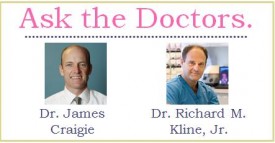
This week, Dr. Richard Kline and Dr. James Craigie of The Center for Natural Breast Reconstruction answer your questions.

Q: I have been diagnosed with a second primary breast cancer in the right breast. 13 years ago it was IDC now DCIS. What are my reconstruction options? 

A: I’m sorry you are having to deal with a recurrence. Glad to hear it is DCIS. I imagine you had radiation before and could have mastectomy with immediate reconstruction. If you like I will have my office contact you for a few more details.  I would be glad to set up a phone consult so you could get my opinion right away.

Dr. James Craigie


Q: I was referred by a coworker who was a patient. I’ve had a bilateral mastectomy, expanders and two sets of implants (taken out due to capsular contracture). My plastic surgeon said my body just isn’t taking to the implants and suggests I try DIEP flap reconstruction. My plastic surgeon does them, but my coworker said she recommends more experience. At this point I am torn. She suggested I contact you. I live in Florida and I am very comfortable with my surgeon, but understand the more you do, the better you are. I’ve also had a gastric bypass 10 years ago and I am scheduled for a hysterectomy (via DaVinci robot) Oct 2nd.

A: Thanks for your inquiry, and sorry for the trouble you’ve had.

Having said that, more surgeon experience, having two microsurgeons involved, and using a hospital with a dedicated flap team does potentially provide benefits, probably most so in terms of shorter operating times and increased flap survival rates. We have presently done about 1030 DIEP and GAP flaps, with a 98.4% survival rate, and we would be happy to see you at any time.

However, I would suggest that you consider discussing your concerns with your plastic surgeon, and if he still feels confident he can do it, I think I would give him the benefit of the doubt. Even if you ultimately decide to have your surgery elsewhere, it would be very helpful to have him on board with your decision.

Dr. Richard M. Kline, Jr.

Center for Natural Breast Reconstruction

Have a question about breast reconstruction you’d like answered from our surgical team? Just ask us!


What Should I Do If An Abnormal Lymph Node Has Been Detected?

This week, Dr. Richard Kline of The Center for Natural Breast Reconstruction answers your questions.

Q: My sister had breast cancer. She completed DIEP flap surgery and a lymph node transfer. A knot has now appeared under her arm. She had a sonogram completed and found an abnormal node. I am really concerned that my sister’s lymph node has died or the cancer has returned. Your insight would be greatly appreciated!

A: We have not run in to that scenario (yet), but I can offer some thoughts. When we transfer lymph nodes we move only a very small amount of tissue (typically 15-20 grams), and even if it dies, it’s unlikely it would be noticed. If more tissue is transferred (as in, a lot of fat with the lymph nodes), and it dies, it could well produce a “knot” as you describe. This would typically become evident a few weeks after surgery, or possibly a little longer. If your oncologist or surgeon is concerned, a PET scan would probably differentiate dead tissue from active cancer in this area.


Q: How long after breast reconstruction do I need to wait to drive a car?

A: After flap surgery we usually recommend waiting at least a month, but everyone is different. If you’re having implant reconstruction, you may well be able to drive much sooner.


Dr. Richard M. Kline, Jr.

Center for Natural Breast Reconstruction

Have a question about breast reconstruction you’d like answered from our surgical team? Just ask us!

What Is My Best Reconstructive Surgery Option After Lumpectomy and Radiation?

Sometimes, the answers we need are found in unexpected places. Our team is happy to share our information…wherever we go!

This week, Dr. Richard Kline of The Center for Natural Breast Reconstruction answers your questions.

Q: I had a lumpectomy on my right breast in 2007. My oncologist has given me the green light to plan reconstructive surgery. I’m hoping to have some sort of reconstructive surgery to balance both breasts. I’m 69 years old. The odd part of this request is that a close friend of mine sat next to Dr. Kline on a flight from Louisville to Charleston!

A: It was a pleasure talking with your friend on the plane, she seemed extremely nice, and immediately mentioned you when she learned what I do for a living.

There are potentially several reconstructive routes one can go after lumpectomy with radiation, depending on your present situation and your goals. As you probably know, your chances of successfully tolerating a breast implant in the radiated breast, while not zero, are much diminished due to the radiation.

If it’s OK with you, I’d like to have our nurse Chris or P.A. Kim call you, and get a few more details about your situation. After that, we can chat by phone, and I’ll give you my honest opinion about which potential interventions might be best for you.

Dr. Richard M. Kline, Jr.

Center for Natural Breast Reconstruction

Have a question about breast reconstruction you’d like answered from our surgical team? Just ask us!

Chronic Pain After DIEP Flap Surgery–Can You Help?

This week, Dr. Richard Kline of The Center for Natural Breast Reconstruction answers your questions.

Q: After a double mastectomy in April 2010, my left expander was replaced in June 2010 due to leakage and became infected.

I was hospitalized and given vancomycin and oral antibiotics for almost 3 weeks. Infection spread to right breast and both expanders were removed the same month.

I had DIEP flap surgery in December 2010, but I have had severe pain and shocking sensations in chest, ribs and stomach. My surgeon says he does not know what is causing this pain. Is it the result of nerve damage? And is there any way to fix this?

A: So sorry to hear about your experience! Out of 1,011 flaps to date, we have very few patients with chronic pain, but unfortunately it does sometimes occur. We usually examine the areas in question with a CT and/or MRI, but usually this does not show any abnormalities other than normal post-surgical changes.

In this scenario, we then refer the patients to our pain therapists, who almost always are able to provide significant relief. Please let us know if we can provide additional information.

Dr. Richard M. Kline, Jr.

Center for Natural Breast Reconstruction

Have a question about breast reconstruction you’d like answered from our surgical team? Just ask us!

I Have Poland’s Syndrome–Am I Candidate for Reconstruction?

Natural Breast Reconstruction options

This week, Dr. James Craigie of The Center for Natural Breast Reconstruction answers your questions.

Q: I am a 56 year-old woman who has Poland’s Sydrome. I have no right breast tissue. Are any of your procedures appropriate for my condition? What is the cost? Because my condition is congenital, I will not be covered by insurance

A: I have seen many patients with Poland’s syndrome who we were able to help. As you know, there are many different problems–mild to severe–that can occur. All of our patients who have had reconstruction of their breast due to congenital (Poland’s) problems have been covered by insurance. So don’t give up on getting coverage. I will be glad to give you more information about your situation if you like. My office will be happy to contact you, too. Just let us know.

Dr. James Craigie

Center for Natural Breast Reconstruction

Have a question about breast reconstruction you’d like answered from our surgical team? Just ask us!

Experiencing Cosmetic Problems After Breast Reconstruction?

This week, Dr. Richard Kline of The Center for Natural Breast Reconstruction answers your questions.

Q: I recently had breast surgery. I think my nipples are positioned too high up, and one breast is harder than the other. What can I do? 

A: Usually asymmetries in this situation can at least be improved, although it is often best let a few months (at least) pass first for the tissues to heal. If one breast is hard, it could mean that you have a significant fat necrosis under the skin, although there could be other reasons. I would strongly urge you to see your surgeon and share your concerns with him or her.

Q: In December 2011 I had a bilateral mastectomy with immediate tissue expanders, followed by silicone implant and nipple tattoo. My problem is that I have developed the “double bubble” look, rippling and contractors bilaterally.

I am 63 and realize that my age does reflect my outcome, however, I just need to know if I am alone or if you have patients that experience this? All of the pics I have seen have really great results and none of them look like me!

I am facing another surgery now to remove these implants and replace them with a different shape. I forgot to mention the cleft/ledge above each implant. They tried fat grafting but it was minorly successful. I need advice and have searched the internet with no success. Can you help?

A: Your situation is far from unique, especially if you don’t have much thickness of soft tissue cover over the implants. Rippling, implant malposition (double-bubble), and contracture are unfortunately fairly common problems even after cosmetic breast augmentation, and can be yet more common after reconstruction.

Our practice is limited to fully autologous breast reconstruction using perforator flaps (DIEP, sGAP, PAP). The surgery to replace the implants with your own tissue is long (6-8 hrs), and carries risks not associated with implant reconstruction alone, so it is not for everyone. Having said that, we have successfully removed implants and replaced them with flaps hundreds of times, and it can work very well indeed (especially if you have a good flap donor area).

There are some additional options your surgeons might consider, if you don’t want to pursue complete implant removal and replacement with your own tissue. These include the addition of latissimus flaps to the implant reconstruction, or potentially the addition of acellular dermal matrix (Alloderm, etc.) to cover the implants. We don’t perform these procedures, but they are commonly available in almost all areas, and can bring extra “cover” over the implants.


 Dr. Richard M. Kline, Jr

Center for Natural Breast Reconstruction

Have a question about breast reconstruction you’d like answered from our surgical team? Just ask us!

Do You Provide the BRAVA and AFT Procedure?

This week, Dr. Richard Kline of The Center for Natural Breast Reconstruction answers your questions.

Q: I am a breast cancer patient who has recently finished chemotherapy. I am looking now into reconstruction, but I was wondering if you performed the BRAVA+AFT procedure?

A: We are actively looking into BRAVA and AFT, but not doing it yet. I would suggest you contact Dr. Khouri, he’s certainly the expert at this point. If you should need GAPs, PAPs, or DIEPs, we would be happy to help you.


Q: I recently finished 8 weeks of chemotherapy. I did not have radiation. I still have Herceptin until next May. I understand you do not currently offer BRAVA, but I’m interested in a fat transfer. Do you use expanders or something? I really want to have something done sooner than later but am willing to wait if it’s necessary. Could you explain to me the procedures you recommend?

A: I would not recommend fat transfer alone as a breast reconstruction technique without BRAVA. Even with BRAVA, it will probably take several sessions to get to the size you want, and there is still no guarantee that it will ultimately be successful, as fat survival is not strictly predictable.

We primarily offer microsurgical breast reconstruction (DIEP, sGAP, PAP), we do it on an almost daily basis, and our flap survival rate over the last 10 years (98.4 %) is realistically probably as high as anyone’s. However, we realize that this is not for everyone. If you have not had radiation, implants may well be a good option for you, and there is likely no need for you to travel a long distance for this, as most communities of any size have plastic surgeons skilled in this area.

Any type of reconstruction can usually be done in between Herceptin treatments, although we ultimately defer to your oncologist’s advice on this.  If you live near us and want an opinion, we’ll be happy to see you in consultation at any time.

Hope this helps!

Dr. Richard M. Kline

Center for Natural Breast Reconstruction

Have a question about breast reconstruction you’d like answered from our surgical team? Just ask us!

Ask the Doctor: Smoking, Risks During Reconstruction, Researching Your Options

Ask the Doctor July 18This week, Dr. Richard Kline of The Center for Natural Breast Reconstruction answers your questions.

Q: I need to have breast reconstruction due to breast cancer occurring twice since 1999. I’m scared because I can’t quit smoking. The surgeon will not perform the procedure unless I quit. Are there any surgeons who will perform reconstruction even though I am a smoker?

A: Surely there are some physicians who will do reconstruction while you’re smoking, but we are not among them. This policy is only because we have personal experience dealing with the many months of wound healing problems (and tears) that commonly follow this type of surgery performed on smokers.

Smoking  isn’t just bad, it’s absolutely terrible. If you want all of your wounds to fall apart, leaving you miserable for months, there may be no better way to accomplish it than to smoke during your reconstruction. The good news is, if you stop for one month before and 3 months after your surgery (with absolutely no cheating), you can often have successful surgery.


Q: I am, after total mastectomy performed 12 months ago, scheduled for reconstruction. My age is 59 and I do not have any emotional concerns about being without a breast. However, I would like to stop wearing epiteze, and would like to not worry that it will show in summer. My concern is whether the long-lasting and repeated reconstruction (several operations, including making the healthy breast smaller) represents too big of a risk to my health. After anesthesia last year, I experienced problems with forgetting and lack of focus for about 3 months. Also, what about the operation and healing stress to the overall body? I would hate to start a new health problem because of reconstruction. What is the general risk apart from risks mentioned here?

A: The risks you are worried about are probably not so much from the surgery, but more from the anesthesia. I would suggest you discuss your concerns with your primary care provider. We can advise you about risks such as bleeding, blood clots, infection, etc., but these do not usually result in the problems you describe.


Q: Am I putting my health at risk in order to research the best reconstruction method before surgery?

A: No, I think you are looking out for your health by doing careful research in advance. Please let us know if we can help you


Dr. Richard M. Kline

Center for Natural Breast Reconstruction


Have a question about breast reconstruction you’d like answered from our surgical team? Just ask us!

Can Upper Stomach Fat Be Used For Breast Reconstruction?

Ask the Doctor

This week, Dr. Richard Kline of The Center for Natural Breast Reconstruction answers your questions.

Q: Can upper stomach fat (fat around the rib cage) be used for breast reconstruction if liposuction was performed on the stomach area below the belly button? What if my liposuction was done more than ten years ago?

A: Liposuction is only a relative contraindication for DIEP flaps, as the necessary blood vessels may well still be present. An MR angiogram is often very useful in determining if adequate perforating vessels are available.

Additionally, it is often possible to use fat from anywhere on the body to reconstruct breasts with the aid of the BRAVA system. The use of the BRAVA with fat grafting is not yet FDA-approved, but it looks very promising for women who either have no good flap donor sites, or don’t want large incisions.

Hope this helps!

Dr. Richard M. Kline

Center for Natural Breast Reconstruction

Have a question about breast reconstruction you’d like answered from our surgical team? Just ask us!

Can I Have an Autologous Fat Transfer After a Lumpectomy?

Ask the doctor May 9

This week, Dr. James Craigie of The Center for Natural Breast Reconstruction answers your questions.

Q: I am a stage IV breast cancer patient looking for autologous fat transfer to fill in my left breast after a lumpectomy in 2008. Can you please let me know how to proceed regarding consultation and such?

A: I would be glad to have our PA call you for more information or phone consultation. I would also be glad to see you in person if you want to come for an office visit to Charleston. I frequently see patients with similar requests.  In my opinion,  fat injections to repair lumpectomy and radiation deformities is usually not the most effective approach. There are also concerns by experts in this specialty regarding fat injections of the breast after that breast has already developed breast cancer once.

As long as the breast tissue remains then there is a risk–although very small–for the cancer to recur. That is why you still need to monitor that breast for any suspicious changes. The fat injections could make monitoring the breast more difficult and most importantly there could possibly be (not proven definitely yet ) an increase in the risk for recurrence after fat grafting. No one knows this for sure yet, but we are always careful regarding this type of safety issue. I could be more specific and talk to you about alternatives if I had more information and especially if I saw you in person. I hope this helps! Please let us know.

Q: I have BRCA mutation. I am 25 years old. I want to have mastectomies with reconstruction but don’t really know which would be the right way to go.

A:  I am sorry you are facing such a difficult decision. Fortunately, breast reconstruction after preventive mastectomies allows for more planning before surgery and usually sets the stage for the best possible breast reconstruction result.  There are several reasons for this.

One reason is more of your natural tissue can be saved. It is usually possible to keep your natural nipple and all of the normal breast skin. Other problems related to possible treatments like chemo and radiation are eliminated because the mastectomies are done to remove breast tissue and prevent breast cancer.

The techniques for breast reconstruction are generally the same following preventive mastectomy and mastectomy for cancer.  Implants are used most frequently because of availability and more rapid recovery from the initial surgery. The end results with implants tend to be less natural than with your own tissue and after the process is complete there is a tendency for the results to deteriorate with implants because they are not living tissue. Your body may reject the implants or they may leak or deflate. The results with using your own tissue are generally more natural and more permanent. We specialize in breast reconstruction using your own tissue but without sacrificing your body’s important muscles.  To be more specific about recommendations for you I would need more information. I will be glad to have our office contact you for this information, just let me know.

James Craigie, MD

Center for Natural Breast Reconstruction


Have a question about breast reconstruction you’d like answered from our surgical team? Just ask us!