Search Results for: implant

Help! Is This Long-Term Pain After Breast Reconstruction Normal?

DIEP flapThis week, Dr. James Craigie of The Center for Natural Breast Reconstruction answers your questions when considering reconstruction or pain after reconstruction.

Q: I had flap surgery in October 2010. Since then, I have experienced pain to the touch in that area, all day, almost every day. Is this normal? 

A: I’m sorry you are having pain in your reconstructed breast. If you have not had your surgeon examine you, that should be your first step to get to the cause of the pain. After breast reconstruction is completed, the new breast should not be painful.  Some people who have implant reconstruction can have pain related to capsular contracture or implant rejection.

If I had more details about your situation, I could possibly give you more information. I would strongly recommend that you make sure your surgeon and or oncologist thoroughly look in to the cause of the pain. I would also not wait a long time to do this. Let me know if you would like to give me more info.


Q: I’m considering breast reconstruction. How long will it take for breast to look normal? What are the differences in the different types of procedures?

A: Thank you for your question. All types of breast reconstruction require time to complete and almost always more than one surgery. Depending on the circumstances, some patients may require chemotherapy and/or radiation. If this is the case, treatments can delay the completion of the process. I tell my patients to allow 3-6 months after any procedure for the results to settle and swelling to resolve.

There are generally two types of reconstruction: implant reconstruction and reconstruction using your own tissue. Implants are generally less natural and for some patients, the results are less permanent. Using your own tissue can be grouped into procedures that sacrifice muscles in the body and those that preserve muscle and use only skin and fat. The latter muscle-sparing procedures are our specialty and require expertise in a specific type of microsurgery.                

I hope this helps! Let me know if you need more info.

Dr. James Craigie

Center for Natural Breast Reconstruction

Have a question about breast reconstruction you’d like answered from our surgical team? Just ask us!

Should I Have a Bilateral Mastectomy Instead of Lumpectomy and Radiation?

This week, Dr. James Craigie of The Center for Natural Breast Reconstruction answers a special two-part question.

Q: Do you know of surgeons in northwest Ohio who can do natural breast reconstruction? I was diagnosed with DCIS and had a lumpectomy done and now am considering a bilateral mastectomy instead of radiation. I was a AA cup size and don’t have much breast tissue left, so I feel like I could use the reconstruction, which is why I am considering the mastectomy.

A: Thank you for your question. I’m sorry I don’t know anyone in that area. Based on your situation you are asking a very good question!

If you have little breast tissue remaining after your lumpectomy then if you went through radiation the breast may develop more abnormal shape. When that occurs, it is difficult to fix that breast because of the radiation effects. If you instead remove the remaining breast tissue you could rebuild the breast to the size you wanted based on how much of your own tissue you have to use. Also you would not need radiation. Remember that implants after radiation are more likely to have complications than without radiation. 

Q: If the DCIS is in one breast, would a double mastectomy make sense, so I could even out the “new” size I choose? Also, do you have information on recurrence rates if I try a nipple-sparing or skin sparing mastectomy?  Is that wise at all?

A: Questions regarding recurrence rates are best answered by the surgeon who performs the mastectomy. We work closely with them as a team and perform the reconstruction immediately after the mastectomy. I’ll be glad to forward your question to the expert. In general, recurrence rates should be the same or lower for mastectomy vs.  lumpectomy and radiation. Skin and nipple sparing mastectomy should be the same as well. For your situation we would get the cancer specialists we work with to give us their opinion before we could give you specific recommendations.

We do have patients choose to do what you mentioned frequently, for the same reasons. Preventive mastectomies are done to reduce the chances of getting breast cancer. If someone is high risk, then they  might decide to reduce the risk of DCIS on the other side. When someone has enough donor tissue we try to give them the best result possible based on each person’s expectations. If you had a bilateral mastectomy we would try to make the new breasts fuller and uplifted as long as there was enough donor tissue to work with. I hope this answers your questions. Let me know.

Dr. James Craigie

Center for Natural Breast Reconstruction

Have a question about breast reconstruction you’d like answered from our surgical team? Just ask us!

Can I Have Natural Breast Reconstruction if I Had Radiation on my Right Side?

This week, Dr. Richard Kline of The Center for Natural Breast Reconstruction answers your questions.

Q: Can I get natural breast reconstruction if I have had radiation on my right side? I have had both breasts removed, but the first time the cancer was found I had a lumpectomy and radiation. The next time I had it removed.

A: Natural breast reconstruction with your own tissue is usually the best option for patients who have had radiation. Sometimes (but not always) it can be difficult to get the radiated side to match the non-radiated side as closely as desired because the radiated skin can be much tighter, but the chances of success are still usually much better using your own tissue than using implants.

We’d be happy to have our nurse Chris or PA Kim call to chat with you more about the specifics of your situation, if you wish.

Dr. Richard Kline

Center for Natural Breast Reconstruction

Have a question about breast reconstruction you’d like answered from our surgical team? Just ask us!

Can You Perform a Buried DIEP Flap Procedure Utlizing Expanders?

The following question is answered by Charleston breast surgeon, Dr. James E. Craigie. of The Center for Natural Breast Reconstruction:

Q: I have had bilateral mastectomies without radiation. Cancer was in the left breast and I have been cancer-free for over a year.

I may be interested in DIEP reconstructive surgery. However, I am having trouble finding a surgeon to perform a buried flap utilizing expanders and my current mastectomy scars.

It is bad enough to have to have a large ugly scar across my abdomen, but to have my breast look like patches with two scars each is even more horrible than having cancer! It is even more disfiguring than the mastectomy and is not doing any woman a favor by making their self confidence and self image even worse. Are buried DIEP flaps one of the procedures that you perform?

A: Thank you for your question. I am sorry you are having difficulty finding a surgeon to address your situation. Every person’s situation is unique and if I had more info I could be more specific to you. However, I think I can help clarify why you are having a difficulties finding a surgeon to address your concerns:

During a mastectomy surgery, it is the breast surgeon removing the breast who has a major impact on subsequent reconstruction options. If no reconstruction was performed at the same time, then the surgeon was obligated to remove excess breast skin in order for the mastectomy incisions to heal without complications. It is important to understand the breast shape is determined by the breast skin that surrounds the new DIEP breast. If surgery removed the skin, then it has got to be replaced in some way.

In your question you spoke of tissue expansion. This technique does not create new skin but stretches the remaining skin. It also stretches the chest muscle and the muscle does not recover. Also, it’s important to note that some people will reject the tissue expander and have problems expanding the breast scar. In my opinion the technique of expanding the skin and later rebuilding the breast with a DIEP works best when the surgeons work together and extra skin is saved by the breast surgeon. Please try not to be discouraged! We have helped many women in your type of situation regain their self-confidence and their body image after mastectomy.

Also, please understand that in order to undergo the procedure you mentioned would require another surgery when the expanders are placed and the skin and muscle stretched over six months or sometimes less. When the stretching was completed then the DIEP procedure would be done but would require another two surgeries. It is unknown whether your body would stretch well and the process could be more complicated.

Most of our patients want to have reconstruction with their own tissue and do not want to sacrifice any important muscles. Our goal is to restore our patients’ self esteem and not simply scar their bodies and put them together with “patches.” Please let me know if you would like any more specific information we may need to touch base with you by phone.

James E. Craigie, M.D.

Center for Natural Breast Reconstruction

Do you have a question about breast implants or natural breast reconstruction? Ask the doctor by submitting your questions here.

Will My Previous Surgeries Compromise My Chances for a DIEP Procedure?

This week, Dr. Richard Kline of The Center for Natural Breast Reconstruction answers your questions.

Q:  I am BRCA 1 positive and researching prophylactic mastectomy with immediate reconstruction. As far as I can find out, DIEP is not available in TN. I am planning to have a bilateral salpingo oophorectomy at some point in the near future and have had 2 previous C-sections. Does that exclude me from being a DIEP candidate?

A: Thanks for your question. Most likely your previous  surgeries have not compromised your chances for DIEP breast reconstruction. In fact, I see patients frequently who have been told they can not have a DIEP, and in fact it works quite well. I would be glad to get more info and could be more specific. Let me know.

 Q: I’m considering implant-based breast reconstruction. My surgeon mentioned a “risk of capsular contracture.” What exactly is that?

A: Capsular contracture is an abnormal response of the immune system to foreign materials in the human body. Medically, it occurs mostly in context of the complications from breast implants and artificial joint prosthetics.

The occurrence of capsular contraction follows the formation of capsules of tightly-woven collagen fibers, created by the immune response to the presence of foreign objects surgically installed to the human body, e.g. breast implants, artificial pacemakers, orthopedic prostheses; biological protection by isolation and toleration. Capsular contracture occurs when the collagen-fiber capsule tightens and squeezes the breast implant; as such, it is a medical complication that can be very painful and discomforting, and might distort the aesthetics of the breast implant and the breast.

Although the cause of capsular contracture is unknown, factors common to its incidence include bacterial contamination, rupture of the breast-implant shell, leakage of the silicone-gel filling, and hematoma.

Moreover, because capsular contracture is a consequence of the immune system defending the patient’s bodily integrity and health, it might reoccur, even after the requisite corrective surgery for the initial incidence.

The degree of an incidence of capsular contracture is graded using the four-grade Baker scale:

• Grade I — the breast is normally soft and appears natural in size and shape
• Grade II — the breast is a little firm, but appears normal
• Grade III — the breast is firm and appears abnormal
• Grade IV — the breast is hard, painful to the touch, and appears abnormal

Dr. James Craigie

Center for Natural Breast Reconstruction

Have a question about breast reconstruction you’d like answered from our surgical team? Just ask us!
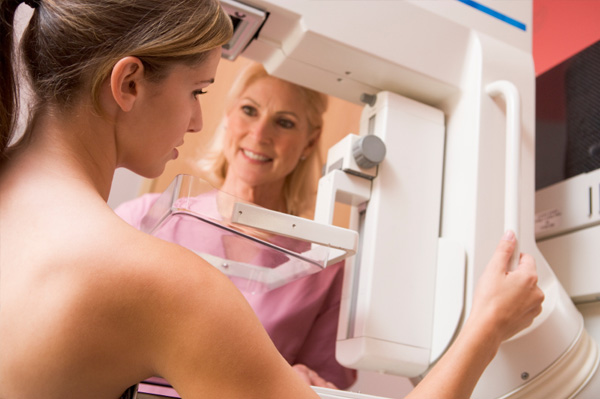
After Breast Reconstruction, Do I Still Need an Annual Mammogram?

diep and mammogramThe following question is answered by Charleston breast surgeon, Dr. James E. Craigie. of The Center for Natural Breast Reconstruction:

Q: After having breast reconstruction using the DIEP method, do I need to have an annual mammogram?  If so, can the pressure from the procedure cause any damage to the tissue or blood vessels used in the reconstruction?

A: First of all, following mastectomy and reconstruction with your own tissues, a mammogram is routinely not needed on a regular screening basis.  Screening mammograms are only helpful for normal breast tissue; therefore, in our patients we do not recommend that they have regular screening mammograms.

From time to time, people will be seen in follow up for examination and have areas of the breast feel firm or hard and sometimes the oncologist or other physicians will order mammograms to investigate a specific finding.  This would normally be performed after the first and second stages of the reconstruction process were completed and therefore should pose no risk of injury to the blood vessels that were connected to the breast.

Thank you for your question!

James E. Craigie, M.D.

Do you have a question about breast implants or natural breast reconstruction? Ask the doctor by submitting your questions here.

Will I Have Any Breast Sensation After a DIEP Procedure? Will My Insurance Cover My Post-Op Stay?

This week, Dr. James Craigie of The Center for Natural Breast Reconstruction answers your questions.

Q:  I was recently diagnosed with LCIS and then in a second and third look was re-diagnosed with ALH. I am leaning toward undergoing a  double mastectomy and reconstruction.

As a 45 year-old single mother of three, I would like to know a few things regarding your procedure.

1) Is there any nipple stimulation with the stomach flap DIEP procedure?

2) Is the week-long stay in Charleston covered by insurance in addition to inpatient charges?

3) How early can you get an appointment scheduled? My insurance rolls January 31, 2014 and my deductible has been met after my lumpectomy.

A: I am sorry you are having to make these difficult decisions. Regarding your questions:

1) Breast sensation after mastectomy is never normal. The more of your breast and nipple skin that is saved, the better the sensation after surgery. Also, the DIEP tissue has nerve tissue in it and if all goes well with the surgery, sensation can return faster. Again: it is not expected to be 100% normal. Implants have no nerve tissue and scarring can impair nerve healing.

2) There is at least one place that some patients qualify for that is free. Otherwise, lodging is not covered at all by insurance. We do have a list of places that give medical discounts.

3) If you would like an appointment, I will be glad to have my office contact you.

Thank you!

Dr. James Craigie

Center for Natural Breast Reconstruction

Have a question about breast reconstruction you’d like answered from our surgical team? Just ask us!

Ask the Doctor: Medicare, Scarless Reconstruction, and Options for Smaller Body Types

This week, Dr. Richard Kline of The Center for Natural Breast Reconstruction answers your questions.

Q:  I was diagnosed with breast cancer in December 2010 and had a bilateral mastectomy/ stage 3 with 25 malignant lymph nodes removed. My treatment was chemotherapy followed by radiation. The last radiation treatment was September 2011. I have been researching about the DIEP procedure and am very interested in having this done. I am 66 years old. Do you accept Medicare out of state? The facility in San Antonio does not.

A: We will accept Medicare if you are otherwise (medically) a good candidate for the DIEP procedure. We can have our nurse Chris or P.A. Kim call you to get more information, if you like.


Q: Can you have scarless breast reconstruction surgery following a double mastectomy for triple negative breast cancer?

A: There’s really no such thing as “scarless” breast reconstruction, although it is often possible to conceal the scars quite effectively. We’d be happy to have our nurse Chris or PA Kim call you to discuss the details of your situation further, if you wish.


Q: What can you do for someone who is thin (5’4″, 116 pounds), has had a unilateral, nipple sparing mastectomy with radiation? Desired cup size would be AA or A only.

A: Most patients, even very thin ones, can still be reconstructed using only their own tissue, particularly if they only need one breast reconstructed, and don’t need it to be very large. If you have any excess abdominal skin / fat at all, it is frequently possible to use both sides of the abdomen to reconstruct one breast (stacked DIEP). Sometimes other donor sites are better ( buttocks or posterior thigh), and most patients have some extra fat spread over their bodies that can be added as free fat grafts at a subsequent procedure after the initial flap. It may be easier to tell which donor site(s) is best during an actual examination, but we can usually get a reasonable idea from photos.

Dr. Richard Kline

Center for Natural Breast Reconstruction


Have a question about breast reconstruction you’d like answered from our surgical team? Just ask us!

After Radiation, Mastectomy and Reconstruction, I’m Having Extreme Back Pain…Solutions?

This week, Dr. James Craigie of The Center for Natural Breast Reconstruction answers your questions.

Q:  About 6 years ago, I had a bilateral mastectomy with reconstruction. The plastic surgeon took one muscle from each side of my back to reconstruct each breast. Now I am experiencing extreme back pain on the right side. This is the side where the tumor was. This was a second occurrence.

In 1993, I had a lumpectomy with chemo and radiation to this right breast/side. The extreme pain feels like it is muscular in nature on the right side. Is this normal and something I just have to live with, or might there be some other treatment for muscle pain? Should I have it checked out for a possible disc problem causing the radiating pain in my back? Should I check out physical therapy or is it too late for this therapy? I am at a loss and hate enduring this constant pain.

A: Thank you for your question, I am sorry you are experiencing pain.

When the pain first developed and exactly where it is located could help determine what the cause is and how to treat it. If it is your back in the area where your back muscle was removed it could possibly be related to your spine discs or from your body compensating for not having the muscle. If you have an implant and the discomfort is in the breast area it is possible that scarring around the implant is the cause.  Most importantly you should let your plastic surgeon,  breast surgeon and oncologist know so they determine the cause and treatment.

Your oncologist should determine if you need any special scans or tests with regard to your breast cancer history and your plastic surgeon can determine if it has to do with the reconstruction and if there is a fix.


Q: I had nipple reconstruction a month ago. After a summer with not having to wear a bra, I’m now having remorse that I didn’t go for 3-D tattoos. Two questions:

Can one have the reconstructed nipples removed?

Is there a way to flatten the nipples over time?

I understand that some nipples flatten naturally but others don’t. I wish I had thought all this through the way I did for every other decision I made during the breast cancer journey. Is there any thing else you would suggest for someone with buyer’s remorse regarding nipple reconstruction? 

A: Thank you for your question.

I suggest you ask your surgeon as it may depend on how the reconstruction was done. Otherwise I would also expect over time the nipple will flatten. It takes about 9 months. It can always be made smaller easily in the office with only numbing medicine.

Dr. James Craigie

Center for Natural Breast Reconstruction


Have a question about breast reconstruction you’d like answered from our surgical team? Just ask us!

Flap Procedure Using Tissue or Muscle–What is My Best Option?

This week, Dr. James Craigie of The Center for Natural Breast Reconstruction answer your questions.

Q:  had a double mastectomy in July 2012. I have one successful implant (right) and the left had to be removed due to infection. I need a flap procedure and want to know which one you usually recommend? I have had a lot of bad ratings for the stomach procedure. 

A: Thank you for the question, and I am sorry you have had problems with your implant.

When implants don’t work out,  usually using your own tissue can be an option to complete the process without using an implant. We specialize in using your own tissue but without sacrificing your muscle. Giving up the tummy muscle can be a problem and may have been part of the reason you have had less than favorable reviews on that subject. We prefer to use the body area that has sufficient tissue to rebuild the breast and take no muscle to do that. We can use the tummy, buttock or thigh tissue. I would be glad to give you more specific recommendations if I had more info. Let me know if you would like my office to contact you for more specifics.

Dr. James Craigie

Center for Natural Breast Reconstruction


Have a question about breast reconstruction you’d like answered from our surgical team? Just ask us!