Your Questions About Breast Reconstruction Answered

nipple sparing mastectomyThe questions below are answered by the breast reconstruction surgeons of The Center for Natural Breast Reconstruction, Dr. James Craigie and Dr. Richard Kline:

If a woman has flap reconstruction, are the nipples reconstructed at the same time or at a later date?

While it is sometimes possible to reconstruct the nipples at the same time, usually for various reasons it is preferable to delay the nipple reconstruction until a later time. Nipples must be positioned very carefully to look their best, and that means the final shape of the breast mound must be stable prior to choosing the nipple position. Tissue flaps must be carefully monitored for several days following the initial reconstruction to assure early detection of any problems, and temporarily leaving extra flap skin on the breast mound helps greatly with this. Additionally, FWIW, the skin that the nipples are reconstructed from, whether flap skin or native breast skin, frequently has no sensation, making it even easier to reconstruct the nipples as a small procedure in the office.

If a woman is a candidate for a nipple-sparing mastectomy, can she have flap reconstruction and retain her nipples?

Yes, in many cases. Problems arise when the breasts are very “ptotic” (droopy), especially if the flaps cannot be made as large as the breast tissue that was removed. The nipples can often be saved even in this situation with special techniques (examples include performing a delayed breast lift some months after flap reconstruction with the flap nourishing the nipple, or, in the case of a prophylactic mastectomy, having a breast lift or reduction some months before the mastectomy), but the overall reconstruction is more complicated and prolonged.

Can you explain what you mean by a muscle-sparing free flap breast reconstruction?

“Muscle-sparing” simply means that NO MUSCLE TISSUE at all is removed. This does not necessarily mean that the muscle suffers no injury, as the blood vessels which nourish the flap usually must be removed from the muscle, but the amount of damage is commonly small enough that the muscle ultimately recovers its function.

What are some criteria that may disqualify a patient for breast reconstruction?

Any serious medical conditions which would prevent a patient from tolerating 4-8 hours of general anesthesia would prevent her from having flap reconstruction. Some medical conditions, such as diabetes, increase various risks (in particular, risks of wound healing problems), but do not disqualify the patient from having reconstruction. We do not perform reconstruction on patients who are currently cigarette smokers (or use nicotine in any form) because nicotine’s effects on wound healing after flap surgery is frequently catastrophic. However, most patients will clear all nicotine form their system after a month’s abstinence. Some very slender patients do not have enough donor tissue anywhere on their bodies for flap reconstruction, but this is quite uncommon.

For more information on breast reconstruction, visit our website.
What Are My Reconstruction Options After a Lumpectomy?

DIEP flapThe below question is answered by The Center For Natural Breast Reconstruction team:

What are the options for reconstruction surgery after a bilateral lumpectomy?

Great question! Your options would be very similar to those you would have if you had a mastectomy. Keep in mind that if your lumpectomy was followed by radiation, the behavior of the radiated skin and tissue can complicate a reconstruction procedure utilizing implants and your best option may be to use your own tissue to restore your breast size and shape. Nonetheless, it’s your plastic surgeon’s responsibility to tell you all of the options available to you and let you choose how to proceed. Also, discuss with your surgeon any procedure that may need to be done on your unaffected breast to achieve symmetry.

Here’s my short list of options:

1. Tissue expanders and subsequent replacement with permanent implants. Ask about silicone vs. saline implants. How about the use of a skin and tissue replacement like fat or a dermal matrix (like Alloderm)?

2. Autologeous reconstruction with latissimus flap (back). Will implants be needed, as well?

3. TRAM flap (transverse rectus abdominus muscle). Uses the muscle, skin, and fat of the abdomen to rebuild the breast. Make sure you have been told of the risks involved in removing this muscle.

4. DIEP, SIEA (deep inferior epigastric perforator or superficial inferior epigastric artery). Uses the skin and fat of the abdomen to rebuild the breast but leaves the muscle of the abdomen intact.

5. GAP (gluteal artery perforator). Uses the skin and fat from the upper (inferior) or lower (superior) buttocks. Like the DIEP, no muscle is removed for this procedure.

6. TUG (transverse upper gracilis). Inner thigh donor area, utilizes skin, fat, and muscle of the upper inner thigh.

7. Intercostal perforator. Utilizes skin and fat from under the arm.

8. Maybe you’re happy with the size of your post-lumpectomy breast but would like the shape addressed. Procedures such as mastopexy or reduction mammaplasty on the unaffected breast may be the procedures to investigate.

9. If it’s a small defect, a simple fat transfer from another part of your body may remedy the problem.

Best Wishes,

The Center for Natural Breast Reconstruction Team

Tips for Post Surgical Clothing for Breast Reconstructive Surgery

breast reconstruction

Chris Murakami RN, CNOR, & Christina Hobgood Naugle, PA-C

The below question is answered by Chris Murakami RN, CNOR, & Christina Hobgood Naugle, PA-C, of The Center for Natural Breast Reconstruction.

I am having a SGAP breast reconstruction in a few weeks. Do I need to buy post op surgical bras? If so, which kind and can I get a prescription for insurance purposes? Also, I heard people use various bras / camisoles with pockets for drains. Have you heard of those or think they are helpful? Do you think button down shirts are something I need to get? Anything else?

No need to buy any special bra, vest, or camisole in advance. Our hospital, East Cooper Regional Medical Center, provides a soft cotton vest with drain pockets as well as a surgical bra that acts as a post operative surgical dressing. Let them know if you feel like you need an extra for when you leave the hospital and they are great about sharing another with you.

Absolutely, I would make sure I had button down shirts and loose clothing that you can easily get in and out of. You’ll have some limitation of lifting your arms above your head so button down shirts are easiest to get on and off without lifting your arms. Some women choose to wear loose sundresses; others track suit pants or cotton shorts. Whatever you are comfortable in is fine, but keep in mind we won’t want you wearing anything right away that could potentially put any pressure on your suture lines.

Here are more helpful hints:

If you are having a DIEP breast reconstruction, abdominal swelling limits clothing choices. Wear loose-fitting garments to the hospital. Women should avoid fitted, zippered pants and skirts because they probably won’t zip when it’s time to leave. Even clothing with snug elastic waistbands may be uncomfortable. A loose chemise or drop waist dress or jumper is a good choice.

Slacks or skirts with elastic in the back and a smooth band in the front may be slightly more comfortable than those with a totally elastic waistband.

Consider clothing that doesn’t wrinkle easily. Resting and naps are necessary while recuperating.

Cotton underwear breathes and is absorbent and comfortable next to the skin. Cotton’s fiber ends help the fabric stand away from the sensitive incision area rather than hug it, as some textured, synthetic fabrics do. If you don’t already have cotton briefs, buy a pair a size larger than your normal size. A little extra room adds comfort during recuperation. For waistline incisions, bikini cut styles may be better, while full cut panties and shorts might be preferred for incisions in the lower abdomen and buttocks.

Loose-fitting nightgowns and nightshirts are comfortable, especially when made from absorbent, breathable cotton or cotton-blends. If you prefer pajamas, select those with drawstrings. Elastic waists may be less comfortable for some people depending on swelling, tenderness, and location of incision. Sweatpants or crew pants are a comfortable change from bed wear, especially those with drawstrings, which allow some flexibility at the waistline.

Flat soled shoes that slip on your feet rather than tie are great to have, too, as you may be limited in your ability to bend over and tie your shoes.

If you do need to have a special bra after your incision lines have healed, we are happy to provide a prescription. We’ve had lots of our patients rave about Nordstrom’s for post mastectomy bras. Not only do the kind folks there provide a professional fitting for mastectomy patients, but they also handle the insurance paperwork for you too!

—Chris Murakami RN, CNOR, & Christina Hobgood Naugle, PA-C

Know someone who would benefit from this blog post? Share it with them via email!

Having a Positive Outlook on Life Before, During, & After Breast Cancer: Interview with Leslie Haywood

Leslie Haywood

Leslie Haywood

We are SO excited to share with you Part II of our interview with Leslie Haywood, creator of Grill Charms™. For those of you who have not yet read Part I of this interview, Leslie shared her story as a breast cancer survivor and explained how she started a successful company while undergoing treatments.

We absolutely love how Leslie can be so inspirational and funny at the same time!

If you missed Part I of this interview, click here.

See below for Part II of our exclusive and highly inspirational (not to mention, hilarious!) interview with Leslie Haywood:

1. Your first Grill Charms™ sale was somewhat unexpected! Tell us where you were and how you sold your first Grill Charms™.

Oh yes! My most memorable sale to date! I was in the office for my final “procedure,” if you will. I was in The Center for Natural Breast Reconstruction office for my nice pinkish brown tattoo. As you can imagine, I have known all the folks at Dr. Craigie’s office  for over a year by then (and  pretty intimately I must say), so in an effort to help me think about anything other than what she was doing, the nurse asked about how my brand new business was going. Her distraction technique worked! I instantly forgot the discomfort and gave her the complete rundown of Grill Charms™, ending with: “I have a set to show you in my purse over there!”

By the time the nurse was done waving her buzzing magic wand all over my reconstructed girl parts, she said “I need 5!”  I immediately jumped off the table (still half dressed), showed her the set out of my purse, and right then and there, with my cell phone calculator (yep, still topless) I totaled up everything plus tax and she wrote the check on the spot. After our business transaction was done, she helped me with the bandage / pad etc. and I put my clothes back on. I can’t imagine any other sale being quite as “interesting” as this one. Obviously I’m not opposed to be doing business topless, but thankfully I have not had to resort to that since!


Grill Charms pink collection

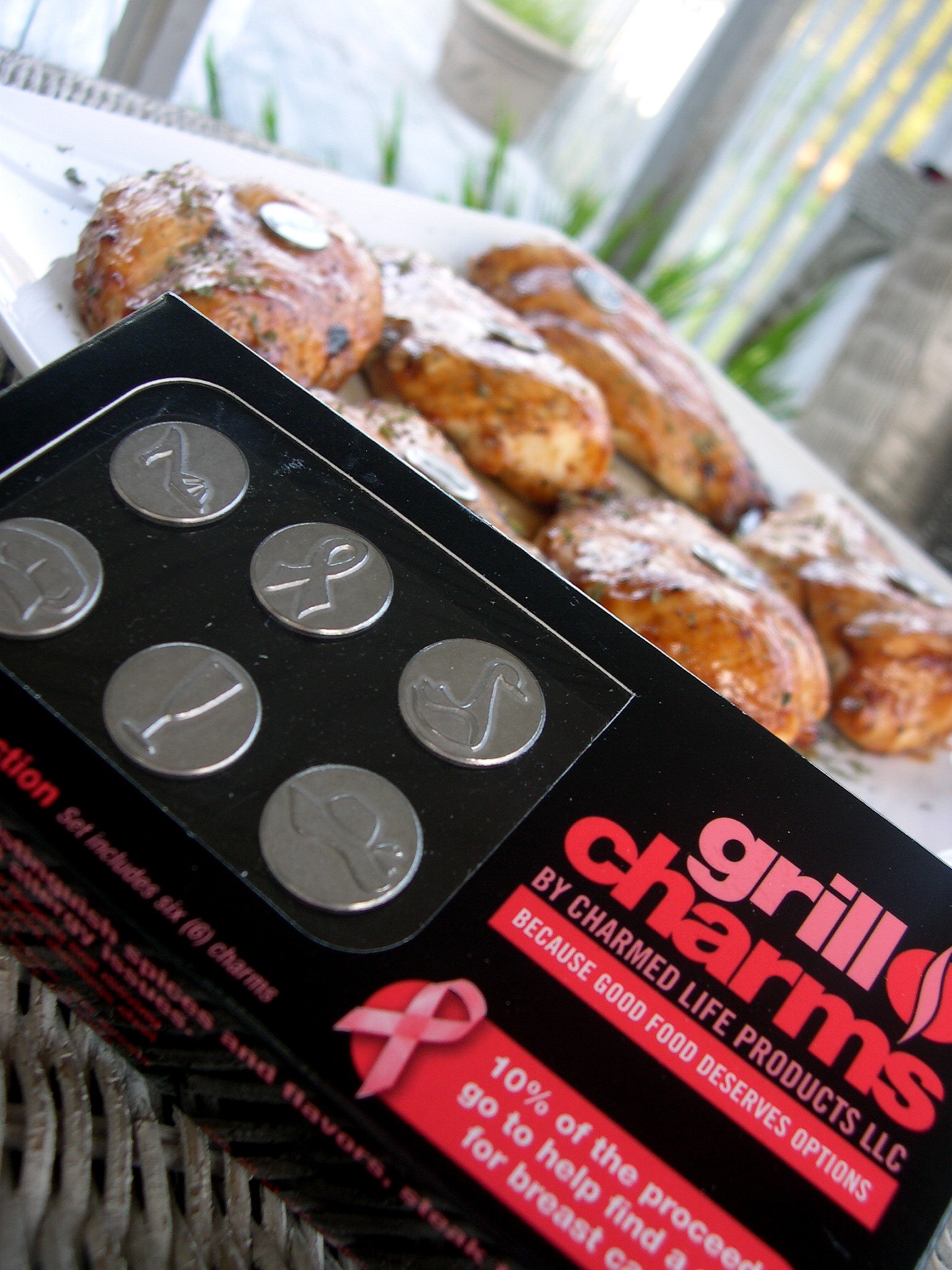
Grill Charms Pink Collection

5. How did you decide which type of breast reconstruction surgery you wanted?

Because of my family history, I feel like I was at an “advantage” (if you can call it that!). I have had YEARS to consider and decide how I would handle a breast cancer diagnosis. Back when my mother had her treatment and reconstruction, there were very few options and she pretty much did what she was told (mastectomy and implant).

I saw what 20 years had done to her reconstruction and had always wanted better for myself. I didn’t like the idea of an implant being in me for all eternity and also knew that I wanted “symmetry” for the rest of my life, so both boobs would HAVE TO GO! The fact that my “baby pooch” would be used to make my new breasts and the fact that I’d have the stomach I used to have in my 20’s, was a BONUS!

Oh, another little story about the surgery (**For those of you who know me, you know I’m the queen of TMI, so you’ll have to excuse my “frankness” when it comes to what some might view as sensitive topics. I apologize if my candor and tone offends anyone.).  Okay… so when the decision was made and we knew that “natural breast reconstruction” was the way to go, and that “belly fat” was where my new breasts were going to come from, I talked to my husband about “size.”  He said “porn star, please” and I said “NO WAY,” but I did want something to show off.  I really wanted to make sure that Dr. Craigie had enough “material” to work with, so I went on an 8-week eating FRENZY!

My family would watch me getting 2nds and 3rds of my favorite food, STEAK! They’d say “Leslie . . . slow down there girl!” and my reply was always the same, “Shut up! I’M MAKING BOOBIES!” For those 8 weeks, food and I had a magical relationship! Ahhh…. I miss those days!

Now what I DID NOT take into account with natural breast reconstruction was how my breasts would look after the surgery. With my tummy flat and my new natural breasts a fabulous B+ maybe C, I wanted do right by my “second chance” and  eat right and exercise to keep it. I have never been more fit in all my life! BUT, because the new breasts are “all natural,” when I started to lose all that “boobie making weight” and toned everything up, my new breasts acted exactly like my old ones. There was a little shrinkage factor! So now I’m more like an A+ to a B-, but I have never been happier with my body and I have never been more in shape in my entire life! Just look how awesome they are! THANKS Dr. Baron for saving my life and thanks Dr.Craigie for making me look and feel better than ever!

6. What would you tell women who have had a mastectomy or are planning on undergoing one about natural breast reconstruction?

You owe it to yourself to at least learn about natural breast reconstruction and fully understand this option. Knowledge is power and you will never regret finding out about what you don’t know. There has not been a single SECOND that I wish that I had done things any differently. Natural breast reconstruction was the absolute best option for me, NO QUESTION!

About Leslie Haywood and Grill Charms™:

Leslie Haywood is founder and President of Charmed Life Products, LLC, and inventor of Grill Charms™. Leslie was a stay-at-home mom when a very spicy light bulb moment thrust her into the entrepreneurial ring. During the start up phase of her company, she was diagnosed with breast cancer, but still managed to launch her product on store shelves within 18 months and is now sold in over 400 stores internationally. She has been featured numerous times on CNBC, various local and regional news programs, as well as ABC’s prime time reality TV show Shark Tank seasons I and II. Her story and product have publicized in such magazines as Everyday with Rachael Ray, Parenting magazine, Health magazine, Inventors Digest, and was also featured on The Today Show. All the while she is mindful of “the cause,” whether it’s giving back through “The Pink Collection” of her gift and grilling accessory Grill Charms™, or her work as Honorary Chair for The Race for the Cure .

Leslie’s Special Offer:

***Put “natural” in the coupon code of www.grillcharms.com for 10% off!***

If you loved this post as much as we did, share it with your friends on Facebook.

How One Entrepreneur Didn’t Let Breast Cancer Get In The Way of Her Success

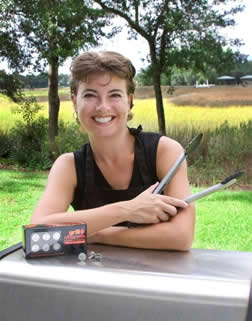
Leslie with her girls.

When Grill Charms™ creator, Leslie Haywood, agreed to participate in a guest interview for our blog we were ecstatic to share her story with our blog readers. We KNOW you are going to love her story.

We’ve known Leslie Haywood for over a year now and, to date, she has been one of our favorite patients! When Leslie was diagnosed with breast cancer, she came to the team at The Center for Natural Breast Reconstruction to receive a breast reconstruction procedure from Dr. Craigie. And something sort of funny happened. She made her first Grill Charms™ sale topless in the doctor’s office! But I won’t spoil the story for you (and there’s even a SPECIAL OFFER, just for you, our blog readers, at the end of this blog post!).

Read below for Part I of our exclusive interview with Leslie:

1. You are truly an inspiration to women who have been affected by breast cancer! You started your own company, Grill Charms™, and had mommy responsibilities, all while you were undergoing treatment for breast cancer. Tell us how you managed to stay positive and what inspired you to keep moving forward with your business during this difficult time.

Yes, two months into starting my company I was diagnosed with breast cancer. I can’t say it was much of a surprise. My first introduction to breast cancer was 1989 when at the tender age of 16 my 30-something-year-old parents told us that my mother had breast cancer. By the time they caught it, she was stage IV and the doctors told her she had 6 months to live.

In the months that followed,  my parents along with their best friends stayed up nights and weekends trying to figure out how my father, who was a master chief on nuclear submarines in the Navy, and only home 6 months out of the year was going to raise his 10, 12 and 16 year- old daughters alone. I had been living with the reality that there was a high probably that someday; I too might be facing this disease. The fact that it happened shortly after I started on my quest to conquer the world one cookout at a time, was a bit of a nuance however!

It wasn’t long when the sentinel node biopsy showed that THIS cancer would not kill me. We knew early on that I would not have to make plans for my daughters’ lives without a mother. I think it was during this time that people started thinking I was in denial. Here I was, diagnosed with breast cancer at the age of 34 with 1 and 3 year old daughters, a brand new company and yet I was truly the happiest women on earth. “You mean to tell me doctor, that I have breast cancer and you didn’t give me an expiration date??!?!”

Non terminal breast cancer . . . what a precious, precious gift I was given! Now that it is all said and done, I’ve got two brand new pieces / parts (and let’s face it . . .  after nursing two babies, they weren’t much to write home about anyway), a bonus tuck (THANK YOU DR. CRAIGIE!) and most importantly . . . I get to live. I always viewed them as a pair of B-sized ticking time bombs anyways, so good riddance. There was certainly no time to dwell on THAT, I had steaks to save and taste buds to rescue! By the way . . . about my mom . . . the doctors underestimated her… my mother is still here, 23 years cancer free!

2. Grill Charms™ are adorable and perfect for individuals who love to host outdoor parties. What are Grill Charms and how do they work?

Why thank you! Grill Charms™ offers an entirely new concept in outdoor entertaining. They are dime-sized solid stainless steel charms that are placed in your food BEFORE grilling. The serrated stems hold them in securely while flipping, moving, and grilling food like you normally do. Grill Charms™ are you use in food prior to cooking to distinguish spices and flavors, steak temperatures, or to avoid health or allergy issues. Grill Charms™ identifies your food before, during, and after grilling so when dinner comes off the grill, simply look for your Grill Charm™, and everyone knows which one is theirs. With four collections for different purposes, they are the perfect gift for Father’s Day, birthdays, groomsmen, Valentine’s Day, other holidays, and housewarming or hostess gifts—you name it!

3. You started a Pink Collection of Grill Charms™, which we absolutely love! Tell us about these charms and where the proceeds go.

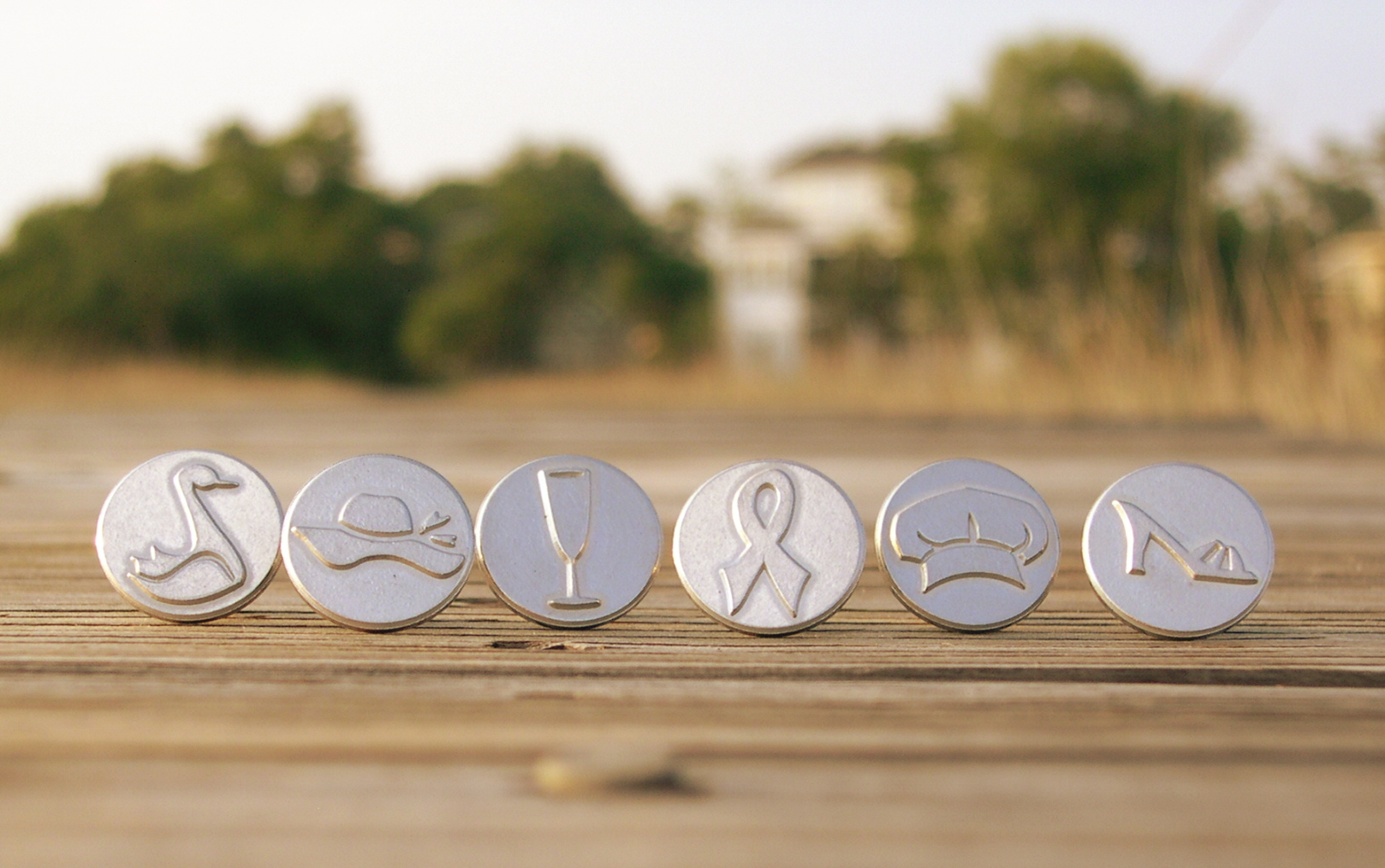
For a truly unique grilling and dining experience, The Pink Collection has six different charms so food can be personalized prior to grilling to distinguish spices and flavors, to avoid health, or allergy concerns or for any reason you can dream up! There is a hot new party trend with this collection, and that is the “Season Your Own” cook-out. This is where the host provides the meat, the guests pick their Grill Charm™, then choose from a variety of sauces or rubs that the host has set out. Guests flavor their meat any way they wish and nobody, including the grill master, needs to know or care how it’s seasoned.


The Pink Collection

The Pink Collection of Grill Charms™

When the food is served off the grill, folks simply look for their Grill Charm™. With people watching every penny, it’s more important than ever that when they splurge on buying that filet, or carefully choose that chicken breast to spend their hard-earned money on, that it’s cooked and seasoned exactly the way they want it.  And with The Pink Collection, I donate 10% of the proceeds to The Breast Cancer Research Foundation, as well as my local Komen Foundation.

This collection also helps with health or allergy issues. With Grill Charms™, if someone has a specific health or dietary need (such as needing a no-sodium, low-sugar, or possibly a gluten-free spice alternative), Grill Charms™ makes it easy for people to identify their food before, during, and after grilling, without any confusion or effort on the part of the grill master.

About Leslie Haywood and Grill Charms™:

Leslie Haywood is founder and President of Charmed Life Products, LLC, and inventor of Grill Charms™. Leslie was a stay-at-home mom when a very spicy light bulb moment thrust her into the entrepreneurial ring. During the start up phase of her company, she was diagnosed with breast cancer, but still managed to launch her product on store shelves within 18 months and is now sold in over 400 stores internationally. She has been featured numerous times on CNBC, various local and regional news programs, as well as ABC’s prime time reality TV show Shark Tank seasons I and II. Her story and product have publicized in such magazines as Everyday with Rachael Ray, Parenting magazine, Health magazine, Inventors Digest, and was also featured on The Today Show. All the while she is mindful of “the cause,” whether it’s giving back through “The Pink Collection” of her gift and grilling accessory Grill Charms™, or her work as Honorary Chair for The Race for the Cure .

Leslie’s Special Offer:

***Put “natural” in the coupon code of www.grillcharms.com for 10% off!***

Personal Fundraising: How to Get Involved and Raise Awareness for Breast Cancer

fundraiser ideasBreast cancer research can always use more funding to continue the battle, and every dollar helps. Increasingly, people are turning to personal fundraising, and often partner with well known, established foundations to raise money.

The following tips and ideas might help you get your fundraising off to a good start:

Start a webpage or blog. Share your support, thoughts, and ideas about breast cancer with others through a personal webpage or blog. They’re easy to set up and provide a place for you to post articles, share your thoughts, and illustrate your fundraising efforts.

Donate instead of gifting. Rather than buy gifts for family and friends, donate that money through your page, and let your family know you’d rather have donations to your webpage than gifts this year.

Let everyone know. Don’t be shy—send an email, post your fundraising page on your Facebook and Twitter accounts, and spread the word about upcoming events. People are willing to give when asked, so don’t be afraid to ask!

Solicit contributions from companies you do business with. Again, just ask for what you want. All they can do is say no. Prepare a short talk about what you’re doing, and give them the URL for your page. The more businesses you approach, the more money you’ll raise.

Hold a garage sale. Most of us have items sitting around that others could use, so why not declutter your home and donate to a good cause at the same time? This is the perfect time of year for yard sales, and perhaps you can encourage neighbors or friends to donate items.

Do it online. If you have items that you’d rather sell online, use eBay, Etsy, or Craigslist to sell them.

Hold your own event. Why not hold your own event? It could be a 5K, a bake sale, a car wash, a barbecue . . . the possibilities are endless. Be sure to check and see which types of promotional materials you can use and what is permissible in your area.

Loved this article and want to learn more about breast cancer awareness? Subscribe to our newsletter by entering your email address in the subscription box on the right sidebar.


Visiting Charleston? Here’s What You Should Do: Part II

charleston scIf you missed Part I of this post, click here.

See below for the rest of our top 10 things to see and do in Charleston list:

6. Golf: World-renowned for its exceptional golfing scene, Charleston has been attracting avid golfers to its lush greens for years. In fact, Charleston is so well-known for its golf that The PGA of America’s 94th PGA Championship in August 2012 will be held at the famous Ocean Course at Kiawah Island Golf Resort, located just outside Charleston.

7. Magnolia Plantation and Gardens: Explore the stunning gardens and manicured landscapes of Magnolia Plantation as you learn about the area’s history that dates back to the Civil War. You can even enjoy a trip around the plantation on a nature train or boat tour. And after you’ve explored all that the plantation has to offer, stop by their petting zoo!

8. Shopping on King Street: Boutiques galore, King Street is one of the hottest shopping districts in all of Charleston. With a variety of shoe, accessory, jewelry, and clothing boutiques to visit, you’ll always find something new and exciting that you can’t find anywhere else. In addition to one-of-a-kind boutiques, King Street also features some well-known stores including Gucci, Lacoste, Pottery Barn, Sunglass Hut, J.Crew, and more.

9. Downtown Carriage Ride: Take in the sights, sounds, and aromas of downtown Charleston on a charming carriage ride through the historic district. Whether you want your own personal Charleston carriage ride or would prefer to embark on a group tour, the option is up to you. During these tours, your guide will point out some interesting and unique facts about Charleston’s history that you would have never known by simply walking around downtown on your own.

10. Art Walks: Every first Friday of the month, downtown Charleston plays host to a delightful art walk. Depending on where the art walk is held that month, people can visit a variety of galleries (after hours between 5:30 and 8 p.m.), while sipping on free wine, cheeses, and light snacks. The artistic creations found in the art galleries throughout Charleston range everywhere from photography to colored pencil, and various painting mediums to intricate sculptures. And for art walks happening on Broad Street, keep an eye out for Zan Smith, an artist who creates unique frog sculptures that are unique to Charleston!

Have you ever been to Charleston? If so, what’s your favorite part about this wonderful city?

What is Capsular Contracture?

breast reconstruction

The below question is answered by The Center For Natural Breast Reconstruction team:

I’m considering implant-based breast reconstruction. My surgeon mentioned a “risk of capsular contracture.” What exactly is that?

Capsular contracture is an abnormal response of the immune system to foreign materials in the human body. Medically, it occurs mostly in context of the complications from breast implants and artificial joint prosthetics.
The occurrence of capsular contraction follows the formation of capsules of tightly-woven collagen fibers, created by the immune response to the presence of foreign objects surgically installed to the human body, e.g. breast implants, artificial pacemakers, orthopedic prostheses; biological protection by isolation and toleration. Capsular contracture occurs when the collagen-fiber capsule tightens and squeezes the breast implant; as such, it is a medical complication that can be very painful and discomforting, and might distort the aesthetics of the breast implant and the breast.

Although the cause of capsular contracture is unknown, factors common to its incidence include bacterial contamination, rupture of the breast-implant shell, leakage of the silicone-gel filling, and hematoma.
Moreover, because capsular contracture is a consequence of the immune system defending the patient’s bodily integrity and health, it might reoccur, even after the requisite corrective surgery for the initial incidence.

The degree of an incidence of capsular contracture is graded using the four-grade Baker scale:

• Grade I — the breast is normally soft and appears natural in size and shape
• Grade II — the breast is a little firm, but appears normal
• Grade III — the breast is firm and appears abnormal
• Grade IV — the breast is hard, painful to the touch, and appears abnormal

–The Center for Natural Breast Reconstruction team

Loved this post? Why not like us on Facebook?


Tricks to Enjoy Yummy Beers and Wine without Packing on the Pounds

light alcoholWhen you’re watching your weight, one of the first things you normally reduce or eliminate is alcohol. While drinking too much can cause weight gain and other issues, moderate consumption of alcohol is good for your heart. You don’t need to deprive yourself to keep your weight down and stay healthy—you just need to do a little planning.

Often, small changes are all you need to make your favorite drinks healthier. For example, if you enjoy beer, you might like the new low-calorie and low-carb light beers. Most of the domestic beer makers have low-calorie options, such as Budweiser Select, Michelob Ultra, Miller Genuine Draft 64, and Aspen Edge. These beers vary in alcohol content.

If you prefer wine, lighter whites such as Chardonnay, Pinot Noir, and Chablis tend to be lower in calories than reds. White Zinfandel is also a good choice. Sweet dessert wines such as Port and Madeira contain high levels of sugar and alcohol and are high in calories.

The calories in mixed drinks and cocktails often come from the mixers you choose. While sweet liqueurs such as crème de menthe are high in calories by themselves, if you add high-calorie juices or cream, you can go from 100 calories to over 500 in no time. If you choose a drink that combines several types of alcohol, the calories will also climb.

The simpler the drink, the better. An average shot of 80-proof alcohol is around 100 calories before you add anything. Asking for diet soda pop, water, or diet tonic will help keep your calorie count down. Gin and tonic, rum and diet coke, and whiskey and water may not be very exciting, but their calorie counts are low. You could opt for shots of liqueur or flavored vodka, or order them on the rocks.

Some drinks have spawned their own low-calorie versions. For example, a skinny margarita leaves out the syrupy mix of the regular margarita. Ordering the regular-sized margarita instead of the fishbowl-sized margarita will help your weight stay where you want it. Some super-sized drinks can have 1,000 calories or more.

To reduce your consumption of alcohol and related calories, consider drinking a glass of water or simple mocktail between drinks, and skip the munchies at the bar. After a few drinks, your inhibitions are low, which also affects your resolve to watch yourself. If you know you’re going out one night, skip snacks or eat light during the day to save up calories for later. Eat before you go out so you aren’t tempted to eat high-calorie bar snacks.

For more information on health and wellness, Like us on Facebook.

Essential Vitamins for Your Health

vitaminsYou’ve heard about essential vitamins all your life, from health classes to discussions on news and talk shows. Depending on which stage of life you’re in, your vitamin needs may vary, and a deficiency in any single vitamin can cause health issues.

Vitamins are chemicals that aid specific functions in your body. They play a major role inside your cells, and to be healthy you need optimal levels of each vitamin. Except for Vitamin D, which your body can make from sunshine, you need food or supplements to provide the full range of vitamins. Check with your doctor before supplementing. Following is a list of vitamins and their functions in the body.

Beta-carotene converts to vitamin A and keeps eyes, bones, skin, and tissue healthy and strong. Green leafy vegetables and orange-colored foods such as carrots and cantaloupe are high in beta-carotene.

Beta-carotene is part of the antioxidant group, which helps protect cells from unstable molecules in the body called free radicals. Other antioxidants include lycopene, found in tomatoes, and vitamin C.

Vitamin B6 aids in brain function, memory, and metabolism, while vitamin B12 helps cells divide normally. Vegetarians commonly have low levels of B12, as it is found only in animal sources such as eggs, meat, and cheese. Good sources of B6 include bananas, seeds, and beans.

Folic acid, or vitamin B9, is especially important for women of childbearing age because it reduces the risk of birth defects. Food sources of folic acid include dark green vegetables, melons, beans, and eggs. If you smoke, drink significant amounts of alcohol, or use oral contraceptives, a folic acid supplement will help maintain optimal levels in your blood.

Vitamin C helps produce red blood cells and heal the body. Many fruits and vegetables contain some vitamin C, but citrus fruits, peppers, broccoli, and tomatoes are especially high. If you tend to have high levels of stress, you’ll want to eat plenty of foods with vitamin C, or supplement it, because stress depletes vitamin C levels.

Vitamin D keeps bones strong by regulating calcium and phosphorus levels. Sunlight is the most effective way to help your body make vitamin D. Exposing as much skin as possible to the sun (without sunscreen) for 10–15 minutes several times a week will activate vitamin D production. During the winter, or any time you can’t get sunlight, taking cod liver oil is a good source of vitamin D. Carlson’s makes a pleasant tasting oil that can be found in health food stores or online.

Vitamin E maintains cell membranes and red blood cells. Nuts and seeds, cod-liver oil, and wheat germ are good sources of E.

Vitamin K promotes normal blood clotting and maintains strong bones in older people. Green leafy vegetables and fish oil are good sources.

Eating a variety of whole, fresh food is the best way to get the full spectrum of vitamins, but taking a supplement is a good nutrient insurance plan. Keep in mind that the more colorfully you eat, the more vitamins you’ll get. Eat at least five servings a day or orange, yellow, purple, green, and red fruits and vegetables. The nutrients give foods their colors.

What vitamins do you take and suggest for others?