Archives for 2012

5 Ways to Minimizing Your Risk of Developing Breast Cancer

We’re finding that a very small percentage—perhaps 10%—of breast cancer has a genetic link. You can take several steps to reduce your breast cancer risk, and we’ll touch on some of them here.

Avoid toxins as much as possible. (Possibly link to hazardous chemicals article here)

We live in a polluted environment and breathe air full of toxins from factories and vehicles. We eat food and drink water that is full of chemicals and stored in plastic containers that leach bisphenol-A. We clean our homes with harsh, hazardous cleansers. We use shampoos, soaps, cosmetics, lotions, and potions that contain ingredients we can’t even pronounce, much less know what they are.

Every step you take to reduce your exposure to these harmful products is not only a step away from breast cancer, but it’s also a step away from other cancers and serious illnesses. Use nontoxic cleaning products, such as vinegar and baking soda. Try some mineral makeup and goat’s milk soap. Avoid plastic containers with the number 7 on the bottom, and toss out scratched or worn plastic items. Filter your water, and choose homegrown or organically grown food.

Maintain a healthy weight and exercise.

Obesity and a sedentary lifestyle increase your breast cancer risk, but the good news is that even a small reduction in weight or moderate, regular exercise are helpful. Find activities you enjoy doing, and focus on moving rather than exercising.

An easy way to start losing weight is to eat as naturally as possible. Take it easy and don’t overwhelm yourself. Start by substituting a piece of fruit for a piece of candy, or add a few vegetables to your evening meal. When you’re used to the first step, take the next step. Before you know it, you’ll be losing weight and feeling amazing.

Have no more than one alcoholic drink a day.

Red wine is beneficial to the heart, but drinking more than one glass a day ups your risk of cancer. Enjoy that one glass of wine and know you’re doing something healthy for yourself, but stop there.

Breastfeed.

According to the Mayo Clinic, breastfeeding appears to protect women against breast cancer, and the longer you breastfeed, the more protection it gives you.

Avoid hormone therapy when possible.

Long-term hormone therapy increases breast cancer risk. Ask your doctor about other options if you’re taking hormones, as you may be able to relieve symptoms with non-pharmaceutical means. If you do decide to continue with hormone therapy, use the lowest dosage you can, and have a goal date to stop using it.

We hope this post has been helpful—do you have any tips to help other women start exercising, lose weight, or avoid toxins?


Mastectomy and Breast Reconstruction Questions Answered

nipple sparing mastectomyThe below questions are answered by Dr. Richard M. Kline, Jr., Charleston breast surgeon for The Center of Natural Breast Reconstruction:

What kind of breast expander do you recommend and employ?

We usually use either Mentor contoured tissue expanders, which have more projection at the bottom than the top, or Mentor round expanders with a remote port. If patients are using tissue expanders only as a “bridge” during post-mastectomy radiation until they can receive a flap reconstruction, then we prefer the remote port model, because it won’t interfere with the MRI we like to get prior to flap surgery to look at the vessels. If the patient is planning on having a permanent implant reconstruction, then the contoured expander (which is not compatible with MRI) may produce a better initial shape.

If I choose immediate breast reconstruction, what happens if it is discovered I need radiation treatment during the mastectomy? What happens then?

It depends on what type of reconstruction you have chosen. If you choose implant reconstruction, radiation doesn’t hurt the tissue expander or implant, although it significantly decreases the chance of achieving an acceptable result. If you have had an immediate flap reconstruction, then learn (unexpectedly) that you need radiation, then the flap may be in serious jeopardy. Experienced oncologic breast surgeons are usually pretty good at anticipating whether a patient will need radiation or not. If significant doubt exists, however, and a flap reconstruction is planned, it is best either place temporary tissue expanders at the time of mastectomy, or delay all reconstruction until after radiation.

What are the disadvantages of postponing breast reconstruction after mastectomy? (scarring, skin sparing options, nipple options)

The only significant disadvantage to postponing reconstruction is potential contraction of skin if a skin-sparing or nipple-sparing mastectomy is used. Depending on the amount of skin present and the ultimate desired breast size, however, this may present a problem for some patients, but not others. The advantages of delaying reconstruction include a decreased incidence of complications, and shorter anesthetics.

For breast reconstruction, what are the options for nipples?

If nipple preservation can be successfully employed, then this may give the best outcome in some cases. Not all attempted nipple-sparing mastectomies are successful, however, and many nipples have failed to survive after this procedure. Nipple reconstruction using local skin flaps has proven to be highly reliable, and tattooing of the areolas can produce very realistic results.

Do you have a question for the Charleston breast surgeons at The Center for Natural Breast Reconstruction? We’d love to hear from you.

How One Breast Cancer Survivor Found Hope by Making Informed and Proactive Decisions

breast reconstructionThe team at The Center for Natural Breast Reconstruction is honored to share with you an In Her Words post written by a recent patient of ours, Linda Burkholder. She is an inspiration to all women who are facing breast cancer or who are at risk for hereditary breast cancer.

See below for Linda’s story:

Breast cancer—you can’t say I didn’t see it coming, but being the eternal optimist, I hoped I would dodge the bullet.  Several members of my family have died from breast cancer, including my grandmother, mother, aunt, and sister. After my sister died in 2006, I began to seriously consider prophylactic surgery. I quickly learned that there is little support in the medical community or among friends for this procedure.

After a benign biopsy two years ago I found F.O.R.C.E. (Facing Our Risk of Cancer Empowered) on the Internet.  F.O.R.C.E. is a support group for those with hereditary breast and ovarian cancer. They posted an application for a scholarship to their annual conference. I applied and much to my surprise I was granted an expense paid trip to the conference in Orlando in 2010. I can’t tell you how that changed my life. I learned so much about everything I wanted to know about breast cancer and I met several plastic surgeons who stood out to me, especially Dr. Kline from The Center for Natural Breast Reconstruction. I made a mental note to keep him in mind and took home a beach towel with his phone number splashed across it.

During the next year I struggled with my decision to have prophylactic surgery. Intellectually, I knew what to do, but emotionally I was really struggling. I joined a local F.O.R.C.E. group and kept learning and thinking and meeting cancer survivors, assuming I would have surgery when I felt more comfortable with the idea. Fast forward to June 2011. It was time for my annual mammogram. I told my family doctor I also wanted an MRI, to which she reluctantly agreed. To make a long story short, the mammogram came back normal, but the MRI showed a 1.2 cm questionable spot—a spot, I was told, because of its location, would never have been seen on any mammogram. It was a Stage 1 cancer.

This was almost 2 years to the date from my previous benign lumpectomy. In July, 2011 I had a second lumpectomy performed by one of the most respected surgeons in my area. Without consulting me she automatically scheduled me for radiation. I refused the radiation because I felt that all treatment was my decision and I wanted to consult with an oncologist first. Also, I had learned at the F.O.R.C.E. convention that radiated tissue is harder to reconstruct and I already knew I ultimately wanted mastectomies with natural breast reconstruction, not implants.

When I told the surgeon I didn’t want implants, she hit the ceiling. Clearly, no one had ever before challenged her standard treatment plan. Thanks to F.O.R.C.E., I was empowered. The next convention was two weeks away and I knew this would be where I would make my final decision, and it was. I talked with EVERY plastic surgeon at the conference. I spoke with Kathy Steligo, author of The Breast Reconstruction Guidebook, for 45 minutes at the round table breakfast. I had read her book for the third time on the plane to Orlando two days before. After the conference I came back to my hometown and started chemotherapy. I also scheduled my surgery for November at The Center for Natural Breast Reconstruction.

After consulting with my oncologist, I elected to have bilateral mastectomies with autologous reconstruction. In September my husband and I made a trip to South Carolina to meet with Dr. Kline and Dr. Baron, the general surgeon. I wanted my husband to meet my doctors. I wanted to make sure I had his full support and I wanted to make sure any lingering questions by either of us were answered.

After that meeting I was sure I wanted to go forward with the DIEP procedure. I felt very confident that everything would be alright. On November 30, 2011 I had the procedure. It was an 8-hour surgery, and everything went very well. I was in East Cooper Medical Center for four days. My nurses were great, especially Angela. I thought of her as my special angel since she was able to anticipate what was needed before being asked and was especially kind. She really took good care of me.

After my discharge from the hospital my husband and I stayed in Charleston another 10 days. I got a handicapped room at a local long-stay hotel. There was a handicapped shower and a recliner in the room. I really appreciated that recliner and I slept in it most nights. It helped to keep my feet elevated.  Every day, at least one time, I took a short, slow walk up and down the hall for exercise. I saw Dr. Kline 3 times during the next 10 days and he assured me everything was fine and my breasts looked “beautiful”—although at that time I didn’t think they looked so beautiful. Now, 5 weeks later, I can see how nicely everything is shaping up and I don’t think I will require a lot of revision at the Stage 2 procedure. I am glad I chose the DIEP procedure. The recovery is long, but it is worth it.

Did I ever seriously consider implants? The answer is yes, because implants represented the path of least resistance. I could have had the surgery done locally and I wouldn’t have had the additional expense of the trip from Indiana to South Carolina. Also, I would have had my entire support system around me. In making my decision I talked to many women who had implants and it seemed to me that they either loved them or hated them. Those that loved them seemed to love them only after 2-3 additional procedures due to complications. Everyone complained about the fills being painful and some found the implants to be cold or uncomfortable. Also there was the risk of capsular contracture and the necessity of replacing the implants every 10-15 years. I also talked with many women I met through F.O.R.C.E. who had flap procedures. I saw their results and they were fabulous. Short of a few fading scars, you could not tell that their breasts were not original. All of them seemed quite pleased with their new breasts.

Yes, recovery is a bit prolonged with DIEP. You definitely need someone very devoted to you to help out those first few weeks. I needed help getting up and down, showering, dressing, and emptying my surgical drains. My husband helped me with everything, dispensed my medications and gave me a blood thinning shot daily. I could do very little without his assistance the first 10 days following surgery, and I slept much of the time. Still, I was able to get around slowly and even went out to local restaurants my two weeks in Charleston. I also had pain medication, which made life bearable.

As the weeks have progressed, I feel my strength slowly returning. I am not yet 100% but I am planning to return to my job part-time on January 9th, with hopes of returning fulltime the following week. For anyone considering a flap procedure but fearful of the recovery, I would advise them that it is doable. It’s not as bad as you think. A certain amount of fear is normal if, like me, you have never had a major surgery. But for me, everything went fine, even though I am 59 years of age, older than any one I have met who had DIEP. So, I think if I can do it, anyone can.

My only regret is that I didn’t come to my decision for prophylactic surgery before I got cancer. Time ran out to make that decision but I am thankful my cancer was found early and I am thankful for my husband of 29 years, Larry, was by my side supporting me every step of the way. I would advise anyone facing cancer to not panic, do your homework, and be very proactive in your treatment. Learn everything about breast cancer that you can so you can understand your options. Choose your doctors carefully. Get second opinions and do what YOU think is best for you. You have many options; don’t let anyone take any of them away from you. Make your own decisions.

Having cancer has changed my view of life. It seems much more precious and much more vulnerable than before. I am thankful for a second chance and thankful that I had so many options that my mother and grandmother did not have. My mother had radical mastectomies, which are very disfiguring. I am glad that I still look much like I did before. I had nipple-sparing surgery and when I look at my breasts I still see me in there. I can’t wait to see the results following my final revisions. I am very grateful for Dr. Kline, Chris Murakami, RN and Clinical Coordinator, and all the staff at The Center for Natural Breast Reconstruction for a very positive reconstructive experience.

About Linda Burkholder

My name is Linda Burkholder and I have lived in Kokomo, Indiana the past 22 years. I am the proud mother of two adult children, a daughter 23 years-old and a son age 21. I have been married to my husband, Larry, for 29 years. I work fulltime at Indiana University as an Administrative Secretary to the Dean of the School of Public and Environmental Affairs. I love animals and have two Pembroke Welsh Corgis and four cats. In my spare time I enjoy reading and knitting.

Do you have a question for one of our doctors? Ask us!

Healthier Ways to Make Your Favorite Winter Comfort Foods

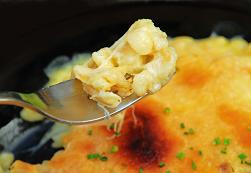
comfort foodsAh, winter comfort foods—is anything better than curling up in a blanket and eating your favorite?

However, many comfort foods, such as macaroni and cheese, fried chicken, and creamy stews and soups, are full of fat and calories we don’t need. Following are a few tips to reduce the fat and calories without sacrificing the taste and comfort you want.

Cut down the butter.

If a recipe calls for three tablespoons of butter, try using only two tablespoons (or less). Chances are you won’t notice a difference in taste. Using margarine presents its own problems, as most of them have hydrogenated oil you need to completely stay away from.

Try using lower-fat dairy products.

Instead of heavy cream, try using half-and-half, or use 2% milk instead of full-fat milk. Sour cream and cottage cheese come in low-fat varieties. You can find lower-fat cheeses, or use a smaller amount of high-quality cheese.

For some recipes, a lower-fat substitution might not work, but it’s certainly worth a try.

Reduce sugar by half.

While sugar doesn’t have that many calories, reducing it is always a good idea when trying to eat healthier. If you don’t like the taste with less sugar, try adding a little bit of honey.

Add more lean protein, fruit, and vegetables.

If you’re making a chicken potpie, use the leanest cuts of the chicken and add more vegetables. Try some broccoli, cauliflower, and beans.

Try pan-frying instead of deep-frying.

You’ll use less oil and have fewer calories. Try frying in olive oil or coconut oil for a change of taste. Taking the skin off will reduce fat, as will baking or oven-frying.

If all else fails, simply eat smaller portions, or make adjustments elsewhere in your diet.

If you can’t stand the way your mac ‘n cheese tastes with lower-fat substitutions, by all means, cook it the right way—just eat from a smaller bowl or plate. If you don’t want to do that, then plan your mac feast and eat less during the other meals of the day.

What do you do to reduce the fat and calories in your comfort foods?

Charleston Breast Surgeon Answers Your Implant and Insurance Questions

charleston breast surgeonsThe below questions are answered by Dr. James Craigie of The Center for Natural Breast Reconstruction

Should a woman have an MRI follow up every two years after implants to check on things? I’ve been told this.

Let’s go to the source of that information for the best answer . . .

This is from the product insert data sheet included with Mentor Corporation Memory Gel Implants . . .

“Rupture of a silicone gel-filled breast implant is most often silent (i.e., there are no symptoms experienced by the patient and no physical sign of changes with the implant) rather than symptomatic.  Therefore, you should advise your patient that she will need to have regular MRIs over her lifetime to screen for silent rupture even if she is having no problems. The first MRI should be performed at 3 years postoperatively, then every 2 years, thereafter. The importance of these MRI evaluations should be emphasized. If rupture is noted on MRI, then you should advise your patient to have her implant removed. You should provide her with a list of MRI facilities in her area that have at least a 1.5 Tesla magnet, a dedicated breast coil, and a radiologist experienced with breast implant MRI films for signs of rupture.”

You can read the entire product insert data sheet here: http://www.mentorwwllc.com/Documents/gel-PIDS.pdf

Does insurance generally cover redoing of nipples and tattooing?  I’m not completely satisfied with the result of my nipple reconstruction procedure.

Great question . . . Let’s address the insurance portion first. If your health insurance covers mastectomy, it must cover reconstruction throughout all phases. There are some that do not have to abide by this rule, (WHCRA 1998) but they are few and far between. Some may limit the number of times you can undergo a procedure at their expense. The best way to assure they will pay for your procedure is to call the insurance company each time and make sure you have benefits available for the procedure you desire.

Nipple reconstructions can deteriorate over time. Those that seem a little too prominent at first tend to flatten out after a while and may no longer project enough to suit a patient.  Tattoos fade, especially when applied to skin that has a large amount of scar. This being said, repeat nipple reconstructions are a quick procedure routinely performed with local anesthesia and it’s not unusual to require a touch up tattoo.

—James E. Craigie, M.D.

Dining Out in Downtown Charleston

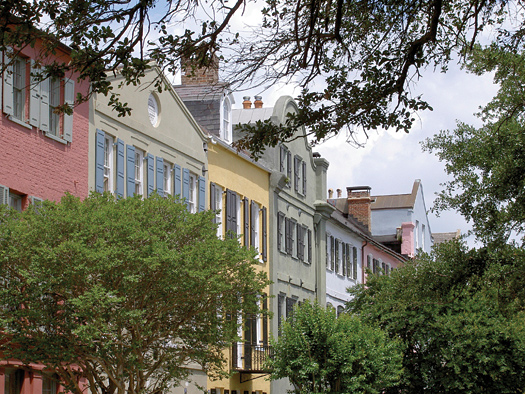
downtown charlestonDowntown Charleston is a dining nirvana. You can find everything from Southern comfort food to the finest French and Japanese cuisine. Following are some of our favorite restaurants.

Cru Café
http://crucafe.com/
Quaint Lowcountry Dining $$$$
18 Pinckney Street, Charleston, SC 29401-2006, (843) 534-2434
Lunch and Dinner

Known for its motto, “Comfort Served Daily,” Cru Café features amazing entrees such as Thai Seafood Risotto, Poblano and Mozzarella Fried Chicken, and barbecued beef brisket. Run by famed Le Cordon Bleu Chef John Zucker, Cru Café has been one of Charleston’s top restaurants since its opening in 2002.

Mercato
http://www.mercatocharleston.com/
Fine Italian Dining $$$
102 North Market Street, Charleston, SC  29401, (843) 722-6393
Dinner

Voted Charleston’s Best New Restaurant by the City Paper, Mercato is noted for its incredible Italian dishes, such as Veal Picatta, Housemade Potato Gnocchi, and Prosciutto and Arugula Pizza. Mercato’s atmosphere transports you to Italy with its Venetian plaster walls, fine Italian leather seats, and 60-year-old Italian chandelier.

39 Rue de Jean
http://www.39ruedejean.com/
French $$$
39 John Street, Charleston, SC 29403, (843) 722-8881
Lunch, dinner

According to its website, 39 Rue de Jean is “a refined French café and bar offering the best in classic Brasserie cuisine.” Enjoy delicious wine from France’s finest vineyards as you dine on Trout Beurre Blanc with almond rice pilaf, Lamb Shank with brandied figs, and Duck Confit with goat-cheese potato croquette.

Wasabi of Charleston
http://wasabiofcharleston.com/
Wasabi Sushi and Japanese Fusion Bar $$$
61 State Street, Charleston, SC  29401, (843) 577-5222
Lunch, dinner

With professional chefs trained in Japan, Wasabi of Charleston is quickly becoming the place to go for sushi and fine Japanese cuisine. You’ll have a difficult time deciding what to order with entrees such as Nabe Yaki Udon and Hibachi Steak and Shrimp and over 45 varieties of sushi and sashimi, including tamago (egg custard) and saba (Japanese king mackerel).

Hominy Grill
http://hominygrill.com/
Southern (excellent for brunch and breakfast) $$ – $$$
207 Rutledge Ave, Charleston, SC 29403-5864, (843) 937-0930
Brunch, Breakfast, Lunch, dinner

For some good old Southern comfort food, go to the nationally acclaimed Hominy Grill. Everything is prepared with locally sourced, fresh ingredients, and you’ll love the hearty breakfast with housemade sausage and hominy grits for breakfast. For brunch, try the salmon potato cakes with poached eggs, and for lunch or dinner, indulge in the Low Country Purloo, rice casserole with ham, sausage, chicken wings, and shrimp.

Which amazing downtown Charleston restaurants have you tried?

How to Develop Effective New Year’s Resolutions That You Will Keep

new years resolutions‘Tis the season to make New Year’s resolutions, but all too often they’re broken within a few days or weeks. We came up with a few ways to help make resolutions that you’re more likely to keep.

Do you really need to make resolutions?

For some people, using the word resolution dooms their plans. Maybe you should create a plan, set a goal, or make a decision.

Write it down.

To be successful in hitting your goal or resolution, you need a written plan of action. Take 30 minutes and write down what you want, why you want it, and how you plan to reach it. When your motivation wanes in the coming weeks, you’ll have that to look back on.

Be realistic.

Is losing 50 pounds in 2012 a goal that you can see yourself reaching? How about quitting smoking for the 10th time, or exercising every day? Be honest with yourself and set a goal that you can hit. Maybe 25 pounds, cutting down to ½ pack a day, or exercising three times a week are more realistic goals right now.

Focus on the short term instead of the long term.

Look at what you can do now rather than what you plan to do 6 months or a year from now. Using the examples above, focus on the month of January instead of the entire year. Decide to lose a pound a week, cut down by two cigarettes a day, or take up a new activity like Zumba or walking the dog after dinner.

Break down your resolutions into bite-sized chunks instead of trying to choke down a big goal.

Expect that things may not go the way you planned.

Most good plans have a monkey wrench thrown in at some point, and your New Year’s resolution is no different. Maybe in March you’ll hit a weight loss plateau, or your plan to quit will go up in smoke—how will you handle it? You may decide to make diet or exercise changes, or you may decide to quit smoking again.

You need to be flexible enough to roll with the punches and not feel defeated when things don’t work out as you had planned.

What has helped you to make successful New Year’s Resolutions?