Ask the Doctor: Smoking, Risks During Reconstruction, Researching Your Options

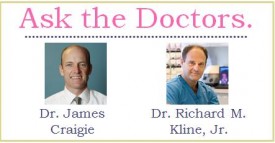
Ask the Doctor July 18This week, Dr. Richard Kline of The Center for Natural Breast Reconstruction answers your questions.

Q: I need to have breast reconstruction due to breast cancer occurring twice since 1999. I’m scared because I can’t quit smoking. The surgeon will not perform the procedure unless I quit. Are there any surgeons who will perform reconstruction even though I am a smoker?

A: Surely there are some physicians who will do reconstruction while you’re smoking, but we are not among them. This policy is only because we have personal experience dealing with the many months of wound healing problems (and tears) that commonly follow this type of surgery performed on smokers.

Smoking  isn’t just bad, it’s absolutely terrible. If you want all of your wounds to fall apart, leaving you miserable for months, there may be no better way to accomplish it than to smoke during your reconstruction. The good news is, if you stop for one month before and 3 months after your surgery (with absolutely no cheating), you can often have successful surgery.


Q: I am, after total mastectomy performed 12 months ago, scheduled for reconstruction. My age is 59 and I do not have any emotional concerns about being without a breast. However, I would like to stop wearing epiteze, and would like to not worry that it will show in summer. My concern is whether the long-lasting and repeated reconstruction (several operations, including making the healthy breast smaller) represents too big of a risk to my health. After anesthesia last year, I experienced problems with forgetting and lack of focus for about 3 months. Also, what about the operation and healing stress to the overall body? I would hate to start a new health problem because of reconstruction. What is the general risk apart from risks mentioned here?

A: The risks you are worried about are probably not so much from the surgery, but more from the anesthesia. I would suggest you discuss your concerns with your primary care provider. We can advise you about risks such as bleeding, blood clots, infection, etc., but these do not usually result in the problems you describe.


Q: Am I putting my health at risk in order to research the best reconstruction method before surgery?

A: No, I think you are looking out for your health by doing careful research in advance. Please let us know if we can help you


Dr. Richard M. Kline

Center for Natural Breast Reconstruction


Have a question about breast reconstruction you’d like answered from our surgical team? Just ask us!

Summer Concert Series at the Sanctuary and More

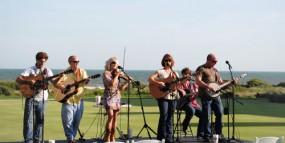
Summer wouldn’t be complete without the concert series on the Grand Lawn of the Sanctuary at Kiawah Island Golf Resort. Every Saturday evening, beginning at 5 p.m. a well-known regional performer takes the stage to entertain all ages. The concerts are complimentary and sponsored by the Town of Kiawah Island.

If you go to a concert, BYOC (bring your own chair). No outside coolers or alcoholic beverages are allowed, as drink service is available.

The dates for the rest of the summer include:

Saturday, July 13

Palmetto Soul, a band that plays a variety of tunes from the 70’s, 80’s, 90’s, and today.

Saturday, July 20

Coastal Breeze Band, an eclectic group that plays retro, soul, pop, and Motown songs from the 70’s through the 90’s.

Saturday, July 27

17 South Band, which plays swing, jazz, rhythm and blues, Motown, and beach music from the last 50 years.

Saturday, August 3

Palmetto Soul

Saturday, August 10

The Sneakers, who play funk and jazz as well as beach and blues.

Saturday, August 17

Common Ground, a folk and bluegrass band sure to please everyone.

Other summer concerts include Music on the Green Summer Concert Series at Freshfields Village, Blues & BBQ Harbor Cruises, and The Sound of Charleston.

Hair and Skin Treatments for Summer

Summer means your hair and skin are on view, and you want them to look their best. We’ve run across a few treatments to help you keep your skin and hair in the best, most luxurious shape possible, and we’d like to share.

Moroccan argan oil

This incredible oil works to keep both hair and skin supple and moisturized, and it contains naturally occurring vitamin E and antioxidants. Many beauty products are incorporating the oil, though there may not be enough oil in them to be of any value.

You can purchase the oil itself and use it as you see fit on your hair before, during, or after your shower. This oil can also be used after you blow dry your hair. To use on skin, apply just a few drops any time. It is particularly helpful for the skin under the eye.

Natural hair remedies

Your next hair treatment may be as close as your kitchen. With its moisturizing yolk and oil-cutting white, eggs transform any type of hair.

Normal hair = use entire egg

Dry hair = use yolk only

Oily hair = use white only

Apply to damp, clean hair, wait 20 minutes, and rinse with cool water to avoid cooking the egg.

For hair with no body, combine 1 tsp canola oil, a raw egg, and ½ cup flat beer. Apply to damp, clean hair, let sit for 20 minutes, and then rinse with cool water. Avocado will help smooth frizzy hair and repair damage. Mash half an avocado and massage into damp hair. After 20 minutes, rinse with water.

You don’t need to pay for clarifying shampoo. Simply create a paste of 2 tbsp baking soda with a little water and massage into your hair. After 10-20 minutes, rinse with water and wash hair.

Natural skin treatments

You don’t need to pay to help your skin stay beautiful and young looking. You just need to go to the grocery store. Coconut oil will remove makeup and moisturize your skin better than most lotions. Be sure to buy virgin organic oil, and keep it out of your eyes.

Cocoa butter is an excellent all-over moisturizer, and like coconut oil, it smells delicious. Olive oil, sugar, and lemon combined make an excellent exfoliating scrub for the entire body.

Rub mayonnaise over your feet, wait 10 minutes, then wipe it off. You can also do the same on your face for a rejuvenating facial.

Which hair and skin treatments do you swear by?

DIEP Flap Procedures: Can You Restore My Original Breast Size? Do You Remove Muscle?

This week, Dr. Richard Kline of The Center for Natural Breast Reconstruction answers your questions.

Q: I am having a double mastectomy on August 1st. I want to have a DIEP flap reconstruction, but will have to settle on being half the size I am now because there isn’t an abundance of fatty tissue in my tummy. I am a full C cup now and will probably be a B cup following the reconstruction. Can additional fat be harvested from my buttocks at the time of my initial surgery to make me look like I do now or do I have to wait until Stage 2?

A: There are a few potential ways to look at your situation.

First, it is possible to do DIEPs and GAPs simultaneously (4 separate flaps). We don’t do this, because we have concerns about our ability to monitor the buried flap, but we do know have references to associates who can and we are happy to provide you with this information.

Second, it is possible to inject fat into the DIEP flap, and potentially the mastectomy skin flaps as well (if they are thick enough), as well as in the pectoralis muscle at the time of the DIEP flap. All that together will buy you some extra size, but it’s hard to predict how much.

Finally, you could do fat injections after healing in a subsequent stage(s). I would call this the “tried-and-true” technique, little to lose, much to potentially gain. We are investigating BRAVA as an adjunct to this, but not quite ready to use it yet.


Q: What happens if I am getting a DIEP flap done and some muscle has to be removed from my abdominal area?

A: A true DIEP flap never results in the removal of muscle, by definition. Some flap surgeons apparently tell patients they may need to remove a little bit of muscle, and we’re not sure why they say that, because we’ve never found it necessary in many hundreds of flaps.

However, with rare exceptions, the rectus muscle does have to be “disassembled” (and put back together again, of course) to remove the blood vessels, and this can occasionally result in partial loss of muscle function. We work extremely hard in designing each DIEP flap to maximize the blood supply to the flap, while minimizing the potential for loss of muscle function.

We obtain an MR angiogram pre-operation. This  requires an unusually strong 3T MRI for best images, which gives us an excellent “road map” of your individual perforator anatomy. We also frequently use the SPY intraoperative laser fluorescent angiogram to help determine exactly which perforating vessels supply the flap best. Thanks to these technologies, in addition to using the best surgical technique we can, it has been many years since we have encountered any significant functional abdominal wall problems in any of our patients.

Hope this helps!

Dr. Richard M. Kline

Center for Natural Breast Reconstruction

Have a question about breast reconstruction you’d like answered from our surgical team? Just ask us!

Blues and BBQ Harbor Cruises

A two-hour cruise from 7 p.m. to 9 p.m. every Thursday night from April through October, the Blues & BBQ Harbor Cruise series features live music from blues bands and a Home Team BBQ buffet.

The dates in July are the 4th, 11th, 18th, and 25th.

The cost is $39.95 per person, tax included.

Sponsored by Charleston Harbor Tours and The Bridge 105.5, the cruises take place aboard the Carolina Belle. As you would expect from Charleston’s finest BBQ restaurant, the food is delicious: smoked chicken, pulled pork, baked beans, coleslaw, and macaroni and cheese.

Local favorite Shrimp City Slim (Gary Erwin) plays while you take in the sights of Charleston, including Fort Sumter, the USS Yorktown, the revered St. Michael’s Episcopal Church,the Battery, the Ravenel Bridge, and Forts Johnson and Moultrie.

You’ll meet at the Charleston Maritime Center near Concord and Calhoun before boarding the Carolina Belle. Find out more about the Blues & BBQ Harbor Cruises by calling 843-722-1112 or 888-224-5037, or visit the Charleston Harbor Tours site here.

Safety Tips for Catching Some Rays

You love the look of a tan, but you don’t want the problems that can come with exposure to the sun. What if we told you that you could tan in a relatively safe manner? Here’s how.

Easy does it.

If you decide to lie in the sun, don’t try to get a full-on tan all at once. Gradually work up to the color you want by spending shorter times in the sun. The bonus is that you get natural vitamin D through sunlight. It’s better to err on the side of less sun exposure . . . there’s always tomorrow.

One possibility is to start your tan with short stints in the sun for a week or two, and then use a self tanner (more below) to deepen the color without extra sun exposure. A “short stint” depends on how quickly you burn. If you’re fair skinned, you may only be able to stay in the sun for 20 minutes or so, while the darker-skinned among us may be able to tan for an hour at a time.

Watch your time.

You are more likely to burn if you lie in the sun at midday, so try tanning in the morning or later in the afternoon. You can stay out a little longer then. Continue to wear sunscreen if you may be in the sun longer than the time it takes you to burn.

Try a tan in a bottle.

Self tanners are much easier to apply than they were years ago, and you don’t risk sun exposure when you use them. They work by changing your skin color, and a self tanner lasts about a week. You need to be careful how you apply it for best results, but you can get a nice looking tan from a bottle. Often people who try a self tanner and are inexperienced find that their skin looks streaky or blotchy, so there may be a learning curve for you to get the color you desire.

If you don’t mind applying it daily, tinted moisturizer or a bronzer will give you a sun-kissed look.

No matter how you decide to tan, remember that the tan occurs in the outermost layer of your skin, so anything you can do to hold on to that layer will extend the duration of your tan. Avoiding exfoliation and using moisturizer will help. As doctors, we do want to gently remind you that excessive sun exposure may cause cancer and premature aging.

Can Small Implants Be Used with Flap Surgery for Added Volume?

This week, Dr. Richard Kline of The Center for Natural Breast Reconstruction answers your questions.

Q: Can small implants be used with flap surgery for added volume?

A: The short answer is “yes, sometimes.”


We have had good success augmenting flaps with reasonable-sized implants in non-radiated patients. In radiated patients, it’s still sometimes possible, but it’s very dependent on how much of the breast mound is covered with flap skin versus radiated breast skin, and what the quality (the technical term is “compliance”) of the radiated breast skin is. Every case is different.

Our nurse or PA can provide you with more information upon request. 

Hope this helps!

Dr. Richard M. Kline

Center for Natural Breast Reconstruction

Have a question about breast reconstruction you’d like answered from our surgical team? Just ask us!

Charleston Area July 4th Celebrations

CHarleston Events Fourth of JulyIndependence Day is one of our favorite holidays, and here are a few ideas to celebrate with your family.

Celebrate at The Sanctuary!

The Sanctuary is a perfect place to spend your 4th of July, with three events going on. The ice cream social runs Thursday through Saturday from 7 p.m. to 10 p.m. each night. You’ll create your own ice cream sundae with your choice of toppings. A small sundae is $9 and a large is $11.

On the fourth, the Young Adults Buffet takes place on Jasmine Porch from 5:30 p.m. to 10 p.m., and Loggerhead Grill will have an all-day party with live music, clowns, and hair braiding. Terrace Lawn will feature children’s activities, food, drinks, and the All American Band.

The Independence Day Fireworks will start at 9:40 p.m. For more information, visit http://www.kiawahresort.com/.

8th Annual Sizzling Southern Celebration

The Circa 1886 restaurant offers a Charleston 4th of July celebration with a Southern picnic and drinks. You’ll listen to a live jazz soloist before you watch fireworks at the Wentworth Mansion. The price is $70 per person, which includes champagne. Visit the Circa 1886 website for more details.

Fourth of July Celebration at the South Carolina Aquarium

Join us on the Riverside Terrace of the Aquarium at 7 p.m. for a fun evening to include barbecue from Smoky Oak Taproom, beer from Holy City Brewing, a movie, music, and fireworks. Tickets are $55 for adult and $30 for children over the age of two.  If you’re an Aquarium member, take $5 off the price. Be sure to BYOC (bring your own chair).

July 4th Cross-Country Run

For the sports minded, the fourth of July means a cross-country run on the dirt trails at Trophy Lakes on Johns Island. Early registration runs through June 27 and is $20 with a shirt and $15 without. Late registration is $25 with shirt and $20 without. Awards are given to the top three finishers by gender and age group.

Other celebrations include the Patriots Point 4th of July Blast, Uncle Sam Jam at Mount Pleasant Pier, and the July 4th Craft Brews Cruise on the Carolina Queen.

How to Train for a Marathon

How to Train for a MarathonSo you’ve decided to train for your first marathon. Congratulations! You’re in for an exciting challenge that will keep you on your toes and help you grow mentally and physically in ways you never imagined. As the website marathonrookie.com states, “Let your mind lead the way, not your body.”

It doesn’t matter if you’ve never run a day in your life or you run 10 miles daily—you can do this! Whether you’re running a 1K or a 10K, the principles are the same. Following are tips and ideas to help you train and love what you’re doing.

Have the right motivation.

Why are you doing this? Marathon training is hard work, and you can’t expect results unless you’re consistent and train daily. What is driving you to train—is it participating in a 5K in honor of a friend or family member? Perhaps you are out to prove to yourself that you can run a marathon. Know your reasons, as they will keep you going when you feel unmotivated.

Mental training is just as important as physical training. Motivational mental training might involve visualizing yourself crossing the finish line, using affirmations, tapping, or merely making the decision each day to continue training. No matter what you to motivate yourself, know that you will have to consciously do it at least once a day, if not several times.

Put yourself on a schedule.

Any marathon training website, such as marathonrookie.com, [link to site] will have a training schedule for you to follow. Keep to it religiously for best results, and follow its recommendations on running gear and mileage per day and per week.

Typically, the first task is to become accustomed to running for a set amount of time, such as 30 minutes. Once your stamina is built up, then you can increase your distance. Recovery time is just as important as training time, so be sure to follow those recommendations closely.

Keep yourself hydrated and nourished.

You need carbohydrates to provide you with the energy to run for extended periods. Plenty of protein will help your body maintain and repair muscle tissue. Aim for no less than 2,000 calories a day, of which two-thirds should be carbohydrates while the other third are high-quality, unsaturated fats and protein. Supplements will provide vital micronutrients such as vitamins and minerals.

Always drink plenty of water and / or sports drinks to stay hydrated. Ideally, you’ll consume about a cup of fluid every 15–20 minutes. Spread it out rather than trying to chug several cups at once. Sports drinks have one advantage over plain water: they replenish electrolytes that you lose while running.

Go to the experts for advice on training—don’t try to do it alone. Learn from their expertise, and good luck!

Can Upper Stomach Fat Be Used For Breast Reconstruction?

Ask the Doctor

This week, Dr. Richard Kline of The Center for Natural Breast Reconstruction answers your questions.

Q: Can upper stomach fat (fat around the rib cage) be used for breast reconstruction if liposuction was performed on the stomach area below the belly button? What if my liposuction was done more than ten years ago?

A: Liposuction is only a relative contraindication for DIEP flaps, as the necessary blood vessels may well still be present. An MR angiogram is often very useful in determining if adequate perforating vessels are available.

Additionally, it is often possible to use fat from anywhere on the body to reconstruct breasts with the aid of the BRAVA system. The use of the BRAVA with fat grafting is not yet FDA-approved, but it looks very promising for women who either have no good flap donor sites, or don’t want large incisions.

Hope this helps!

Dr. Richard M. Kline

Center for Natural Breast Reconstruction

Have a question about breast reconstruction you’d like answered from our surgical team? Just ask us!