Search Results for: history of breast cancer

Ask The Doctor – Recovery After a Failed Implant Reconstruction

<alt='failed implant reconstruction"/>This week, Dr. Richard M. Kline, Jr. of The Center for Natural Breast Reconstruction answers your question.

QUESTION: I had breast cancer twice, and one of my breast implants got a bad infection. My implants had to be removed, and I’ve left them that way since. Now I’m 58 years old, and I’d like to have reconstruction. Is this possible for me at my age and after an infection?

ANSWER: Thanks for your question. While I cannot obviously make precise predictions about our ability to help you without knowing a little more, I can tell you that your situation is actually a very common one. Fortunately, a history of failed implant reconstruction has very little impact on our ability to subsequently reconstruct you with your own tissue, and we have successfully reconstructed many, many women in your situation. If you wish, one of us can give you a call to discuss your situation further, and we can go from there. Have a great day!

— Richard M. Kline, Jr., M.D.    

Have a question about breast reconstruction or post-surgical care you’d like answered from our surgical team? Just ask us!


Ask the Doctor: Lymphedema and Lymph Node Transfer

<alt="3 pink roses"/>This week, Dr. James Craigie of The Center for Natural Breast Reconstruction answers your question.

QUESTION: I’ve had breast cancer and developed lymphedema after my mastectomy.  I recently heard about Lymph Node Transfer surgery.  Does it work?  I’m scheduled for a DIEP breast reconstruction, can it be done at the same time?

ANSWER: Lymphedema is a very difficult problem that results when a patient has had breast cancer and has to undergo surgical removal of the lymph nodes under the arm as part of their surgical treatment for breast cancer. There are other causes of lymphedema but our specific interest has been in patients who have had breast cancer.

Lymphedema can be a very debilitating process; it remains a terrible problem worldwide, for all types of reasons. There is still much to be learned about why some people develop lymphedema and others do not. It appears that lymphedema is directly related to several factors in our breast cancer patients. It is directly related to having the lymph nodes removed from under the arm and seems to develop from the scarring that occurs under the arm following mastectomy and / or axillary dissection.

Undergoing radiation of the arm or axilla increases this risk. However, there are many people who undergo removal of the lymph nodes and radiation that do not develop lymphedema. There are also people who have mastectomy, have lymph nodes removed followed by radiation, and don’t develop lymphedema until many years after their surgery. That is the main reason that patients are warned to pay particular attention to their arm if they have had removal of any lymph nodes.

It is also possible that someone could get lymphedema even after simply having a sentinel node removed. A sentinel node procedure (lymphadenectomy) is a way to examine the lymph node without having to remove more than one or two. The whole idea of examining only the sentinel node is to lower the risk for lymphedema, but even with the sentinel node procedure, there is still a chance of developing lymphedema. Our practice became interested in options to help breast cancer patients with lymphedema as we see many who are suffering from the symptoms of this process while undergoing breast reconstruction.

Our practice specializes in microsurgical free flap breast reconstruction utilizing skin, underlying tissue, and microscopic blood vessels that transport life-giving blood to the reconstructed breast. This procedure is commonly referred to as the DIEP if using the abdomen or a GAP if using the buttock tissue. The muscles of the abdominal wall are left intact as it is the removal of the muscles of the abdominal wall that can lead to problems in the donor area, like hernias and bulging, as well as a more involved extended recovery. The lower tummy wall is the most common area that we transfer and it’s also an area where lymph nodes are present. Therefore, over the first decade this surgery was being done, we would encounter lymph nodes in the area of the blood vessels, as well as fatty tissue.

It became obvious that we could transfer lymph nodes on the blood vessels as we refine our technique for microsurgery. Due to the lack of effective treatment for lymphedema, for years surgeons doing perforator flaps have taken on this challenge and are trying to come up with ideas and techniques to treat it. We began doing an extensive amount of research, spanning the globe, looking for information on procedures that may help these patients. In 2005, we formed a group known as the Group for the Advancement of Breast Reconstruction, known as GABRs, and we included members throughout the world who had had a unique experience with our type of breast reconstruction.

We encountered one individual who had 15-years of experience with what is now known as “vascularized lymph node transfer” for the treatment of lymphedema. Initially, Dr. Robert Allen had attempted lymph node transfer during breast reconstruction and the biggest concern was how to transfer lymph nodes from one area of the body to treat lymphedema but not to create lymphedema in the donor area. In 2006, the GABRs met in Beijing, China and invited Corrine Becker, a surgeon from France who had a long history of experience with vascularized lymph node transfer.

She presented her work and through communication and travel to Paris to work with her, members of the GABRs group began to gain experience and learn more of her technique. The biggest hurdle that we were able to overcome was learning how to select the lymph nodes that could be removed as the donor lymph nodes and use those for breast reconstruction without causing lymphedema of the leg. We spent an extensive amount of time discussing her techniques and reviewing her results, as well as her publications.

We then made arrangements for her to travel to South Carolina and actually performed surgery on our own patients with her as an assistant surgeon. Since that time we have been very encouraged by the results with vascularized lymph node transfer as an effective treatment for reduction of the symptoms of lymphedema. We feel very excited but yet are very cautious about all results. It is important that patients realize that this procedure is still evolving and that there are risks involved, but to date we have had very good results and no serious complications.

Improvement of symptoms with vascularized lymph node transfer can occur immediately; however, they also may take up to 2 years to be appreciated. In most of our patients, the indicators of success are different. For the majority, the goal was to improve the edema, lessen the need to wear compression garments on a regular basis, and to eliminate the risk for frequent infections, which are the typical problems that those affected by lymphedema experience.

In order to lower the risk for complications and to closely study our results in conjunction with other colleagues who perform this procedure, we prefer to perform vascularized lymph node transfer as an isolated procedure. It can be done at the time of breast reconstruction; however, there is a chance that some people with mild lymphedema who undergo breast reconstruction may have improvement without lymph node transfer. Therefore, in order to closely study our results, we perform the breast reconstruction first followed by vascularized lymph node transfer as the second step. When the results are complete, we can determine whether it was the reconstruction or the transferred lymph nodes that gave the end result. It is important again to reemphasize that the main risk for of the surgery is that the transfer may not work. It is possible that if the transfer did not work resulting in more scar, the lymphedema could worsen.

Thankfully, to date, we have not experienced this complication. Other complications are damage to the blood vessels under the arm or the nerves under the arm. Therefore, our preference is to have an oncologic surgeon, who performs axillary dissection, release the scar under arm.  At the same surgical setting, after the scar is released, we perform the transfer by removing very specialized lymph nodes from the outer and lower abdominal wall or outer upper leg. We preserve the lymph nodes of the inside leg. These are the ones that drain the lower extremity and therefore, we feel that the risk for lymphedema of the donor area is reduced.

At this point, we have received some very exciting results along with some mixed results and continue to follow our patients very closely. We have had no patients with any serious complications and no patients at this point with lymphedema of the donor site. We are hopeful that the future holds vascularized lymph node transfer as an effective option for people with lymphedema following breast cancer surgery.

We plan to continue to devote and focus our energies on a surgical solution while simultaneously not exposing people to excess risk of additional problems. Once again, we do have to admit that the surgery, although giving some promising results, is  still evolving at this point and we choose to proceed with caution in the best interest of our patients.

— James Craigie, M.D.

Have a question about breast reconstruction or post-surgical care you’d like answered from our surgical team? Just ask us!

September: Charleston Events Roundup

<alt="arial act"/>The year is almost over! Time goes by quickly when you’re having fun, right? Thanks to these exciting Charleston events for September, it will be October before you know it. Don’t miss these opportunities to have some fun!


September 1: Beating the Surf

Join Capt. Ben Floyd at 6:30 p.m. at the Mt. Pleasant shop, as he covers everything from rod & reel selection, to bait and tackle, to which tides work in your favor. Surf Fishing is a great way to get anglers of all ages catching fish. Whether it’s bull redfish or bull sharks, the surf has it all.

Come enjoy a few drinks, learn some new skills and enjoy 10% off everything during the night of the seminar.

To register, please e-mail jj@thecharlestonangler.com. For more information, please visit this website.  


September 2, 7, 9, 14, 17, 21, 26, 30: Sherlock Holmes and the Charleston History Mystery

Join Sherlock Holmes for an Historical City Tour truly for everyone — where without ever leaving your theatre seat you will explore Charleston’s past, present, and … other worlds. Should you choose to volunteer, you may actually participate and play a victim, villain, or vile vision in The Case of Sherlock Holmes and the Charleston History Mystery!

$24 Adults, $22 College/Military, $15 Children 12 and Under.

Please see the website for showtimes and to purchase tickets.


September – Every Thursday, Friday, Saturday: Evenings in the Market

The weekly event, designed to showcase local artists, food vendors and designers, is from 6:30-10:30 p.m. every Thursday, Friday, and Saturday from March through December.

For additional information, please visit this website.  


September 6: Downward Facing RiverDog

Come and enjoy some yoga at the Joe! International Yoga Instructor, Kathryn Budig, will be at the Joe teaching some yoga moves on the field. Gates open at 9 a.m. Yoga on the field is from 10-11 a.m. There will be free parking, live music by Estee Gabay and a cash bar featuring mimosas and bloody marys. All levels are welcome. The class will be playful and enjoyable for all. $10 in advance, $15 at the door.

For more information, please visit the website.  


September – Every Wednesday: Fall Wine Strolls

Sip and stroll in a different garden location each week while sampling old and new world wines. The season ends with a Masquerade Wine Stroll Finale on October 29!

Time: 6 – 8 p.m.

Cost: $20/online, $25/gate ($5 off for Foundation members).

For more information, please visit the website.


September 14: Dance with Dragons

The 2nd Annual Dance with Dragons offers a beautiful evening of outdoor circus arts performances including hooping, acroyoga, serial silks, slacklining, and juggling playshops. Spectate, play, perform, gawk, share, and make new friends. You might be tempted to run away to the circus afterwards!

This year’s even benefits Dragon Boat Charleston, a non-profit that promotes physical and mental wellness among local cancer survivors and their community.

4:00 p.m .- 8:00 p.m.

$5 for adults, kids attend free.

For more information, please visit the website.


September 20: 2014 Walk to End Alzheimer’s

The Alzheimer’s Association Walk to End Alzheimer’s® is the world’s largest event to raise awareness and funds for Alzheimer’s care, support, and research. Held annually in more than 650 communities nationwide, this inspiring event calls on participants of all ages and abilities to reclaim the future for millions. The Charleston walk will take place at the Charleston Harbor Resort & Marina.

Registration at 8:00 a.m. | Ceremony at 8:45 a. m. | Walk at 9:00 a.m.

Route Length: 3 miles.

To register, please visit the website.


September 19-21: 7th Annual Autumn on the Ashley

The Tri-County Master Gardeners will host the 7th Annual Autumn on the Ashley open-air craft fair Sept. 19-21 at Magnolia. More than 50 vendors are expected to exhibit wood cravings, paintings, textiles, pottery, jewelry, culinary oils, and photographs. The Philip Simmons Artists Blacksmith Guild will demonstrate their craft while dancers entertain the crowd.

Autumn on the Ashley, which is free to the public, opens at 9 a.m. and closes at 5 p.m. A $100 vendor fee will be charged for a vendor booth space to display handcrafted items. No retail items will be allowed. Vendors are responsible for their own pop-up tent, tables and chairs. Vendors who require electricity are encouraged to register early. Eight spaces with electricity are available.

The Master Gardeners will answer gardening questions and provide soil samples. The cost for a soil analysis is $6 each. Call 843-722-5940 to get tips on how to collect a sample. Plants and gardening books will be on sale.

For information and to reserve a booth, call Magnolia’s operations manager Mary Ann Johnson at 843-571-1266, extension 229. You can also visit this website.

Pinching Pain Around the Flap Area–Is This Normal?

DaisyThis week, Dr. James Craigie and office manager Gail Lanter of The Center for Natural Breast Reconstruction answers your questions.

Q: Hello! I am a breast cancer survivor. In 1995, I was diagnosed and had my mastectomy and reconstruction all at one time. It was a 13-hour surgery.

Lately, I have been experiencing some pain like a pinching around the flap area. Is this normal? Perhaps scar tissue? Also, what can cause this? Most mammogram techs will not do both breasts during mammograms; they say there is no need. But this makes me a little scared. What if the pain is cancer coming back in that area? Also, could weight gain contribute to this discomfort? I appreciate your insight. 

A: It is not unusual for aches and pains to develop in the area you had surgery. If you have had weight gain then changes in the breast shape could cause pulling on the scars from your surgery. A lot would depend on the type of reconstruction you had. You should definitely have either your surgeon or cancer doctor examine you to determine if they notice anything suspicious. If so they may need to perform some type of test to get more information. They might consider an MRI or ultrasound. Our practice is dedicated to breast reconstruction and we are not experts at screening for breast cancer or  the treatment of breast cancer.

I would definitely recommend you follow up with  one of your doctors if your discomfort persists. I do not routinely have patients undergo screening mammograms of their reconstructed breasts. I hope this helps and that everything works out okay.

Dr. James Craigie


Q: I have the gene mutation, BRCA 1. I am from Ashkenazi Jewish descent. Many family members have been diagnosed before the age of 40. I have a scheduled prophylactic mastectomy with DIEP flap surgery scheduled for the end of May. I received a call this morning that Humana will not cover prophylactic surgeries. I know there’s got to be a way and that’s why I’m writing you. They’re telling me that my physicians can file an exemption or determination letter. Is this the best way to go about this? Do you have any advice for me on what I need to or ask my doctors?

A: I am sorry that you are having trouble getting information about the coverage of a prophylactic mastectomy.  That can make a difficult situation even harder to deal with!  Without having all of the info about your particular Humana plan, I can offer you general information that may help.  You can access here Humana’s most recent clinical policy regarding coverage of prophylactic mastectomy.  It clearly says that a patient is eligible if she has a personal history of the BRCA 1 mutation so I am unsure why you are receiving conflicting information.  Did you receive the call from a representative employed by Humana?  If so, I would certainly initiate another conversation with them and identify this clinical policy.

Gail Lanter

Practice Manager, Center for Natural Breast Reconstruction

Have a question about breast reconstruction or post-surgical care you’d like answered from our surgical team? Just ask us!


Mastectomies and Expanders: Your Questions Answered

Ask the DoctorThis week, Dr. Richard Kline of The Center for Natural Breast Reconstruction answers your questions.

Q: Both my mother and my aunt have been diagnosed with breast cancer. If I were to get a mastectomy, would it be covered by insurance in the state of Pennsylvania?

A: The situation with “high risk” patients and prophylactic mastectomy seems to be evolving. If you are tested and found to have the BRCA gene, most or all insurers seem to be covering mastectomy and reconstruction. Even if you do not have the BRCA gene, but have a strong family history such that your medical oncologist recommends mastectomy, your insurer may well cover it. There may be other laws specific to this in the state of Pennsylvania of which I am not aware, but possibly Gail, our office manager and insurance specialist, can help you more.

Q: I had breast cancer in my right breast, and received a double mastectomy in November. They placed expanders in both. I didn’t have any trouble on the left side. However, six surgeries later, I opted to have my right-side expander removed. It feels better. However, I am now scared to undergo reconstruction due to this past trouble with my right expander. I still have the expander in my left breast. Any advice for me? Is it common to have trouble with expanders?

A: Sorry you are having trouble.

Unfortunately, trouble with expanders is pretty common. It’s more likely if you were radiated on the “problem” side, but it also happens with some regularity even if you aren’t radiated.

Fortunately, previous trouble with expander or implant-based reconstruction does not adversely affect your ability to have natural breast reconstruction using your own tissue. Many of our patients come with stories very similar to your own, some already having had over 10 surgeries, and almost all have subsequently achieved satisfactory, natural-feeling reconstructions without the use of implants.

I think there is an excellent chance that we can help you. If you wish, we can have our nurse Chris or P.A. Kim call you to discuss the specifics of your situation in more detail.

Dr. Richard Kline

Center for Natural Breast Reconstruction

Have a question about breast reconstruction or post-surgical care you’d like answered from our surgical team? Just ask us!

How Do We Emphasize Prevention in Healthcare?

Prevention in healthcare saves lives and money, and it keeps all of us healthier. Not many know about preventive medicine, because much of our medical system focuses on treating symptoms and disease. We all have a good idea of what prevention is and why it’s important. We can all agree on the need to take basic health steps such as drinking water, eating right, and exercising.

Health professionals who focus on prevention use a system to do their work. We thought we’d share some of that with you, as it’s interesting and not often discussed.

Primary prevention focuses on avoiding occurrence of disease, and most health prevention activities fall into this type. Vaccines and condoms are two examples of primary prevention. They stop illness before it can start. In the case of condoms, they prevent unwanted pregnancy as well as sexually transmitted disease.

Secondary prevention methods detect and treat disease in the early stages so it does not cause further health issues. The PSA screening test for prostate cancer, mammogram, and Pap smear are considered secondary prevention because they catch cancer early to make treatment possible.

Tertiary prevention aims to lower the negative effects of current disease by reducing complications of the illness. One example includes using nebulizer medication, respiratory therapy, and oxygen therapy for chronic obstructive pulmonary disease. In fact, most of the therapies (rehabilitation, occupational, physical) are tertiary prevention because they attempt to restore function at the highest possible level.

Quaternary prevention includes health interventions for avoiding over diagnosis and overtreatment. One example is providing palliative or comfort care after a patient has reached the point in illness that warrants stopping curative measures. Simply listening to the patient often gives information about overtreatment. If the patient is sleepy too much, it might indicate over-prescription of medication.

In addition to the four types of prevention noted above, prevention also occurs in a tiered system, which is described below. Often, behavior that leads to a health issue is addressed in the prevention strategy.

Universal prevention involves a large, similar population, such as a school or workplace to prevent a health problem. Typically, primary prevention occurs here.

Selective prevention targets groups who are at risk of developing a health issue. The group members share certain common traits, such as family history or age.

Indicated prevention narrows the group further to by using a screening process to identify individuals who already show signs of the health issue or dangerous behavior, such as smoking or drinking.

One more type of prevention is noteworthy. Environmental prevention methods address the illness or behavior at the community level and use restrictions to manage the illness or behavior. Quarantines, city and county laws, and smoking bans are environmental prevention measures.


What Technique Do You Use For Nipple Reconstruction?

This week, Dr. Richard Kline of The Center for Natural Breast Reconstruction answers your questions.

Q:  Can you tell me how successful you have been in doing nipple reconstruction and what technique you use? I had one done from tissue gathered from my own breast, then had fat transferred but it is still flat. Now that I am losing the other breast (2nd mastectomy) I would like to have a protruded nipple even if just a bit on each breast. 

A: I use the “skate flap” technique, although many similar techniques using local tissue exist. There are, in my experience, two potential problems which may cause nipple reconstruction to be unsuccessful.

1) Sometimes, a portion of the flap just dies. This is, to a large extent, unpreventable and unpredictable, as these flaps are too tiny to be based on any known blood vessel. Additionally, the need to put the nipple in the proper location precludes altering its design to potentially improve blood flow.

2) We have learned that it is essential to protect the flap from the pressure of clothing until it is fully healed (at least one month). There are special domed “Tupperware” protectors made just for this purpose.

It helps to make the nipple larger than desired at first. That leaves a little leeway if things go awry, and it only takes a few minutes to reduce a nipple in the office if it ends up being too large.

Hope this helps, good luck.

Q: I have just been diagnosed with breast cancer of the right breast. The surgeon suggest bilateral mastectomy due to family history. Should I meet with a plastic surgeon before the surgery or get a 2nd opinion?

A: Whether or not you ultimately decide to have reconstruction (at the time of mastectomy, or later), you should at least speak with a plastic surgeon beforehand so that you know all of your potential options. Ideally, your breast surgeon already works with one or more plastic surgeons, and can help direct you to one.


Dr. Richard Kline

Center for Natural Breast Reconstruction

Have a question about breast reconstruction you’d like answered from our surgical team? Just ask us!

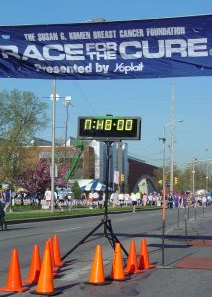
Race for the Cure®!

It’s that time of year again–where we stand up and run for the cure!

That’s right–it’s time for the 20th Annual Susan G. Komen Lowcountry Race for the Cure®!

When:  Saturday, October 19, 2013

Where: Family Circle Cup, Daniel Island, South Carolina

Who: YOU!

How much: Visit http://www.komenlowcountry.org/komen-race-for-the-cure for more details on dates and fees.

Important Dates:

Wednesday, October 16th – Online registration ends @ noon

Thursday, October 17th – Sponsor booth setup noon–7 p.m.

Friday, October 18th – In-person registration / pickup, expo open from 9 a.m.–6 p.m.


Race Day!

7:00 a.m. Expo, Sponsor Village, and Survivor Tent Open

8:00 a.m. Survivor Celebration

8:30 a.m. Fun Run/Walk

9:15 a.m. 5k Run Timed

10:00 a.m. Awards Ceremony

(No rollerblades or pets, please. Strollers, please line up at the back.)

According to the Komen website, 75% of what you pay or raise stays in the Lowcountry service area to provide “breast health education, screening and diagnostics, and survivor support services.” The remaining 25% supports Komen’s national programs.

In 2012, the Komen Lowcountry Race for the Cure® raised over $800,000. This year, the goal is a million dollars, and they need your help. (While your registration fee is not tax deductible, anything additional you donate is.)

If you’d rather Sleep In for the Cure, visit this link to register:

http://www.komenlowcountry.org/komen-race-for-the-cure/sleep-in-for-the-cure/

A brief history of the Race for the Cure® from the Lowcountry website:

“Susan G. Komen fought breast cancer with her heart, body, and soul. Throughout her diagnosis, treatments, and endless days in the hospital, she spent her time thinking of ways to make life better for other women battling breast cancer instead of worrying about her own situation. Moved by Susan’s compassion for others and commitment to making a difference, Nancy G. Brinker promised her sister that she would do everything in her power to end breast cancer.

Though Susan lost her battle with the disease, her legacy lives on through the work of Susan G. Komen for the Cure®, the organization Nancy started in her honor.

The Lowcountry Affiliate of Susan G. Komen for the Cure—along with those who generously support us with their talent, time, and resources—is working to better the lives of those facing breast cancer in our community. We join more than 100,000 breast cancer survivors and activists around the globe as part of the world’s largest and most progressive grassroots network fighting breast cancer. Through events like the Komen Lowcountry Race for the Cure®, we have invested more than $5.5 million in local breast health and breast cancer awareness projects in 17 counties.”

Click here to join us on the 19th!


After Radiation, Mastectomy and Reconstruction, I’m Having Extreme Back Pain…Solutions?

This week, Dr. James Craigie of The Center for Natural Breast Reconstruction answers your questions.

Q:  About 6 years ago, I had a bilateral mastectomy with reconstruction. The plastic surgeon took one muscle from each side of my back to reconstruct each breast. Now I am experiencing extreme back pain on the right side. This is the side where the tumor was. This was a second occurrence.

In 1993, I had a lumpectomy with chemo and radiation to this right breast/side. The extreme pain feels like it is muscular in nature on the right side. Is this normal and something I just have to live with, or might there be some other treatment for muscle pain? Should I have it checked out for a possible disc problem causing the radiating pain in my back? Should I check out physical therapy or is it too late for this therapy? I am at a loss and hate enduring this constant pain.

A: Thank you for your question, I am sorry you are experiencing pain.

When the pain first developed and exactly where it is located could help determine what the cause is and how to treat it. If it is your back in the area where your back muscle was removed it could possibly be related to your spine discs or from your body compensating for not having the muscle. If you have an implant and the discomfort is in the breast area it is possible that scarring around the implant is the cause.  Most importantly you should let your plastic surgeon,  breast surgeon and oncologist know so they determine the cause and treatment.

Your oncologist should determine if you need any special scans or tests with regard to your breast cancer history and your plastic surgeon can determine if it has to do with the reconstruction and if there is a fix.


Q: I had nipple reconstruction a month ago. After a summer with not having to wear a bra, I’m now having remorse that I didn’t go for 3-D tattoos. Two questions:

Can one have the reconstructed nipples removed?

Is there a way to flatten the nipples over time?

I understand that some nipples flatten naturally but others don’t. I wish I had thought all this through the way I did for every other decision I made during the breast cancer journey. Is there any thing else you would suggest for someone with buyer’s remorse regarding nipple reconstruction? 

A: Thank you for your question.

I suggest you ask your surgeon as it may depend on how the reconstruction was done. Otherwise I would also expect over time the nipple will flatten. It takes about 9 months. It can always be made smaller easily in the office with only numbing medicine.

Dr. James Craigie

Center for Natural Breast Reconstruction


Have a question about breast reconstruction you’d like answered from our surgical team? Just ask us!

Gift of the Present: An Interview with Heidi Sermersheim

Heidi Sermersheim

Heidi Sermersheim is an absolute inspiration to our team at the Center for Natural Breast Reconstruction. Dr. James Craigie wrote a recommendation letter on behalf of Heidi for her Cancer for College scholarship application, and Heidi was selected as the recipient! She received funds to continue her education, and we are so proud of her! Take a few moments to read her inspiring interview, and feel free to share this story with the loved ones in your life.

Congrats on your recent scholarship! Tell us a little about your award and what it means to you personally.

Thank you!

In April  I received a generous regional ‘Carolina’ scholarship of a one-time $1000 donation through Cancer For College for the 2013-2014 academic year.  I am significantly humbled to receive this honorable scholarship award, and deeply appreciative for the financial support.  I plan to use this scholarship to help cover the additional expenses beyond the initial tuition costs, while continuing my education in Human Services at Southern Wesleyan University. Without the generosity of scholarship patrons like this, there would be many students, much like myself, struggling to meet various educational expenses. 

Tell us a little bit about your story and how you survived through breast cancer?

There were five children in our family, four girls and a boy. By birth order, Gail was second to the oldest and I was the youngest. Despite the age difference of 14 years, we were connected genetically, shared a spiritual bond, and had become the best of friends.

In 2004 Gail was diagnosed with breast cancer. At that time, she was forty-eight years old. Gail was a nurse, so she began to strongly encourage the women in her life to obtain a mammogram. Her persistent encouragement inspired me, and I, reluctantly, scheduled my first and consequently the last mammogram of my life. Two weeks later the results of my mammogram revealed suspicious spots in need of biopsy. Within three months further tests had revealed that I too, had the most aggressive form of what is classified as ‘triple negative’ (high grade – ER/PR-negative, HER2Neu negative) infiltrating ductile carcinoma breast cancer.

I found myself following behind my sister, stepping carefully in her footprints, mapping out my own cancer treatment and surgery. Soon, Gail and I were side-by-side in our journey, as our bi-weekly chemotherapy appointments were only offset by one week of each other. After six months of treatment, we were blessed to have 2 years of remission.

Unfortunately, her cancer returned with a vengeance in 2006 and sadly, Gail passed away. Gail’s compassion for life, desire to mentor, and willingness to share her experiences provided me with a heightened appreciation for the “gift of the present.”

Did you have breast reconstruction surgery? If so, what type of breast reconstruction did you have? Would you recommend it to other women who might be contemplating natural breast reconstruction?

Yes, after my diagnosis and meeting with multiple physicians, oncologist and plastic surgeons along with a significant amount of research; I chose to have bi-lateral skin-sparing mastectomies, with immediate DIEP reconstruction. I was blessed to discover Dr. Craigie and Dr. Kline of the Center for Natural Breast Reconstruction. Their office staff graciously coordinated the details of my surgery. The overall attention to detail, kindness and care which I received from Dr. Craigie and his professional staff was absolutely priceless. I simply cannot express the impact this has made on my life, during treatment and my recovery. Not only would I recommend this procedure to other women, I have recommended it and will continue to do so.

What is the one thing you want all women to know about breast cancer?

First and foremost, aggressive breast cancer among young women is on the rise in America. One of the best ways for detection of breast cancer is through a mammogram, in my case, my first and last mammogram saved my life!

Upon receiving a breast cancer diagnosis, become your own best advocate by asking questions (remember there are no ‘dumb’ questions) and seeking out answers. Knowing all the surgical and reconstruction options is very important in making an informed decision.

I must add that, during this journey, I became significantly aware of the importance in human compassion during cancer diagnosis and treatment. When diagnosed with breast cancer, women often experience a feeling of their womanliness being robbed by breast cancer surgery and treatment. Flap reconstruction procedures are better than former surgical reconstruction options. However, in my opinion DIEP is the gold standard of reconstruction because it provides the least problems, offers a faster return to normal activities, and has a better long term surgical outcome than most other reconstruction options available.


You have achieved so much and given back since being diagnosed with cancer. What is next for you in life?

Surviving the diagnosis of breast cancer has helped to clarify my personal worldview and pinpoint my calling in life to serve others. In doing so, I am currently enrolled in a bachelor’s degree human services program, with aspirations to complete a graduate degree in social work, counselor education or youth development leadership. I plan to combine my degree with my life experience, in order to advocate, mentor, and assist people by teaching and helping with navigating higher education and oncology healthcare systems. By obtaining a bachelor’s degree in higher learning, I believe that my life will be enriched and I will be better prepared to fulfill this mission.

The journey of life and learning continue to propel us forward and provides opportunities to examine our mirrors of reflection introspectively and reflectively. All-the-while, our heart’s motive is revealed to us and becomes better illuminated and more transparent with time. I am forever grateful to live on my sister’s coattail, because my cancer diagnosis helped me blaze my life’s pathway. It is through her death and my battle with breast cancer that I have grown into a better person with an intimate knowledge of God’s grace, love and mercy. Overall, the ‘gift’ of breast cancer has bestowed upon me a ‘bucket list’ of goals, higher aspirations, and provided multiple opportunities to give back. Indeed, I am blessed.

For more information about me, please feel free to explore my website: www.heidiwalkersermersheim.webnode.com