Educate Yourself on Breast and Ovarian Cancer at the Annual Joining FORCEs Conference

Image to the left taken from FacingOurRisk.org.

For anyone concerned about hereditary breast or ovarian cancer, FORCE is hosting their annual Joining FORCEs Conference with Moffitt Cancer Center to educate individuals on everything from mastectomy options to genetic basics, and reconstruction options to menopause. This three-day international conference will provide attendees with valuable information and tips for cancer prevention and detection.

Attendees will also learn vital skills such as how to cope with cancer, how to make risk-management decisions, how to discuss cancer with family members, and so much more.

The event takes place from June 23 – 25 at the Hyatt Regency Grand Cypress in Orlando, Florida. And we are delighted to inform you that we’ll be attending the event and featured as one of the exhibitors. In addition to exhibiting, Dr. James Craigie will be on one of the reconstruction Q & A panels, and Dr. Richard Kline will be hosting a table at the Networking Breakfast. We hope to see you there!

See below for an amazing video from FORCE:

Click here to register for this amazing event!

What is an MRA and What is it For?

Dr. Richard M. Kline, Jr.

The below question is answered by Richard M. Kline Jr., M.D., of The Center for Natural Breast Reconstruction.

Why am I scheduled to have a MRA prior to my DIEP surgery? What is it and what is it for?

Preoperative imaging of perforating vessels by CTA (computerized tomographic angiogram) or MRA (magnetic resonance angiogram) is probably the most significant development in perforator flap breast reconstruction in the last 5 – 10 years.

Some of the potential advantages of preoperative imaging (with CTA or MRA) include:

1. Shortened operating time, due to knowing in advance where the desired perforating vessels are located.

2. Decreased damage to the rectus muscle, due to being able to select perforating vessels with the shortest intramuscular course. This is particularly important because it can decrease the chance of a major motor nerve to the muscle being divided. A few fortunate patients have an unusual anatomic situation in which a large perforating vessel actually goes between the two muscles, which can allow harvest with no damage to the muscle at all; this is instantly recognizable on preoperative imaging.

3. Decreased fat necrosis, due to being able to select the largest perforator.

4. Advanced recognition of those few cases when the SIEA, not the DIEP, might actually be the preferred blood supply for the flap (the same tissue would still be used)

5. Advanced recognition of those very rare instances where the deep inferior epigastric system has been divided form past surgery, or where all usable perforating vessels have been damaged by previous abdominal liposuction.

CTA has the advantage of being most readily available, but also exposes the patient to radiation. MRA does not expose the patient to radiation, but we have found that only a very strong MRI (3 tesla, or 3T) can give us images with enough detail to be really useful for preoperative planning. MRA still requires the administration of intravenous contrast agents, which can rarely have undesirable side effects. On the horizon is MRA without the need for any injection—it’s not quite here yet, but its coming.

We are very fortunate to work with a very skilled group of radiologists with a 3T MRI who are very interested in and skilled at obtaining images for our breast flap patients. We obtain preoperative imaging on all patients preoperatively, whether they are scheduled for a DIEP or GAP flap. If a patient has a contraindication for an MRI / MRA (ferrous metal implanted in the body is the most common), then we obtain a CTA.

—Dr. Richard M. Kline, Jr.

If you loved this post, then why not Like us on Facebook?


Important Self-Exams Every Woman Should Perform

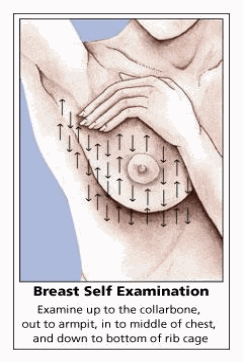
Image to the left taken from Cancer.org.


Self-exams help you to detect changes in your body between visits to your doctor. Many lives have been saved due to diligent self-examination, and following are two self-exams you’ll want to perform regularly.

BSE or breast self-exam

Each woman has her own method of examining her breasts. Some do a systematic BSE monthly or bimonthly, while others keep an eye on their breasts by regularly feeling them in the shower or while lying in bed. Often, women ask their significant others to help them check, or they visit the doctor several times a year for a clinical exam.

While a regular BSE with a consistent technique is best, perfect technique is not as important as frequency and diligence. Sometimes, women stress needlessly about doing it correctly. As long as you feel the entire breast and overlap your motions, you’re doing it right. The goal of a BSE is to know what is normal for you and check for changes.

If you’re not sure whether you’re feeling the entire breast, cancer.org suggests the following BSE routine:

  • Lie down and bend your arm behind your head to spread the breast tissue evenly over your chest, making it easier to examine.
  • Imagine your breast is divided in vertical lines from your underarm to breastbone, and use the finger pads of your other hand to feel for lumps in an up-and-down pattern along those lines. Move in dime-sized circles, slightly overlapping the previous line as you move up and down.
  • Use different levels of pressure at each spot so you feel all the breast tissue, especially if you have large breasts. You can feel the tissue close to the skin with light pressure, tissue in the upper half of the breast with medium pressure, and lower breast tissue with deeper pressure. There will be a ridge at the bottom of each breast, which is normal. If you have questions about pressure, talk with your doctor or nurse.
  • Examine the entire breast area, and then repeat the exam on your other breast.
  • Stand in front of a mirror, press your hands on your hips, and look at your breasts for changes in shape or size. Also look for rashes, redness, or dimpling.
  • Raise each arm slightly, and feel the underarm for lumps.

Some women may find it easier to examine their breasts in the shower, which is fine, as long as you are thorough—or add this routine to your shower exam. Current medical literature suggests that the above procedure is the most effective for finding lumps as soon as possible.

Skin exam

A regular skin exam will help you keep an eye on moles, freckles, and other spots that could become cancerous. It should be done at least once a month, and if you ask your doctor to do a full-body exam first, you’ll have a baseline. While it may sound daunting, after you’ve done a full skin exam a couple of times, it shouldn’t take more than 10–15 minutes.

Warning signs of skin cancer include a change in an existing mole or spot, or any growth or spot that . . .

  • Appears during adulthood.
  • Increases in size or thickness.
  • Changes in texture or in color—especially if it turns pearly, multicolored, brown, or black.
  • Has an irregular shape or outline.
  • Is bigger than a pencil eraser.
  • Continues to hurt, itch, scab, or bleed longer than three weeks.

If you see any of these signs, don’t wait or hope it goes away. See a doctor, preferably a dermatologist.

Loved this post and want to receive even more helpful tips? Sign up for our newsletter using the subscription box on the right sidebar.

How Long Should I Wait to Have a DIEP Flap After Radiation?

Dr. James Craigie

The below question is answered by Dr. James Craigie of The Center for Natural Breast Reconstruction.

How long should I wait to have a DIEP flap after radiation?

Radiation therapy is part of the treatment of breast cancer and will affect the results of breast reconstruction. The treatments can miraculously kill some growing cancer cells but they also change the area of the body left behind after surgery.

All of the elements of the body can be affected: blood vessels, scarring, healing function, and appearance.  The effects of radiation occur in two phases. Short term occurs during and immediately after the treatments. Elective surgery at this time is not possible, for obvious reasons. The long term effects develop after the early “burn-like” injury “settles down.” The long term reaction occurs for approximately the first six months.

The experience can be widely different from one person to the next. We have experienced difficulties with the receiving blood vessels after radiation when we did not wait for the body to recover from both long and short term damage. These types of problems could possibly increase the chance for the new breast to fail. Avoiding these problems may be possible by waiting and that is why the long recovery is needed before reconstruction is started.

—Dr. James Craigie

Spread the Word about the 2011 Women’s Empowerment Conference

womens healthWe are delighted to spotlight the upcoming 2011 Women’s Empowerment Conference hosted by the Women’s Empowerment Group on May 21, 2011 at the Technical College of the Lowcountry, Beaufort Campus, Beaufort, SC, happening at 8:00 a.m. – 3:00 p.m.

Dedicated to educating and assisting women to live “Healthier Lives Through Education,” the Women’s Empowerment Group has created their very first Women’s Empowerment Conference for all women of the Lowcountry to attend. In an effort to educate women and young females about common health issues, the conference will work to educate females about heart disease, cancer, diabetes, stroke, and chronic diseases. Attendees may also receive HIV tests, as well as breast exams.

Throughout the day at the conference, there will be a variety of breakout session topics, including . . .

Dream Big, Live True: This is an entrepreneurial workshop hosted by Elizabeth Millen, editor and publisher of Pink Magazine.

Breast Health 101: This workshop will focus on what females can do to take care of their breasts and work to prevent breast cancer. The workshop will be hosted by Lucy Spears, a mission / coordinator survivor.

Sexy Senior: This workshop will focus on sex throughout life and will be hosted by Gwen Bampfield, JD.

Fats: The Good, Bad and the Ugly: Hosted by Sarah Smith, RD, LD, CDE, this workshop will focus on how to prevent chronic diseases.

Your Body is Your Temple: This discussion will focus on how to nourish the body and soul, and will be hosted by Gina Jordan, MD.

Sexual Health: With a focus on women’s sexual health issues, this workshop will be hosted by Ardra Davis-Tolbert, MD.

Teen Conference: This discussion will focus on a broad range of health topics for teenagers ages 13 – 18.

The event will also feature health screenings, door prizes, fitness demonstrations, heart health discussions, snacks and beverages, and giveaways.

**Since seating at the event is limited, please pre-register prior to Saturday, May 14. Registration is completely free. Click here to fill out your pre-registration form.

Spread the word and bring your daughters, mothers, grandmothers, and girlfriends for a day of fun and health education you’ll always remember.

For more information, click here to visit the Women’s Empowerment Group website.

How to Talk to your Spouse about Health Concerns without Scaring Him

health concernsYou need to talk to your husband about your health, but it scares him when you bring it up. You need to have a strategy for talking to him. You can’t stop him from fearing for you—he loves you and wants you healthy and safe—but you can minimize his anxiety with a few simple tips.

Be clear on what you need to tell him at this point.

One of the worst things you can do is to throw a worst-case scenario at him from the start. That would unnecessarily scare anyone. If you’ve found a lump, tell him you’re going to have it checked out. Answer his questions, but don’t put thoughts in his mind that don’t need to be there at this time.

Have the facts in front of you, and keep it short and to the point.

Men often respond better when they can see the facts. Show him studies, doctors’ websites and blogs, WebMD—anything that clearly states the facts so he can see for himself. Practice what you’re going to say, and focus on being clear and succinct.

When you talk to him, get right to the point and then stop. If you ramble, his attention may wander, or he may tune you out right when you need him to listen. Ask him if he has any questions, and answer them honestly—but again, keep it short.

Try to keep your emotions in check during the discussion.

When women are upset or crying, their husbands feel powerless and unable to solve the problem, so they become frightened and angry. If you can hold your emotions just until you’ve finished telling him what you need to, he’ll hear you more clearly.

We’re not saying you need to stifle your emotions, but give him a chance to hear and comprehend what you’re saying without becoming frightened because you’re upset.

Have the doctor explain it to him.

If you’re not comfortable talking to him, or you think he might have questions you can’t answer, have the doctor call him at home. If you take him to the doctor with you, his mind will run wild while you’re in the waiting room, and he’ll scare himself. Leave the room while he’s on the phone, and do not have the doctor call him at work unless it’s good news.

Give him time to process.

After you’ve talked to him, go to another room for a while to let him sort through his thoughts. He needs time to process what you’ve told him, and he needs to be alone. Tell him to take his time. It might be five minutes or five hours, but give him the time he needs.

What strategies have you used when talking to your husband about your health?

A Journey You Don’t Have to Take Alone

breast cancer survivor

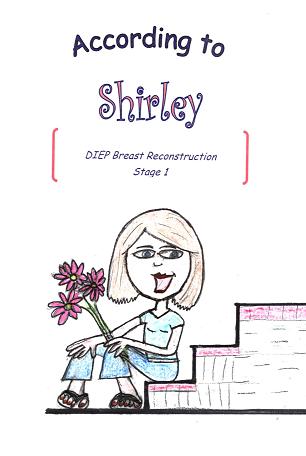
Shirley's book cover

Dear Sister in this Journey,

My name is Shirley. I have just undergone a double mastectomy and breast reconstructive surgery as a result of having breast cancer. I am one of the fortunate ones who did not have to endure chemotherapy, as well.

My cancer was in my left breast, but I chose to have a double mastectomy to mitigate future risk of recurrence.  Based on the reputation and firsthand knowledge I had of Dr. Kline and Dr. Craigie, I chose the Center for Natural Breast Reconstruction to take care of my small, but precious bosoms.

Once the decision was made to move forward with bilateral DIEP reconstruction surgery, I was given a patient handbook that provided information about what to do pre and post surgery. No offense to the medical team that put together a technically comprehensive document, but boy did they leave out a lot of information that would have been helpful! The kinds of things that, really, only a patient would know.

So, I thought I’d write about my personal experiences to share with others—maybe it will help those who are about to undergo a DIEP reconstruction procedure to be more prepared and know more about what to expect. If you would like a copy of my booklet, get in touch with the center at www.naturalbreastreconstruction.com, they’ll be happy to give you one.

It’s all from my perspective and I hope it helps in understanding what will happen. And I hope it helps keep others positive as they face the surgery.

Good luck on your Journey!

Most sincerely,

Shirley Trainor-Thomas

Breast Cancer Survivor

Hodgkin’s Lymphoma Survivor

Reconstruction Success Story

Did you find Shirley’s story inspirational and know of others who will? Share it with your friends on Facebook.

A Look at the Second Annual Warriors Wear Pink MoBo Event

Guest post by Lee Heyward, owner of the Charleston Style Concierge.

Lee attended the Second Annual Warriors Wear Pink MoBo Event, and was one of the speakers.

See below for Lee’s guest post:

Last week I was honored to be a part of the 2nd Warriors Wear Pink MoBo, where shopping was not only fun, but went to a great cause.  Attendees shopped through a great selection of designer denim, fun accessories, and great spring wardrobe updates to benefit local “warriors” fighting breast cancer. I had the privilege of helping shoppers find and put together great spring outfits.

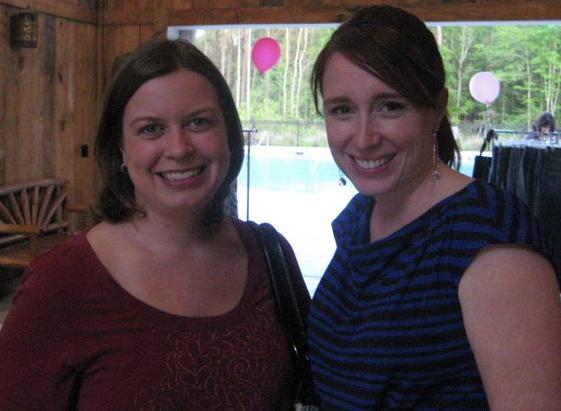
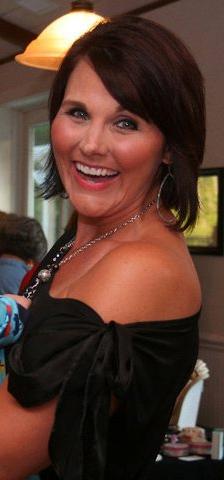
warriors wear pinkImage to the left of Lee Heyward at the Warriors Wear Pink MoBo Event.

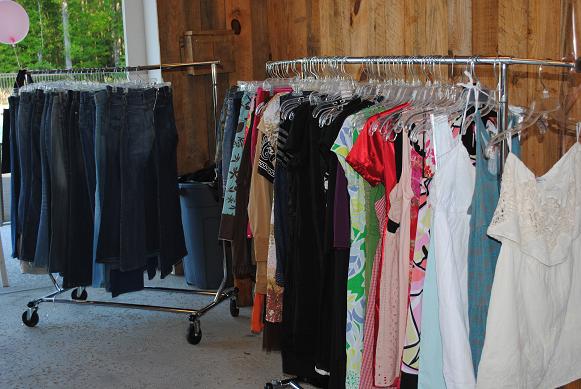
The MoBo was a great way to add fun spring wardrobe updates on any budget. I always teach my clients to keep an open mind when shopping because you never know what you are going to find, and the MoBo was the place to find so many great deals. Shopping here was a fun way to add new pieces to your wardrobe while benefitting an amazing cause.  Pictured here are a few of the many MoBo racks.

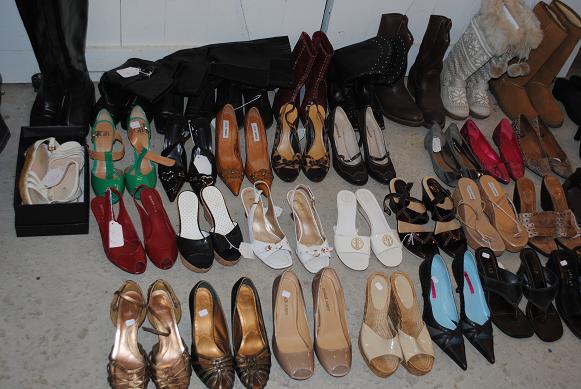
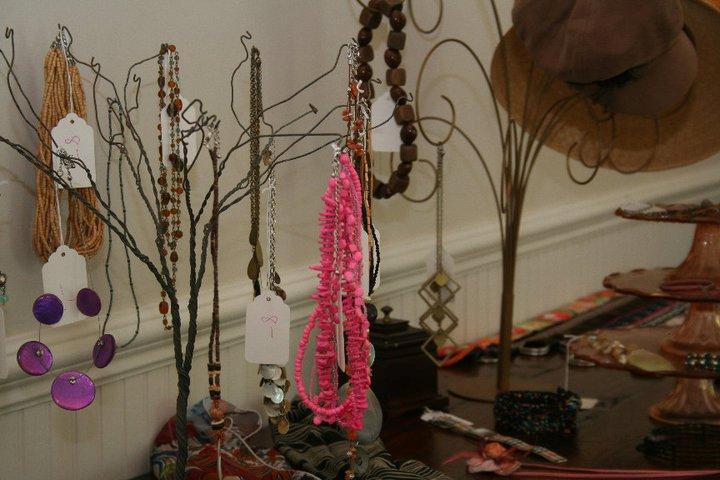
Below are images taken at the event of some of the clothing, jewelry, and shoe racks:

breast cancer events

charleston style concierge

Charleston personal stylist

I’m so honored to have had the opportunity to become involved with the Warriors Wear Pink organization. After speaking for only a few minutes with Leslie Moore, the organization’s founder, I had chills and knew I wanted to help however I could. Leslie is a breast cancer survivor and founded Warriors Wear Pink to give other pink warriors inspiration, hope, advice, and a community to reach out to.

breast cancer awareness

For more information about Warriors Wear Pink visit the Warriors Wear Pink Promise Blog or get involved with them on Facebook.  I hope to see you at the next Warriors Wear Pink MoBo!

To find out more about Lee and the Charleston Style Concierge, click here to visit her website.

What is Fat Necrosis and Should I Be Concerned About It?

The below question is answered by Dr. James Craigie of The Center for Natural Breast Reconstruction.

Dr. James Craigie

After my stage one DIEP surgery, I have some lumpy areas that I am told are fat necrosis.  Do they go away or what can you do about them? I am due to have stage two of my surgery soon.

Fat necrosis is a generalized term that results following injury or surgery when fat no longer has an adequate blood supply to survive. When fat does not survive and is in the breast the body develops scar or firmness as part of the healing process. A small amount of fat necrosis may go away on its own and larger amounts may persist indefinitely making the breast feel hard.

Following a DIEP or other muscle sparing breast reconstruction some of the fat transferred to the breast may not receive enough blood supply to survive the healing process. When this happens you may feel small lumps in the new breast about 1 – 2 months after the first surgery, sometimes sooner depending on where the lump is. These are usually small areas that can be removed at the second stage without affecting the end result. This is the most common situation we encounter.

On a larger scale, if something has occurred during the course of surgery and the tissue was transferred with an inadequate blood supply, the entire breast or a major portion of it could develop into fat necrosis. This is the most severe situation and would be considered a major complication or even failure of the procedure. Fortunately, in our experience, this situation is rare and the surgeon will know this has happened and should discuss options for correction.

If someone has a new breast lump and has a history of breast cancer, they are likely to undergo biopsies or have some concern over the area. Lumps that are fat necrosis may make breast exams more difficult or confusing and increase the chance that a new cancer or recurrence goes undetected. So anytime there is obvious fat necrosis after the first stage of surgery, we would make attempts to remove it. Initially, when a patient states they feel a firm area, I always remind them that what they feel on the outside will feel larger than the actual amount of fat necrosis tissue because the body is creating a reaction to the tissue trying to dissolve it.

It should be stressed that even patients who have undergone breast reconstruction should continue to do breast self-examinations. Any surgery on the breast will cause swelling and scarring. In many women who undergo reconstruction with breast implants, the body creates a capsule in response to these implants and all of these scars, capsules, or post surgical changes can feel like lumps and bumps following surgery. Therefore, it is important to know that fat necrosis may become apparent soon after surgery and should stay the same and not enlarge as time goes by. Alert your doctor regarding any breast lump that seems to enlarge. It is also important to know that breast exams will not be useful until after stage one and two are completed and the breast has had several months to recover from the surgery.

Once the reconstructive process is complete, things should not be changing. Patients should become familiar with any area that feels firm. If there are scars remaining after surgery, the patient should keep track of where they are and monitor them for changes. Changes in size or significant changes of any type should always be brought to the attention of your physician even in a reconstructed breast.

—James Craigie, M.D.

Follow us on Facebook to see more questions answered by our doctors.

Your Insurance and Financial Options for Breast Reconstruction: Know Your Options

Post by Gail Lanter, CPC Office Manager

Image to the left taken from The United States Department of Labor website.

A large part of my day is spent answering questions for women who are exploring their breast reconstruction options. These ladies are all potential patients of our practice and my mission is to help them make educated, informed decisions regarding a procedure, location, and time that are right for them. Ultimately, the discussion always turns to the insurance and financial part of the surgical procedure.

I’ll be honest. Sometimes the questions are surprising and a bit alarming when it comes to this end of things. There are women out there who are not aware of WHCRA 1998, the law that empowers women to elect to have the breast reconstruction procedure of their choice. In short, it states that if their insurance company covers mastectomy . . ., they have to cover your elected breast reconstruction procedure and any procedure required to achieve symmetry if you only have one affected breast.

Of course, just like anything else, there are always exceptions, but I would venture to say it covers the majority of women in the U.S. Read it here. It’s a law designed to protect your rights, and it’s important to know if you have had or are facing mastectomy.

***It’s not cosmetic surgery. Plastic surgery for breast reconstruction after mastectomy is a functional issue, not a vanity item. You don’t have to have artificial implants if you don’t want them. The options are endless. Sure, some women are limited in their options, simply because there are medical and health issues some women face that may not make them candidates for some of the surgical procedures. But in general, there is something out there for just about everyone. It’s not a one- time shot either. You’ve tried implants, great, they worked out for you and you are happy. HOORAY! DONE!

If you’ve tried them and they didn’t work out, (i.e. you developed capsular contracture, a post operative infection, couldn’t bear the tissue expansion process, whatever the reason) you can choose to go another route. It’s completely up to you. Read, go online, ask your friends, ask someone in your support group, and get a 2nd and 3rd opinion. Sometimes it’s not easy to find the alternatives, but sooner or later you will find something that works for you. Ask a bunch of questions, and in turn, you’ll get a bunch of answers and opinions to consider. Don’t be afraid to travel—sometimes your local surgeon may not offer all of the breast reconstruction techniques that are available, new ones are developed all the time.

Think of it this way: I’m an excellent softball player, but if you are looking for someone for your basketball team, I’m not your girl. But, being a good pal, I’ll ask around and find you someone who will be a wonderful addition to your team. It’s what friends do for one another.

So ask your current surgeon, tell him or her that as much as you appreciate all they have done for you, you’d like to know if there are procedures available beyond what they offer. If they are good guys / girls, they’ll lead you in the right direction if they are out of options for you.