Archives for 2011

Stop Smoking Series: the 4Ds

stop smokingQuitting smoking can be challenging, but if you know what to do when a craving hits, you’ll be ready to conquer any urge. The 4Ds are a good guideline to follow when you desperately want a cigarette. The order we show them is a general guideline, so modify it to work for you.

Delay.

The moment the craving hits, tell yourself you can have a cigarette in 10 minutes. Then when the 10 minutes are up, tell yourself what a good job you did and challenge yourself to go 20 minutes. Any craving will go away in a few moments as long as you don’t keep thinking about it. After you delay, the next thing to do is . . .

Drink water.

In fact, get up and get a glass of water as you’re telling yourself to wait 10 minutes. And you want to drink water, not pop, coffee, or alcoholic beverages. First, while you’re quitting, your body is trying to get rid of the toxic materials you’ve inhaled all these years, and it needs water remove the junk from your system. Second, for many women, other drinks are triggers to smoke, especially coffee and alcohol. Third, the water will change the taste in your mouth and help to break the craving.

Please don’t make the excuse that you don’t like water. You can filter it or flavor it with fruit or small amounts of fruit juice. Find what works for you, and do it.

Do something else.

Your success in quitting may be determined by how well you shift your focus when you have an urge to smoke. The more you think about a craving, the worse it will become. After you’ve had your glass of water, find something else to do. If you were watching TV, move to another room and read a book. Take the dog for a walk. You need to break the association with whatever you were doing when you felt the craving.

Try keeping a bag of entertaining distractions with you, which could include puzzle books, books, art projects, or needlepoint. The main thing to remember is that you need to abruptly and quickly change what you’re doing and thinking to survive the craving.

Deep breathing.

This step can be done at any point in time, as many times as necessary. Deep breathing will release endorphins, which will help you feel better. It will also show you how well your respiratory system is healing during your quit. Take at least 10 deep breaths in through your nose—your stomach will move if you’re truly taking deep breaths. Exhale through your mouth with pursed lips, as if you’re kissing someone. Blow out hard, and imagine you are forcing out all the air in your lungs.

The 4Ds will feel awkward at first, but as you get used to them, you’ll find they are very helpful during cravings.

 

Common Breast Reconstruction Questions Answered

dr. richard klineThe below questions are answered by Dr. Richard M. Kline, Jr., of The Center for Natural Breast Reconstruction.

1. I had my second part to breast reconstruction and had necrosis removed, but I still have the hardness. How can it be treated? They did liposuction.

If necrosis was removed and there is still hardness, then it is most likely from either 1) additional / remaining fat necrosis, or 2) edema (can feel hard, especially likely in radiated tissue). In either case, resolution is likely without additional surgery, if you wait long enough (may take 1 – 2 years), although breasts will be smaller in either case. If pain is present, and fat necrosis is still present, then surgery to remove the rest of the dead fat may be indicated.

2. I am considering silicone implants for breast reconstruction. What should I know before I proceed—what questions should I ask?

Silicone or saline implants, while generally very safe from a medical perspective, are still subject to some complications. The most common problem is that either type implant can develop a hard capsule of scar tissue around it (capsular contracture), which is sometimes painful, and makes the breast mound hard (and often unattractive). Generally speaking, the thicker and more normal the soft tissue covering around them, the better result implants tend to give when used for reconstruction. The presence of radiation injury greatly decreases the chances of success when using either silicone or saline implants for breast reconstruction, and flaps may be a better alternative in that case.

—Dr. Richard M. Kline, Jr.

Hearts for the Arts Foundation: Helping the Creative Children of the Lowcountry

hearts for the arts foundationToday’s post is very dear to me. I’ve interviewed Morgan Downing of the Hearts for the Arts Foundation, an amazing initiative, based in the Charleston area of South Carolina, that works to financially and emotionally support artistic children.

See below for the interview and learn how you can help the Hearts for the Arts Foundation and cause:

1. Tell us a little bit about Hearts for the Arts. Specifically, who are the leaders and founders behind it, and what is the foundation’s mission?

The Hearts for the Arts Foundation was established by Kelly James, Jared James, Shelly Downing, and myself, Morgan Downing. We have set out to fund one of the most attacked activities offered by public schools: the Arts. From ballet to creative writing, we support any form of expression.

2. What was the inspiration behind starting the Hearts for the Arts initiative? In other words, what moved you to start this project?

Kelly James, one of the founders, teaches at an arts-infused school. The money for the programs runs on grants, state money, and donations. However, in the recent economic crisis, the state sees their programs like “finger painting” if you will. Thus, the funding is cut short—yet AGAIN. I, Morgan Downing, am an avid representative for the vitality of the arts in children’s growth and development. We knew there was a need so we all found a solution, the Hearts for the Arts Foundation.

3. The Hearts for the Arts foundation is in direct affiliation with The Art Closet Thrift Store, which is opening soon on Dorchester Rd. in Charleston. What types of things can individuals purchase from The Art Closet Thrift Store, and how does their contribution support the Hearts for the Arts initiative?

The Art Closet Thrift Store is currently the blood and life of our foundation. 80-85% of the money made from our store is directly given to the foundation. We have absolutely fabulous items of all variations there. We have seasonal items, clothing, furniture, books, house ware, jewelry, and much more! However, we must have support from the community to keep this wonderful organization up and running.

4. How can individuals become involved with the Hearts for the Arts foundation and support its cause?

For anyone who has fallen in love with our cause, here are some ways to help:

  • Bring your donations to us! We need all that we can get.
  • If you or the company you work for would like to give, they can. We take monetary donations as well.
  • VOLUNTEER!!!
  • Spread the word and tell EVERYONE. Word of mouth is the best form of advertisement!

If anyone has questions or would like to donate, you can contact us at 843.460.0001 or 843.789.5544. Our e-mail is hearts4thearts@ymail.com.

Thank you for being a part of “The key to a creative education.”

How to Reduce Stress by Managing Your Time

time managementTime (or lack of) is a big stressor for many of us, and managing our time can reduce that stress significantly. Time management is something most of us lack, and just a few ideas can help you get a handle on your time and spend it wisely.

The following time management tips are simple but effective:

Get a planner.

Part of the reason we are so stressed is because everything we need to remember is scattered: sticky notes here, cell phone memos there—and then we try to commit important tasks and dates to memory. Everything needs to be in one place, preferably in something you can carry with you at all times.

A planner is the most efficient and easiest way to keep track of everything. It doesn’t have to be large or complicated—you’ll be surprised at how many different planners you’ll find once you make the decision to use one. Some planners are very low tech, while others will also update your computer or other electronic devices. Get whichever makes sense for you. The main goal is to use it.

Plan your day and prioritize your tasks.

Use the planner to decide what you’ll do each day, and determine which tasks have high priority. Those are the tasks you should be focusing on. This is not to say the low-priority tasks are not important, but those with high priority should take precedence. Track your progress each day so you can see how efficiently you’re working.

Quit trying to remember everything.

The planner will become a significant part of your brain once you start to use it. You’ll be amazed at how free you’ll feel when you don’t have to try to remember everything. Just consult your planner each morning, and live your life.

Learn to say no.

Here’s another great use for the planner—it’s a great way to tell someone no easily and gracefully. If you’re asked to do something you don’t want to do or don’t have time for, pull out your planner and consult it, and then tell that person you’re booked on that date.

Delegate when and where you can.

Do you really need to go to the store, or can you send your teenager?  Look at your to-do list and see who could take over some of your low-priority tasks. Maybe it’s time to teach others in your household to do some laundry, or to allow your assistant to help you with your work email. You don’t have to do it all.

Analyze how you’re doing.

At the end of each month, take 10 minutes to look back and see how well you managed your time. You’ll see where you have improved and where you still need help. Adjust accordingly.

Did you find these stress and time management tips effective? Is this a topic you’re interested in hearing about in the future?

Nerve Recovery and Breast Reconstructive Surgery

breast reconstructionThe below question is answered by the Charleston breast surgeons at The Center for Natural Breast Reconstruction.

How long does it take for nerves to recover and for full skin sensation to return after reconstructive surgery?

During any surgery, numerous sensory nerves, generally too small to have names, are invariably cut. Depending on the extent of the surgery, this can result in numbness of the skin or other areas. This is not typically regarded as a complication, but rather an essentially inescapable result of making an incision in the body. Most of the little divided nerves literally “wither away,” and other sensory nerves eventually grow in to take their place, restoring sensation once again. This process can take anywhere from a few months to 1 – 2 years. There is no limit on how late sensation can be regained, but the longer, beyond 1 – 2 years numbness, lasts, the less likely it is that sensation will spontaneously return. Occasionally, numbness can persist indefinitely, although this is uncommon.

In addition to numbness, other symptoms such as discomfort, hypersensitivity, or chronic pain can also result as a consequence of nerve damage following any surgery. Thankfully, these complications are much rarer then numbness. While it can be very difficult to ascertain exactly what mechanism is causing discomfort, some possibilities include traction or tethering of nerves by scar tissue, or formation of a “neuroma,” which is a painful little ball of tissue at the end of a regenerating nerve.

Nerves irritated by adjacent scarring may be helped by massage, injection of local anesthetics, or simply the passage of time. Neuromas, which are thankfully extremely rare following breast surgery, usually result in pain when pressure is applied to a very specific location, and can be much harder to treat. Surprisingly, additional surgery is often not effective in treating these rare cases of chronic pain, and referral to a Pain Therapist for injectable nerve blocks may be the most effective option.

If you want to learn more about breast reconstruction, visit us on Facebook.

Improving Your Self-Esteem after Mastectomy

breast reconstructionA mastectomy affects you not only physically, but also mentally and emotionally. Many women feel like a vital part of them has been taken away, and their self-esteem suffers as a result. If these feelings aren’t resolved, they can lead to depression and other issues. It’s important that if they surface, you recognize them and know you can find help.

Focus on the positive.

While the surgery itself may not be a positive thing, focusing on being optimistic helps your self-esteem. You may decide on breast reconstruction and feel excited about having new breasts, or you may be heartened by the fact that you’re now a breast cancer survivor and can move forward with your life. Often, mastectomy patients find that the smallest things, such as a drive in the mountains or a sunrise, bring them joy.

Allow yourself to grieve.

You’ve had a loss, and it’s likely to provoke the same feelings of grief as losing a loved one. You may feel denial or anger, which is perfectly normal. Allow yourself to experience those feelings instead of minimizing them or holding them inside. If you feel the need for a grief counselor, ask your doctor or religious professional for a referral. A hospice bereavement counselor may also be a good choice.

Talk it out before, during, and after.

Whether you feel relief that the cancer is gone, grief over losing a part of your body, or hesitation in allowing your partner to see you right after your mastectomy, talk it out with someone you trust. Many women confide in their partners first, while others may turn to a family member, fellow breast cancer survivor, or therapist.

Find someone you feel comfortable with, and don’t be afraid to express yourself. The more you bring out in the open, the better you’ll feel.

Consider breast reconstruction as soon as possible.

Many patients look at natural breast reconstruction as their chance to finally have the breasts they’ve always wanted. They become very involved in learning what the surgery entails and what their options are. In fact, reconstruction often improves our patients’ self-esteem because their new breasts signal a new beginning, which is exciting and empowering.

In fact, our happiest patients are those who choose to have reconstruction at the same time as mastectomy, which reduces self-esteem issues.

Treat yourself.

This is the time to celebrate the amazing, unique woman you are. Be kind to yourself, and treat yourself to what you desire as often as you can. Travel, go shopping, and pursue those dreams.

If you’re a survivor, what advice can you give?

How to Enjoy Halloween without Gaining Candy Weight

halloween candyHalloween tests everyone’s resolve to stay on track with his or her healthy eating programs. Even if you’ve been good all year, you may be tempted to snack on a few too many candy bars. Following are a few tips to enjoy some candy without regretting it later.

Eat dinner right before you take the kids trick-or-treating.

You and the kids will all be less tempted to sneak a few treats from goodie bags if you’re still full from dinner. If you’re the one giving the treats, remembering that you just ate may help you stay out of the treat bowl.

Offer higher quality treats to those who come to your door.

Instead of the typical chocolaty, sugar-heavy treats, think outside the box. Offer dark chocolate, fruit roll-ups, and snack-sized boxes of raisins and dried fruit. You may be less tempted to snack, and even if you do, you won’t be doing much damage.

Eat a healthy treat and drink a glass of water before eating candy.

If you’ve decided you want one of those Snickers bars, eat a handful of baby carrots or an apple and drink a glass of water before opening the candy wrapper. You’ll be less likely to eat too much candy because the healthy snack and water will help fill you up.

To make this step even more effective, distract yourself by doing something else for 20–30 minutes before eating the candy. Your stomach will have time to signal your brain that you’re not hungry, and that distraction might last longer than 30 minutes. If it does, and you decide you still want the Snickers, start over with the healthy snack and water.

Keep candy out of sight.

If the kids want to enjoy their candy longer than one night, ration the amount that they can keep and have them put it out of your sight. You can remove the excess from the house the next morning.

Give it away.

If candy is out of the house completely, you can’t eat it. Take it to work, drop it off at a food bank or church, or give it to a neighbor. If possible, gather it up and get rid of it the next morning. The sooner it’s gone, the sooner you won’t have to deal with the temptation.

The holidays coming up are hard enough to manage weight wise without adding an extra few days of eating candy at Halloween. What tips for avoiding Halloween weight gain can you add?

Let Bread Be Your Friend, Not Your Foe

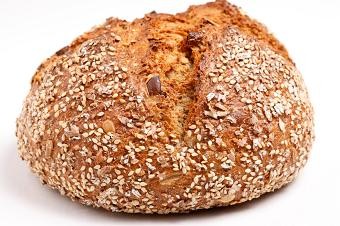
breadIn their desire to eat healthy, many people have lumped all breads and grains together and given them something of a negative reputation, which they do not deserve. This post will touch on the differences between the breads and grains you should be eating and those you should minimize.

Remember, you can eat anything you like in moderation.

We won’t tell you not to eat something, but we will suggest reducing your intake. We set ourselves up for failure when we say that we won’t eat something, because then we tend to crave it. Have a little, not a lot. Have one slice of bread instead of three, or one cup of grains instead of two. Sensible is the way to go.

Go for brown instead of white, and eat as much whole grain bread as possible.

In general, brown grains and rice are nutritionally superior. White bread and white rice have been processed, meaning they have lost some of their nutrients and fiber. The closer you can stay to the grain as it appears in nature, the better.

Whole-grain bread is better than wheat, which is better than white. To know if you have whole-grain bread, the first ingredient will contain the word whole. Sometimes wheat bread isn’t truly whole wheat—it’s mostly white bread with enough wheat added to change its color. Look at what kind of flour is used in the bread. Wild rice is healthier than brown rice, which is healthier than white.

A note about seeded breads: sometimes these are nothing more than white bread with seeds, so read the label to see which type of flour is used. And don’t let the words unbleached or enriched fool you, as they often mean processed. The key word is whole.

Check fiber content.

Bread should have at least 3 grams of fiber per slice. Less fiber means you’re not eating whole-grain bread.

Read labels.

Often, it’s not the grain that’s the issue, but the sweeteners, additives, and preservatives that have been added to the finished product. Many companies add high fructose corn syrup or hydrogenated oils and vegetable shortening (trans fats) to baked goods, so read your labels. Some bakers now avoid using those harmful chemicals in all their products.

It’s not enough for the label to say 0 trans fats, as a food can have a small amount of trans fats and claim to be trans fat free. You need to read labels.

Eat bread with proteins and fats.

As bread is a carbohydrate, it can raise your blood sugar. Eating bread with proteins and fats, especially if you choose white bread, can somewhat blunt the rise in blood sugar. Many margarines contain trans fats, so be careful what you spread on the bread.

Have you been participating in breast cancer awareness activities this month? If so, what did you do?

Visit the Spa from the Comfort of Your Home: DIY Spa Treatments

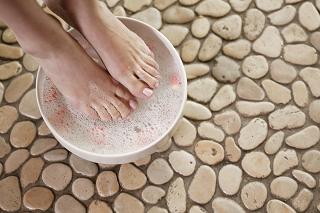
spa treatmentsYou don’t need to drive to the spa to enjoy its therapeutic, mood-enhancing benefits—you can relax at home and enjoy a spa atmosphere and treatments with just a little creativity.

Choose a time when you’ll be alone.

Part of the allure of the spa is having time to yourself, so for your at-home spa experience, choose a time when you’ll have no distractions. Plan it for a weekend your spouse will be away. Try a DIY spa day while the kids are in school, or ask other family members to take them for an evening. If your dog never leaves your side, take him to doggie daycare for a few hours and let him play his little heart out while you relax.

Set the mood.

Candles, soft music, a glass of wine, some delicious chocolate, and incense will help you create a spa-like mood. In fact, your favorite spa might sell you some of their incense or candles to help you create your home spa. Some women love to play ocean waves or nature sounds while they pamper themselves.

Soak in a luxurious, hot bubble bath.

Find a bubble bath scent you love and slip into the tub with your wine and a good book, or simply lie back and let the fragrant bubbles soak your cares away. A good bathtub pillow will help you feel like you’re at the spa.

Indulge in a decadent facial.

The at-home options for facials are limitless: you can buy products from your spa, you can find amazing facials and masks at beauty supply stores, or you can create your own with ingredients from your kitchen or supermarket. The right facial is refreshing not only for your face, but for your soul.

Try a paraffin manicure or pedicure.

You can buy a paraffin warmer inexpensively and use it while giving yourself a manicure or pedicure. Splurge on your favorite nail polish and hand cream, or buy a pedicure kit. You’ll love doing it yourself while sipping wine and listening to your favorite music.

Make it a friends’ day out.

If you prefer to go to the spa with friends, have a spa party at home instead. Ask each friend to bring a delicious treat or bottle of wine and their favorite home spa treatment. You’ll love trying something new, and they’ll cherish the time spent with you.

What’s your favorite part of an at-home spa day?

How to Spice Up A Boring Salad—the Healthy Way

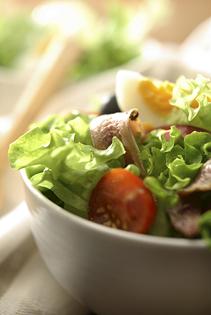
saladYou’re eating healthier by having a salad once or twice a day, but it’s getting a tad boring. What can you do to spice it up and give it a little taste pizzazz? When it comes to delicious healthy additions, you’re limited only by your imagination.

Peppers

Here you have a variety of choices, including bell peppers (green, red, yellow, orange), banana peppers, hot peppers including habanero and jalapeño, and dried peppers used as a spice. Peppers are full of fiber and antioxidants, vitamins, and carotenoids to nourish your body. Red peppers are loaded with vitamins A, C, and K, as well as lycopene. The capsaicin in hot peppers may help improve immunity and kill stomach bacteria that cause ulcers.

Nuts and seeds

Any salad tastes better with a little crunch. Nuts and seeds are rich in healthy unsaturated fats, fiber, vitamin E, and minerals including magnesium, iron, and zinc. Eat a variety of nuts and seeds to get as many nutrients as possible. Good choices for salads include sunflower and pumpkin seeds, walnuts, almonds, pecans, and pistachios.

Eggs

A hardboiled egg is only about 70 calories, and is a tasty and healthy addition to any salad. Eggs are chock-full of nutrients, including essential fatty acids that help keep your brain, eyes, and muscles healthy. The protein in eggs is high quality, and if you’re pregnant, the choline in eggs helps your child’s brain develop properly.

Fennel or Anise

This aromatic and flavorful veggie contains fiber, folate, and vitamin C, and delivers a slight licorice flavor.

Beans

Another food full of nutrients, beans will fill you up and add fiber and protein to your salad. Try black or kidney beans for a rich taste that’s never boring.

Fruit

Why not add orange slices, kiwi, strawberries, or blueberries to your salad? Fruit is high in vitamin C, fiber, and antioxidants, which give fruits and veggies their color. Eat a variety of colors, and you’ll feel incredible.

Dressing

If you’re bored with oil and vinegar, try something new. Use a different type of oil, or sample rice or balsamic vinegar. Add a few squeezes of lemon or lime juice, or try yogurt mixed with olive oil and vinegar. Add a new ingredient with a kick, such as red pepper or mustard, or buy a pepper mill and crack fresh pepper over your salad. Don’t be afraid to use spices liberally, such as Mrs. Dash or sea salt.

What do you do to spice up your salads?