Weird Breast Issues That Aren’t Really Weird At All

breast changesFrom nipple leakage to uneven sizes, our breasts often confuse or scare us. Most of the time, what appears to be a breast problem isn’t a problem at all, but a completely normal occurrence. Breast information isn’t at the forefront of the news unless it’s connected to cancer, so we don’t receive much information about breast issues that aren’t serious.

The following breast issues are typically normal, even though they may seem odd. Let us stress that if you have questions about any breast issue, or feel that something isn’t right, do not hesitate to call your doctor. Always listen to your gut and intuition.

Uneven breast sizes

If you look closely at other parts of your body that come in pairs, such as your eyes, hands, and feet, you’ll see that each one of the pair is different from the other, and this includes your breasts. Some women may find that one breast is a size or two different from the other, and this is normal.

Lumpy breasts

Have you ever driven yourself crazy because you think you’ve found several lumps during a self-exam? This one can be scary, but for some women, lumps are a normal part of their breast tissue. Called fibrocystic breasts, this noncancerous condition is very common, especially among premenopausal women. Dense breast tissue tends to feel lumpy, which is one more reason to know what is normal for your breasts and do thorough monthly self-exams.

Nipple leakage when you’re not pregnant

Nipple leakage is common, and fluid can be almost any color or consistency. Some women experience spontaneous leakage, while for others, the leakage occurs only if the nipple is stimulated. Rarely, leakage signals something more serious, so check with your doctor if you’re concerned or it regularly occurs spontaneously.

Extra nipples

Some men and women are born with extra nipples, much as female animals have. According to Texas ob-gyn Michael Yang, MD, when a fetus forms, it has a milk line with several nipples that runs from the armpits down to the groin. Extra nipples typically disappear before birth, but some don’t, and their appearance ranges from molelike to actual miniature breasts.

Menstrual cycle-related breast changes

Thank your hormones for those breast changes during the month. Estrogen and progesterone increase and decrease during your cycle, which can cause breast tenderness and nipple soreness. If your breasts are unbearably sore, ask your doctor for advice on nutritional support.

Weight gain or loss from breasts

Speaking of breast changes, women often lament the fact that when they lose weight, it comes from their breasts first. Because breasts are mostly fat, it’s normal for them to change size when you lose weight.

Again, call your doctor with any breast-related concerns or questions.

Your Questions About Breast Reconstruction Answered

nipple sparing mastectomyThe questions below are answered by the breast reconstruction surgeons of The Center for Natural Breast Reconstruction, Dr. James Craigie and Dr. Richard Kline:

If a woman has flap reconstruction, are the nipples reconstructed at the same time or at a later date?

While it is sometimes possible to reconstruct the nipples at the same time, usually for various reasons it is preferable to delay the nipple reconstruction until a later time. Nipples must be positioned very carefully to look their best, and that means the final shape of the breast mound must be stable prior to choosing the nipple position. Tissue flaps must be carefully monitored for several days following the initial reconstruction to assure early detection of any problems, and temporarily leaving extra flap skin on the breast mound helps greatly with this. Additionally, FWIW, the skin that the nipples are reconstructed from, whether flap skin or native breast skin, frequently has no sensation, making it even easier to reconstruct the nipples as a small procedure in the office.

If a woman is a candidate for a nipple-sparing mastectomy, can she have flap reconstruction and retain her nipples?

Yes, in many cases. Problems arise when the breasts are very “ptotic” (droopy), especially if the flaps cannot be made as large as the breast tissue that was removed. The nipples can often be saved even in this situation with special techniques (examples include performing a delayed breast lift some months after flap reconstruction with the flap nourishing the nipple, or, in the case of a prophylactic mastectomy, having a breast lift or reduction some months before the mastectomy), but the overall reconstruction is more complicated and prolonged.

Can you explain what you mean by a muscle-sparing free flap breast reconstruction?

“Muscle-sparing” simply means that NO MUSCLE TISSUE at all is removed. This does not necessarily mean that the muscle suffers no injury, as the blood vessels which nourish the flap usually must be removed from the muscle, but the amount of damage is commonly small enough that the muscle ultimately recovers its function.

What are some criteria that may disqualify a patient for breast reconstruction?

Any serious medical conditions which would prevent a patient from tolerating 4-8 hours of general anesthesia would prevent her from having flap reconstruction. Some medical conditions, such as diabetes, increase various risks (in particular, risks of wound healing problems), but do not disqualify the patient from having reconstruction. We do not perform reconstruction on patients who are currently cigarette smokers (or use nicotine in any form) because nicotine’s effects on wound healing after flap surgery is frequently catastrophic. However, most patients will clear all nicotine form their system after a month’s abstinence. Some very slender patients do not have enough donor tissue anywhere on their bodies for flap reconstruction, but this is quite uncommon.

For more information on breast reconstruction, visit our website.

Dining Out in The Charleston Area: Mount Pleasant

charleston restaurantsCharleston is famous for its restaurants! From succulent Lowcountry fine dining to zesty Italian bistros, and quaint barbecue hot spots to vibrant Mexican eateries, Charleston truly is a culinary melting pot.

For many of you who are visiting from out of state, you may not be aware that Charleston is segmented into various different areas that include downtown Charleston, Folly Beach, James Island, Johns Island, Mount Pleasant, North Charleston, West Ashley, and Daniel Island (there are a few other neighboring cities, towns, and islands thrown in there, but these are the main ones). Each and every area in Charleston is home to exciting restaurants, cafes, bars, and pubs that naming them all in one blog post would be way too much. This is why we’ve decided to create a series on Charleston restaurants. Each post in the series will focus on a different area of Charleston and some of the best restaurants found in that area.

This first post will focus on Mount Pleasant, which is located right across the Ravenel Bridge from downtown Charleston.

Below are just 5 of our favorite restaurants and cafes in Mount Pleasant:

Crave: Serving up artisan sandwiches, pasta, steak, and seafood, Crave provides an eclectic mix of various foods that are sure to delight your palette. The atmosphere is casual and the food is moderately priced. One of our favorite dishes is the turkey club sandwich complimented by a mermaid martini!

1968 Riviera Dr # O, Mount Pleasant, SC 29466 / (843) 884-1177 / brunch, lunch, dinner

Mustard seed: For some great food, a casual atmosphere, and excellent service, take a trip to the Mustard Seed. This quaint restaurant features everything from creamy pasta dishes to fresh salads, chicken entrees to mussels and linguine, and much more. The bread that they put on your table at the beginning of dinner is also exceptional and is covered in seasoning and cheese.

1036 Chuck Dawley Boulevard,Mount Pleasant, SC 29464-4178 / (843) 849-0050 / lunch, dinner (not open Sundays)

Yamato: If you love Hibachi-style cooking as much as we do then you’ll definitely want to check out Yamato. With a fun and social atmosphere, great food, huge portions, and silly chefs, Yamato will instantly steal your heart. This restaurant is particularly great for larger groups.

1993 Riviera Drive, Mount Pleasant, SC 29466 / (843) 881-1190 / dinner

Red Drum: With somewhat of a Tex-Mex thing going on Red Drum will add a flair to your night. Serving up excellent culinary masterpieces such as lamb shank, fresh seafood, and enchilada appetizers this elegant restaurant is sure to knock your socks off. Note that Red Drum is considered fine dining and we suggest calling in advance to book a reservation.

803 Coleman Boulevard, Mount Pleasant, SC 29464 / (843) 849-0313 / sunday brunch, dinner (closed Mondays)

Mozzo: This deli is a must when visiting the Charleston area. With a huge selection of artisan sandwiches, pasta salads, cole slaws, and desserts, it can be easy to go overboard when dining at Mozzo. They’re a deli that definitely knows what they’re doing. Some of our favorite sandwiches include the Roma, The Godfather, Fusion, Dig the Fig, and Fat Boy.

730 Coleman Boulevard, Mount Pleasant, SC 29464 / (843) 388-5755 / breakfast, lunch

Some other Mount Pleasant restaurants that we love include Opal, Langdon’s, Jacob’s Kitchen, Basil, Next Door, Sette, and Uno Mas (great margaritas).

Have you ever been to Mount Pleasant? What’s your favorite restaurant in the area?

The Truth behind High-Fructose Corn Syrup

high fructose corn syrupHigh-fructose corn syrup (HFCS) is corn syrup that is processed to convert some of its glucose into fructose to make it sweeter. HFCS is the sweetener of choice for most food companies, and is found in everything from bread to baby food. It has replaced sugar (sucrose) in processed food and baked goods because it costs less than sugar.

HFCS has become controversial recently because of its widespread use in products that one wouldn’t expect to contain sugar. As studies have found an alarming number of ill effects that appear to be caused or worsened by HFCS, such as higher triglycerides, greater insulin resistance, increased abdominal fat, and elevated blood pressure, the food industry and corn growers maintain that HFCS is safe, even preferable to cane or beet sugar. HFCS has also been linked to weight gain in a Princeton animal study.

As noted, the effects of HFCS are controversial and still being studied, but one fact remains: the amount of sweeteners in our food today is very high—we’re simply eating too much sugar in general. Most HFCS consumption is in the form of soft drinks. According to the USDA Economic Research Service, in 2003 the average American consumed 63 pounds of HFCS, 75% in soft drinks. As the use of HFCS has exploded over the past decade, that number is likely to be much higher today, and does not include all the other sugars that we consume, most of which have no nutrient value.

Some food manufacturers are removing HFCS from their products, which is an encouraging step, but we’d like to suggest that you become vigilant about your sugar intake. A good place to start is to reduce soft drink intake; read labels; avoid sugar, especially HFCS, whenever possible; and eat whole, fresh foods whenever you can. The less your food has been processed, the healthier it is.

When you’re reading labels, anything with the word syrup or sweetener (or ending in –ose) is a sugar. Some other sugars and sugar derivatives to watch for are maltodextrin or dextrin, sorghum, brown rice syrup, agave nectar, treacle, xylose, fruit juice concentrate, and dehydrated cane juice.

Have you reduced your intake of HFCS?

What Are My Reconstruction Options After a Lumpectomy?

DIEP flapThe below question is answered by The Center For Natural Breast Reconstruction team:

What are the options for reconstruction surgery after a bilateral lumpectomy?

Great question! Your options would be very similar to those you would have if you had a mastectomy. Keep in mind that if your lumpectomy was followed by radiation, the behavior of the radiated skin and tissue can complicate a reconstruction procedure utilizing implants and your best option may be to use your own tissue to restore your breast size and shape. Nonetheless, it’s your plastic surgeon’s responsibility to tell you all of the options available to you and let you choose how to proceed. Also, discuss with your surgeon any procedure that may need to be done on your unaffected breast to achieve symmetry.

Here’s my short list of options:

1. Tissue expanders and subsequent replacement with permanent implants. Ask about silicone vs. saline implants. How about the use of a skin and tissue replacement like fat or a dermal matrix (like Alloderm)?

2. Autologeous reconstruction with latissimus flap (back). Will implants be needed, as well?

3. TRAM flap (transverse rectus abdominus muscle). Uses the muscle, skin, and fat of the abdomen to rebuild the breast. Make sure you have been told of the risks involved in removing this muscle.

4. DIEP, SIEA (deep inferior epigastric perforator or superficial inferior epigastric artery). Uses the skin and fat of the abdomen to rebuild the breast but leaves the muscle of the abdomen intact.

5. GAP (gluteal artery perforator). Uses the skin and fat from the upper (inferior) or lower (superior) buttocks. Like the DIEP, no muscle is removed for this procedure.

6. TUG (transverse upper gracilis). Inner thigh donor area, utilizes skin, fat, and muscle of the upper inner thigh.

7. Intercostal perforator. Utilizes skin and fat from under the arm.

8. Maybe you’re happy with the size of your post-lumpectomy breast but would like the shape addressed. Procedures such as mastopexy or reduction mammaplasty on the unaffected breast may be the procedures to investigate.

9. If it’s a small defect, a simple fat transfer from another part of your body may remedy the problem.

Best Wishes,

The Center for Natural Breast Reconstruction Team

How One Survivor Used Meditation and Support to Find a Brighter Future

breast cancer survivorWe’re superexcited to share Part II of our guest interview with Debbie Woodbury on our blog, today!

For those of you who missed Part I of this interview, click here.

See below for Part II of our guest interview, where Debbie shares more of her inspirational story, including a look into her Meditation Mondays:

1. Our team at The Center for Natural Breast Reconstruction loves how you started a Meditation Mondays blog series! Tell us what inspired you to begin meditating and what benefits it provides to you.

Thank you, I love that series too! I was inspired to begin meditation by simple necessity. My cancer diagnosis completely blindsided me. Up until that point, I thought of myself as a healthy person, who looked and felt fine. However, as testing and treatment chipped away at my body, I slowly sunk into sickness. My mastectomy cured my noninvasive cancer, but healing was a whole different matter.

Physically, I had lots of guidance and healed with rest and good care. Emotionally, I was on my own. Luckily, I discovered guided imagery just a few weeks before my mastectomy and used it to calm my anxiety about the impending surgery and loss of my breast. I continued searching for emotional healing and discovered meditation.

Meditation provides me with many, many benefits. As a cancer survivor, it is so easy to drive yourself crazy, worrying about doctors’ appointments, tests, and every ache and pain. Through meditation, I became aware of the voice in my head whose job is to worry. Meditation brings me back to the present moment, where the only thing that exists is what is happening right now.

The funny thing is that I actually had an easier time meditating during my disability, when there was lots of time to sit still. Now that the stresses of family, home, work, and survivorship fill my day, finding time to meditate takes a bigger commitment. It is well worth it, however, and can be done in just minutes a day. Meditation is one of the many gifts cancer brought me and I am so grateful for the “Peace and Joy, Love and Light” it brought into my life.

2. What one piece of advice would you give to women who are struggling with breast cancer and are finding it difficult to look toward a brighter future?

When I was actually going through the diagnostic and treatment phases, I kept going by sheer force of will. I just needed to get through it, especially for my husband and children. After my mastectomy, however, the emotional fallout was overwhelming. Luckily, my cancer center offered free oncology therapy, which I committed to on a weekly basis for approximately a year. I don’t know how I could have processed it all without the help of my wonderful therapists. Without their help dealing with cancer’s losses, I never could have eventually recognized cancer’s gifts.

My one piece of advice would be to get all the support you need, from family and friends, but also from professionals. No one can walk this road alone and no one person can be your only source of support. Ask for and find the help you need to create your brighter future beyond cancer.

Debbie WoodburyAbout Debbie Woodbury:

Debbie Woodbury is a cancer survivor, blogger, speaker, and advocate. She entered the diagnostic and treatment phases of breast cancer in 2008. When she completed treatment in 2009, she was left to deal with cancer’s emotional impact. With the support of family, friends, and wonderful oncology therapists, she was able to create her Gifts and Losses List and eventually realize that “Survival > Existence.” The Gifts and Losses List became the heart of WhereWeGoNow.com, a community of survivors sharing the gifts and losses of lives lived beyond cancer.

Connect with Debbie on Twitter and Facebook. And be sure to visit her blog, Where We Go Now; it’s one of our favorites!

How One Cancer Survivor Embraces Life After Cancer

Debbie Woodbury

Debbie Woodbury

We are not only delighted, but we are also extremely honored to introduce our In Her Words guest blogger for today, Debbie Woodbury. As a cancer survivor, blogger, speaker, and advocate, Debbie has become an inspiration to all women—no matter their age or health history. In our interview with Debbie, she talks about her amazing blog, Where We Go Now, and discusses the benefits she, as well as her loyal readers, receive from reading her blog.

See below for our exclusive interview with Debbie:

1. Where We Go Now is a completely unique blog that acts like a community and resource for women. Who is Where We Go Now for and what benefits do you hope readers get from visiting your blog?

Thank you so much for inviting me to lend my voice to In Her WordsWhereWeGoNow.com was created for cancer survivors exploring the gifts and losses of life beyond cancer. The idea for the site came from my own journey. About nine months after my mastectomy, I startled to realize I was keeping a tally in my head of the changes cancer was bringing me. Although I was excruciatingly aware of the losses, I was begrudgingly recognizing gifts. When I could ignore the gifts no longer, I decided to write them down side by side with the losses.

The losses were obvious, but there were a surprising number of gifts. Introspection, closer relationships, discovering yoga and meditation, making new friends, becoming aware of the present moment, learning to say “yes” to myself, and writing—just to name a few.

That list is now the heart of WhereWeGoNow.com. We’ve all taken major, earth-shattering losses, but I hope readers visiting WhereWeGoNow.com are inspired to recognize cancer’s gifts in their own lives. The most beautiful entries readers have posted are found at the Community Gifts and Losses List page. My Gifts and Losses List helped me find emotional healing and balance after cancer and I hope readers visiting WhereWeGoNow.com receive the same benefit.

2. What benefits do you receive from blogging about your life after cancer? (i.e. clarity, joy in helping others, etc.)

With each blog post I write, I still manage to surprise myself by writing down a thought I didn’t know I had until it hit the screen. Blogging brings me a deeper understanding of what I went through, and continue to experience, because of cancer.

Blogging also taught me that survivorship is a multi-faceted, life-long journey. I’ve blogged about my “beautiful,” eloquent cancer scars; yoga; how giving back to others helped me heal from cancer depression; awful summers and moving beyond them; my first survivors’ walk, the best thing anyone ever said to me about my cancer, and so much more.

Of all the posts I’ve written so far, however, I probably learned the most from the one I wrote about gratitude. I learned in writing that post, which I also gave as a speech, that I never would have recognized cancer’s gifts without gratitude, cancer’s first and most important gift to me.

The most wonderful part of blogging is getting comments back from my readers. It’s so gratifying to know my experiences have struck a chord with other survivors and perhaps made a difference in how they approach their survivorship. I will never say that cancer itself is a gift, because it is not. But recognizing the gifts it brought and continues to bring into my life is very healing for me.

Stay tuned for Part II of our interview with Debbie, which will publish this Wednesday, August 10!

About Debbie Woodbury:

Debbie Woodbury is a cancer survivor, blogger, speaker, and advocate. She entered the diagnostic and treatment phases of breast cancer in 2008. When she completed treatment in 2009, she was left to deal with cancer’s emotional impact. With the support of family, friends, and wonderful oncology therapists, she was able to create her Gifts and Losses List and eventually realize that “Survival > Existence.” The Gifts and Losses List became the heart of WhereWeGoNow.com, a community of survivors sharing the gifts and losses of lives lived beyond cancer.

Connect with Debbie on Twitter and Facebook.

Spotlight on Upstate Women’s Show

Image above taken from the Upstate Women’s Show website.

The 4th annual Upstate Women’s Show takes place August 26–28 at the TD Convention Center (formerly the Carolina First Center) in Greenville, SC. For three days, women can shop, watch fashion shows, attend cooking and fitness demonstrations, and just have fun with other women. Whether you’re a teen, a single woman, a mom, or a retiree, you’ll find plenty of fun, treats, and excitement at the show.

Over 300 vendors will show and demonstrate their products for women, and the exhibitor list includes Aloette Cosmetics, Carolina Pet Chef, Massage Envy, Chocolate Dreams, and The Children’s Museum. Products and services available range from jewelry to closet organization systems and baby gifts to a variety of artwork.

One of the exhibitors, My Girlfriend’s Closet, is working with Safe Harbor, an organization that helps women and children in need. If you drop off gently used accessories at Safe Harbor’s booth, you’ll receive a coupon for My Girlfriend’s Closet, and proceeds go to Safe Harbor.

Special areas of the show include . . .

  • Corley Entertainment Stage, with fashion shows, music, and comedy.
  • BI-LO Cooking Stage, with live cooking demonstrations.
  • Lift Your Spirits, a sampling area for wine and cuisine.
  • Cureton Photography Booth, offering free photos.
  • Go Active! Kids Area, with crafts, games, and sports.
  • Haywood Hall Man Cave, a lounge for the men to hang out while you explore.

The day wouldn’t be complete without some fun contests. To win a free bedroom makeover with Vern Yip of HGTV, visit www.WMYI.com from August 8–19 and upload a picture of your bedroom. Listeners will vote on the top three bedrooms that need a makeover, and Vern will choose the winner, who will receive a 15-minute consultation, a $1,000 gift certificate, and a queen mattress set.

Win an iPad on the SCBT Treasure Hunt. You’ll find a playing card in the bag you receive at the show. Visit the booths of the 8 sponsors on the card, and return it to the SCBT booth to enter the drawing.

The Upstate Women’s Show runs Friday, August 26 and Saturday, August 27 from 9 a.m. to 6 p.m. and Sunday, August 28 from 12 p.m. to 5 p.m. Parking is $5, and tickets are $8 for adults and $4 for children ages 6–12. To save $2 on admission, bring 5 canned goods for Harvest Hope Food Bank.

For more information, visit http://shegreenville.com/.

4 Must-Try Outdoor Activities

outdoor fitnessExercise can be a dirty word, so we prefer to talk about being active. When you’re active, you’re doing things you enjoy, so it doesn’t feel like a chore. During the summer, you have a wide range of outdoor options to have fun, keep your weight down, elevate your mood, and get some fresh air. We’ve discovered a few outdoor activities you might like to try . . .

Kayaking

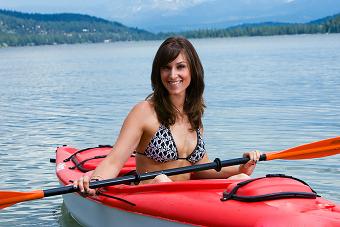
A highly enjoyable water sport, kayaking is similar to canoeing, but a kayak typically has a closed deck. The kayaker sits with legs in front and uses a double-bladed paddle. Any body of water, from a river to an ocean, is suitable for kayaking. If you like excitement, kayaking down swift-moving rivers, waterfalls, and rapids—also known as whitewater kayaking—is for you.

Kayaking works most of the muscles of the body, especially the torso and arms. You can certainly purchase everything you need to kayak, but kayaking companies will also outfit you on a rental basis.

Surfing

Another water sport, surfing has always been synonymous with ocean waves, but it can be done anywhere waves occur, such as lakes or rivers. The surfer rides a surfboard, a 5-foot or longer flat platform, and maneuvers the board toward a wave hoping it will carry him or her forward, called catching the wave. Once the surfer has caught the wave, he or she stands up on the board to ride the wave. Surfing takes patience and practice.

Surfing works all the major muscle groups, especially the muscles of your upper body while catching the wave, and the muscles of your core, legs, and buttocks while riding the wave. The only equipment you need is a surfboard, which may be purchased or rented.

Paddleboarding

Similar to surfing, paddleboarders ride a board, but instead of catching waves far from shore, the rider stays nearer to shore, sits or kneels on the board, and uses a swimming motion or an oar to move the board. Variations including paddle surfing and doing yoga on the paddleboard make this sport fun and accessible for almost anyone.

Like kayaking and surfing, paddleboarding is a full-body workout and is an excellent cardiovascular activity. Paddleboards tend to be longer than most surfboards, up to 15 feet or more, and can be purchased or rented.

Hiking

For those who prefer dry land or exploring, hiking offers a fun way to stay active and see the outdoors. Most serious hikers are environmentally conscious, and they walk trails in mountainous or hilly areas. Hikers receive a double benefit: exhilarating activity and incredible views. Many people get away from the hustle and bustle of their lives by hiking, and they enjoy the peace of being one with nature.

Hiking works most major muscle groups, and the higher hikers climb, the better workout they get. Equipment is simple: good hiking boots, thick socks, protective clothing, and a backpack stocked with food, water, a compass, and a map of the area. If the hike is going to be longer than a few hours or in areas without trails, the hikers should have other essentials such as a knife, fire starter, flashlight, and GPS device.

Have you tried any of these activities, and did you enjoy them? Any tips for the rest of us?
Tips for Post Surgical Clothing for Breast Reconstructive Surgery

breast reconstruction

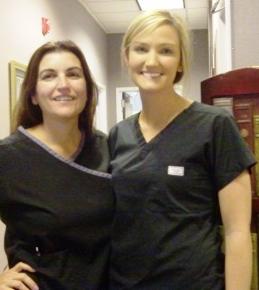
Chris Murakami RN, CNOR, & Christina Hobgood Naugle, PA-C

The below question is answered by Chris Murakami RN, CNOR, & Christina Hobgood Naugle, PA-C, of The Center for Natural Breast Reconstruction.

I am having a SGAP breast reconstruction in a few weeks. Do I need to buy post op surgical bras? If so, which kind and can I get a prescription for insurance purposes? Also, I heard people use various bras / camisoles with pockets for drains. Have you heard of those or think they are helpful? Do you think button down shirts are something I need to get? Anything else?

No need to buy any special bra, vest, or camisole in advance. Our hospital, East Cooper Regional Medical Center, provides a soft cotton vest with drain pockets as well as a surgical bra that acts as a post operative surgical dressing. Let them know if you feel like you need an extra for when you leave the hospital and they are great about sharing another with you.

Absolutely, I would make sure I had button down shirts and loose clothing that you can easily get in and out of. You’ll have some limitation of lifting your arms above your head so button down shirts are easiest to get on and off without lifting your arms. Some women choose to wear loose sundresses; others track suit pants or cotton shorts. Whatever you are comfortable in is fine, but keep in mind we won’t want you wearing anything right away that could potentially put any pressure on your suture lines.

Here are more helpful hints:

If you are having a DIEP breast reconstruction, abdominal swelling limits clothing choices. Wear loose-fitting garments to the hospital. Women should avoid fitted, zippered pants and skirts because they probably won’t zip when it’s time to leave. Even clothing with snug elastic waistbands may be uncomfortable. A loose chemise or drop waist dress or jumper is a good choice.

Slacks or skirts with elastic in the back and a smooth band in the front may be slightly more comfortable than those with a totally elastic waistband.

Consider clothing that doesn’t wrinkle easily. Resting and naps are necessary while recuperating.

Cotton underwear breathes and is absorbent and comfortable next to the skin. Cotton’s fiber ends help the fabric stand away from the sensitive incision area rather than hug it, as some textured, synthetic fabrics do. If you don’t already have cotton briefs, buy a pair a size larger than your normal size. A little extra room adds comfort during recuperation. For waistline incisions, bikini cut styles may be better, while full cut panties and shorts might be preferred for incisions in the lower abdomen and buttocks.

Loose-fitting nightgowns and nightshirts are comfortable, especially when made from absorbent, breathable cotton or cotton-blends. If you prefer pajamas, select those with drawstrings. Elastic waists may be less comfortable for some people depending on swelling, tenderness, and location of incision. Sweatpants or crew pants are a comfortable change from bed wear, especially those with drawstrings, which allow some flexibility at the waistline.

Flat soled shoes that slip on your feet rather than tie are great to have, too, as you may be limited in your ability to bend over and tie your shoes.

If you do need to have a special bra after your incision lines have healed, we are happy to provide a prescription. We’ve had lots of our patients rave about Nordstrom’s for post mastectomy bras. Not only do the kind folks there provide a professional fitting for mastectomy patients, but they also handle the insurance paperwork for you too!

—Chris Murakami RN, CNOR, & Christina Hobgood Naugle, PA-C

Know someone who would benefit from this blog post? Share it with them via email!