Search Results for: eating

The First Step in Quitting Smoking: Why Do You Want to Quit?

quit smokingAre you ready to quit smoking?

The first step in quitting is to determine why you want to quit. You know you should, and maybe your doctor has told you that you need to quit. However, you won’t be successful long-term unless the desire to quit comes from you, and the reasons you quit have to be your reasons. You can’t quit to please others or because they’re pressuring you. If you do, you’ll use that person as your excuse to go back to smoking.

You know what we’re talking about. At least once, you’ve tried to quit because someone was bugging you. When you did, you lasted for a few weeks or even a few months, but it was a tough quit to maintain because you weren’t doing it for yourself. In the end, you went back to it because deep down, you didn’t want to quit then—and you were even a little resentful of the person who was pressuring you.

So if you’re thinking about quitting for your kids, your spouse, or the dog, stop right there. What are your reasons for quitting? What do you want out of it? Your reasons will keep you going when you have that irresistible craving for a smoke. Your reasons will help your quit go more smoothly. Yes, quitting can be difficult at times—but quitting for other people’s reasons is even harder.

Here are ten common reasons for quitting we’ve heard from successful smokers:

  • I was tired of spending all my money and having nothing to show for it.
  • I woke up one day and decided I was done. I’d had enough of the smell, the expense, and the coughing.
  • I knew I could do so much more with the money and time I spent on smoking.
  • I wanted to feel better and not be dependent on cigarettes to get me through the day.
  • I didn’t like being addicted to nicotine because I was missing a lot of life.
  • I was sick of smelling and feeling bad all the time.
  • I wanted to run and play with my kids (or grandkids).
  • Being a smoker wasn’t for me—I’m worth a lot more than that, and I want to live to be an old lady.
  • The thought of having lung cancer or COPD scared me, and I knew it was time to quit.
  • I just got tired of the habits: waking up and smoking, driving and smoking, eating and then smoking . . . it was ridiculous.

Do any of these reasons resonate with you? What benefits of quitting are you looking forward to? When you have your own, clear reasons to quit, it’s time to move forward and do it—but quitting without a reason that is meaningful to you is a setup for failure.

 

Spread the Word about the 2011 Women’s Empowerment Conference

womens healthWe are delighted to spotlight the upcoming 2011 Women’s Empowerment Conference hosted by the Women’s Empowerment Group on May 21, 2011 at the Technical College of the Lowcountry, Beaufort Campus, Beaufort, SC, happening at 8:00 a.m. – 3:00 p.m.

Dedicated to educating and assisting women to live “Healthier Lives Through Education,” the Women’s Empowerment Group has created their very first Women’s Empowerment Conference for all women of the Lowcountry to attend. In an effort to educate women and young females about common health issues, the conference will work to educate females about heart disease, cancer, diabetes, stroke, and chronic diseases. Attendees may also receive HIV tests, as well as breast exams.

Throughout the day at the conference, there will be a variety of breakout session topics, including . . .

Dream Big, Live True: This is an entrepreneurial workshop hosted by Elizabeth Millen, editor and publisher of Pink Magazine.

Breast Health 101: This workshop will focus on what females can do to take care of their breasts and work to prevent breast cancer. The workshop will be hosted by Lucy Spears, a mission / coordinator survivor.

Sexy Senior: This workshop will focus on sex throughout life and will be hosted by Gwen Bampfield, JD.

Fats: The Good, Bad and the Ugly: Hosted by Sarah Smith, RD, LD, CDE, this workshop will focus on how to prevent chronic diseases.

Your Body is Your Temple: This discussion will focus on how to nourish the body and soul, and will be hosted by Gina Jordan, MD.

Sexual Health: With a focus on women’s sexual health issues, this workshop will be hosted by Ardra Davis-Tolbert, MD.

Teen Conference: This discussion will focus on a broad range of health topics for teenagers ages 13 – 18.

The event will also feature health screenings, door prizes, fitness demonstrations, heart health discussions, snacks and beverages, and giveaways.

**Since seating at the event is limited, please pre-register prior to Saturday, May 14. Registration is completely free. Click here to fill out your pre-registration form.

Spread the word and bring your daughters, mothers, grandmothers, and girlfriends for a day of fun and health education you’ll always remember.

For more information, click here to visit the Women’s Empowerment Group website.

How to Make Sure You and Your Doctor Communicate Effectively

breast reconstructionYour relationship with your doctor is a partnership, and one of the best ways you can help each other is to communicate effectively. You’ll avoid misunderstandings and hurt feelings, and the two of you can quickly move forward in your treatment. When it’s time for your next appointment, using the following tips can make a positive difference in your relationship.

Always be as honest and as specific as possible.

Even if you’re uncomfortable, tell the truth—your doctor can’t successfully treat you otherwise. If you’re not sure how to answer a question, say so instead of guessing. Your answers should be as specific as possible, even if you need to add more information or ask questions before replying.

Don’t be afraid to ask or tell your doctor anything—he or she has literally heard it all.

Listen, and then ask questions.

Sometimes while the doctor is talking, patients have an emotional reaction that prevents them from hearing the rest of what the doctor has to say. Listen to everything the doctor says, try not to react right away and let it process for a moment, and then ask questions.

Note anything unusual, and write down your questions before you go.

Keep a calendar or day planner with you, and jot down any symptom that is unusual for you. The night before you go to the doctor, make a note of these symptoms as well as questions you have. Often we go to the doctor with a list of questions in our head, and then forget what we wanted to ask. This step will save time for both of you during the appointment.

Never ignore unusual pain, discharge, or bleeding. Contact your doctor immediately.

Tell your doctor about everything you take.

Make a list of your medications and any dietary supplements you take, including vitamins and aspirin. Be sure to note dosage size and frequency. Give the list to your doctor for your file, and send a copy to your pharmacist. Update these lists at least once or twice a year.

Don’t be offended by non-medical questions.

Your doctor might ask about your job or what you do on weekends, and this is not to pry, but to evaluate how your lifestyle might be affecting your health. Stress, eating habits, and alcohol consumption may be factors in your condition.

Let your doctor know if he or she doesn’t communicate well with you.

Your doctor needs to know if his or her communication style isn’t effective. Think back on your last few appointments. Did he or she say anything that upset you, and was everything explained in a way you could understand? Were you comfortable talking with him or her?

Give your doctor specific suggestions to improve your partnership. If you’re not comfortable doing that in person, send an email or leave a voice mail after hours on the doctor’s private line.

Your doctor is there to help you—and he or she can do a much better job when you have built a relationship based on trust and good communication. This process can take a little time but is well worth the effort.

What do you and your doctor do to create effective communication?

Exercising as Fun Rather Than Drudgery

We all know exercise is a vital part of creating a healthy life, but often, we see exercise as another chore we need to finish. Following are some ideas to help you play and have fun with exercising instead of putting it off or dreading it. No matter which exercise you choose, set realistic goals for yourself and focus on fun.

exercisePlay. Do what you enjoy.

If you pick an activity you like, you’ll look forward to doing it regularly, and you’ll be more likely to stick with it long term. It doesn’t matter what it is as long as you’re moving, so be creative. Is there a sport you’ve always wanted to try, or perhaps a form of dancing you enjoy? Did you love to roller skate as a kid? There’s no reason you can’t learn a new sport, dance, or roller skate now.

If you prefer being indoors, you might like weight lifting, yoga, swimming, or Zumba dance. If you’re an outdoors person, try rock climbing, skiing, bicycling, or simply walking. The more you love what you’re doing, the more often you’ll do it, and the more benefits you’ll reap from it.

Make a fun date with yourself.

Decide which time of day you would most enjoy moving, and schedule it in writing. Be realistic—if you’re not a morning person, don’t plan a 6 a.m. workout. Would you enjoy going to a yoga class after work, or taking the dog for a walk after dinner? Decide which days and times suit you best, and start there.

Think of this time as “I get to . . .” instead of “I have to . . .” because your attitude before you exercise will dictate your frame of mind while you’re doing it.

Take it easy at first, and then challenge yourself to do just a little more.

Don’t expect miracles the first day or the first week. Again, be realistic with yourself. Start slowly, and do what you can. If five minutes is your limit today, great—you might be able to go just a little longer tomorrow and do 5 ½ or 6 minutes. By starting slowly, you’ll have a sense of accomplishment without hurting yourself by doing too much, too soon.

Find an exercise buddy.

If you have a friend who makes you laugh or is fun to be with, maybe he or she would like to exercise with you. If you’re going for a walk, take the dog, or walk with your spouse or children. Exercise time can double as family time, and it’s easier to stay motivated when you have other people to exercise with.

Variety is the spice of life.

Nowhere does that saying apply more than to exercise. Varying your workout with new activities will not only keep you motivated, but changing your routine also works different parts of your body. Try something new once a month, and have different activities for the seasons.

What do you do to keep exercise fresh and fun?


Therapeutic Ways to Relieve Stress

meditationReducing stress is one of the most effective steps you can take to improve your health, and it can be one of the most challenging. Stress is a constant in our lives, but if you’re proactive about managing it, you’ll be surprised at how much better you’ll feel. This post will discuss three very effective ways to relieve stress and reduce health issues.

Yoga

Body postures of varying difficulty and controlled breathing exercises increase your physical flexibility, while meditation helps you focus on being peaceful and calm. This powerful mind / body combination makes yoga an extremely effective stress reliever. Yoga practitioners also enjoy increased strength and balance. Prominent medical facilities such as the Mayo Clinic recognize the role of yoga and meditation in health promotion and stress management.

In yoga, movements are precise and require concentration, which draws your attention away from your hectic life and quiets your mind, so you release tension and anxiety. In addition to reducing stress, yoga has been proven to help with insomnia, depression, and fatigue. Yoga also lowers blood pressure and is used as a weight loss aid.

Journaling

Often we hide thoughts and feelings that cause stress, and we do our best not to think about them. However, stress is like any other untreated wound in that it becomes larger and more damaging if we don’t take care of it. Journaling, which is simply writing down your thoughts, allows you to express those feelings and understand their effects on your health.

When you see those thoughts on paper—especially after the strong emotions connected to them have passed—they lose their power to upset you, and their hold on your mind is broken. The stress these thoughts caused dissipates as a result. When you look objectively at what is going through your mind, you can define what is causing your stress and take steps to remedy it. For many, the act of writing helps them process their feelings, and that alone helps their stress levels.

Meditation

A quick and easy way to reduce stress, meditation is one mental technique of focusing your attention away from stressful thoughts and situations, giving you a sense of balance and peace. In addition to stress relief, the Mayo Clinic has found that meditation helps with pain management, allergies, binge eating, and sleep problems.

When you meditate, you intentionally move your mind into a new state of relaxation that extends throughout your body. Stressful feelings and thoughts are released as you move into a deeper state of awareness. As you become more proficient in meditation, you control your conscious thoughts more easily and relax more quickly.

To learn yoga, journaling, or meditation, search for classes in your area. Look at the instructors’ websites, or call them, and decide who seems knowledgeable and approachable. Often instructors will offer a class or a visit for low or no cost. Don’t be afraid to try something new to reduce your stress.

For more helpful tips on health and wellness, Like us on Facebook.

What is Fat Necrosis and Should I Be Concerned About It?

The below question is answered by Dr. James Craigie of The Center for Natural Breast Reconstruction.

Dr. James Craigie

After my stage one DIEP surgery, I have some lumpy areas that I am told are fat necrosis.  Do they go away or what can you do about them? I am due to have stage two of my surgery soon.

Fat necrosis is a generalized term that results following injury or surgery when fat no longer has an adequate blood supply to survive. When fat does not survive and is in the breast the body develops scar or firmness as part of the healing process. A small amount of fat necrosis may go away on its own and larger amounts may persist indefinitely making the breast feel hard.

Following a DIEP or other muscle sparing breast reconstruction some of the fat transferred to the breast may not receive enough blood supply to survive the healing process. When this happens you may feel small lumps in the new breast about 1 – 2 months after the first surgery, sometimes sooner depending on where the lump is. These are usually small areas that can be removed at the second stage without affecting the end result. This is the most common situation we encounter.

On a larger scale, if something has occurred during the course of surgery and the tissue was transferred with an inadequate blood supply, the entire breast or a major portion of it could develop into fat necrosis. This is the most severe situation and would be considered a major complication or even failure of the procedure. Fortunately, in our experience, this situation is rare and the surgeon will know this has happened and should discuss options for correction.

If someone has a new breast lump and has a history of breast cancer, they are likely to undergo biopsies or have some concern over the area. Lumps that are fat necrosis may make breast exams more difficult or confusing and increase the chance that a new cancer or recurrence goes undetected. So anytime there is obvious fat necrosis after the first stage of surgery, we would make attempts to remove it. Initially, when a patient states they feel a firm area, I always remind them that what they feel on the outside will feel larger than the actual amount of fat necrosis tissue because the body is creating a reaction to the tissue trying to dissolve it.

It should be stressed that even patients who have undergone breast reconstruction should continue to do breast self-examinations. Any surgery on the breast will cause swelling and scarring. In many women who undergo reconstruction with breast implants, the body creates a capsule in response to these implants and all of these scars, capsules, or post surgical changes can feel like lumps and bumps following surgery. Therefore, it is important to know that fat necrosis may become apparent soon after surgery and should stay the same and not enlarge as time goes by. Alert your doctor regarding any breast lump that seems to enlarge. It is also important to know that breast exams will not be useful until after stage one and two are completed and the breast has had several months to recover from the surgery.

Once the reconstructive process is complete, things should not be changing. Patients should become familiar with any area that feels firm. If there are scars remaining after surgery, the patient should keep track of where they are and monitor them for changes. Changes in size or significant changes of any type should always be brought to the attention of your physician even in a reconstructed breast.

—James Craigie, M.D.

Follow us on Facebook to see more questions answered by our doctors.

Who’s on Your Team?

breast surgeonsGO TEAM! Lots of phrases are used to describe a team concept. Some people call it “Multidisciplinary Breast Team, “Breast Cancer Team Conference,” “Breast Health Team,” “Cancer Clinic Team,” or, the one I like the LEAST, “Tumor Board” (ick!).

These teams are the groups of doctors, P.A.s, nurses, and therapists—basically everyone who would be involved in treating a patient with a breast cancer diagnosis—who meet to coordinate the best care for you. Yes, YOU and your unique self! They talk about your individual case, bounce ideas and treatment plans off of one another, and come to a consensus about what treatment would be best at beating your type of breast cancer. All of the members of this team may not necessarily be the providers treating you, which is a good thing for a wide perspective of opinions, but may include breast radiologist, general surgeon, breast surgeon, surgical oncologist, plastic surgeon, pathologist, medical oncologist, oncology nurse, radiation oncologist, social worker, financial aid counselor, and an oncology psychiatrist.

If you are in a community that does not have a team or you would like to be presented to a team prior to beginning treatment, just ask that one be found for you. Most hospitals have one and some exist that are composed of a group of providers in the community with a particular interest in breast cancer and breast health.

What is A Breast Cancer Navigator?

A breast cancer navigator is a term that hopefully most of us don’t know and won’t learn in our lives. But simply stated, this person, usually an oncology nurse, is there to help you from the time of your breast cancer diagnosis through the treatment maze to the end of your breast cancer journey. Consider her the person who reads the map while you are trying to drive the car, or perhaps if we keep in line with navigator, she sits on the stern of the boat and tells you when and how to row.

We like to think of her as more of a concierge at a really cool classy hotel (no tips required!!). She’s right there at check-in if you need her. But when you want to leave the hotel, she’s the go-to girl. She’s informative and has all the great information on the BEST places to go in town. Sometimes, she might even give you a little side information on the places that people have given her rave reviews about.

The Center for Natural Breast Reconstruction now has a new breast cancer navigator on board at our favorite “hotel,” the new East Cooper Regional Medical Center. We’re confident that once gets the hang of the lowcountry, she’ll be the best concierge in town! You’ll be able to call her for the best rates during your stay, ask her about what kind of post-op care you might need, and what types of support services are available during your time in Charleston. She’ll always be available to our clients.

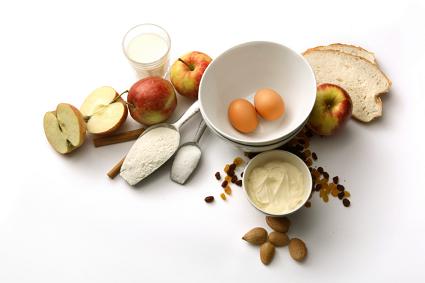
What Does It Mean to Eat Healthier?

healthy eatingWhat does healthy eating mean to you, personally?

Eating healthier means different things to all of us. For one person, it might mean cutting out animal products and eating strictly organic vegan food. For another, it might mean eating out no more than a couple times a week and learning to cook.

Transforming your eating habits is a process, and you can’t expect to be perfect overnight. Eating healthier means striving to avoid unhealthy food most of the time. Only you can decide what it means to decrease unhealthy food and add healthy food. Your doctor or nutritionist can help, but you must live with your new eating habits, so your plan must be realistic.

We’ve seen people stop eating certain foods cold turkey, and while it works for some, for others it’s a recipe for disaster. When you deprive yourself of foods you love, you may reach a point where you have an overwhelming craving for that food, and then you’re likely to binge, or eat a large amount at one sitting.

We recommend that instead of cutting out favorite foods completely, allow small portions occasionally, or find an acceptable substitute. One example is moving from eating large amounts of milk chocolate daily to small amounts of dark chocolate a few times a week. Another example is limiting yourself to one soda a day.

When you’re ready to change your diet for the better, you can start with these tips:

  • Think about how you eat now. Look at how often you eat processed food, such as frozen pizza, versus food in its natural state, such as fruit. Generally, the less often you eat processed food, the better.
  • Keep a food diary for two weeks. You’ll see where you can improve, and you’ll have a good idea of exactly what you’re eating.
  • Visit www.healthfinder.gov, www.healthypeople.gov, and www.mypyramid.gov for more information on healthy eating and ways to change your eating habits.
  • Decide what you can and cannot live with when it comes to healthy eating, and start with small steps such as reducing sugar intake. Once you’re comfortable with that, add another small change to your diet.

Remember, this is a marathon, not a sprint. Make minor changes gradually, and you’ll still enjoy eating while you work toward your goals. Use your doctor and nutritionist for help and guidance.

What steps to improve your diet are you considering? If you’ve already taken steps to change your eating, please share in our comments section.

Events

Post Op Pearl Webinar- A Panel Presented by The Center for Natural Breast Reconstruction

Join The Center for Natural Breast Reconstruction and our panel of past patients and specialists on Tuesday, August 28th, at 7pm for our live webinar, Post-Op Pearls:

Recovery, Healing, and Healthful Insights from Past Patients and Specialists

. We’ll explore and reflect on the post-mastectomy and reconstruction recovery process, and answer your questions about what to expect during all stages of your journey.

During the hour-long event, the panel will explore…

  • Each woman’s journey, including her diagnosis, surgery, post-op recuperation, and a reflection on how her life has been affected by her treatments.
  • Advice for newly diagnosed women, from post-op clothing to the recovery process.
  • How to discuss your options and decisions with family and friends.
  • The secret to self-confidence post-surgery.
  • The answer to any questions you have during our live Q & A session.

Find support and counsel from women who know firsthand the breast reconstruction options available—register today!

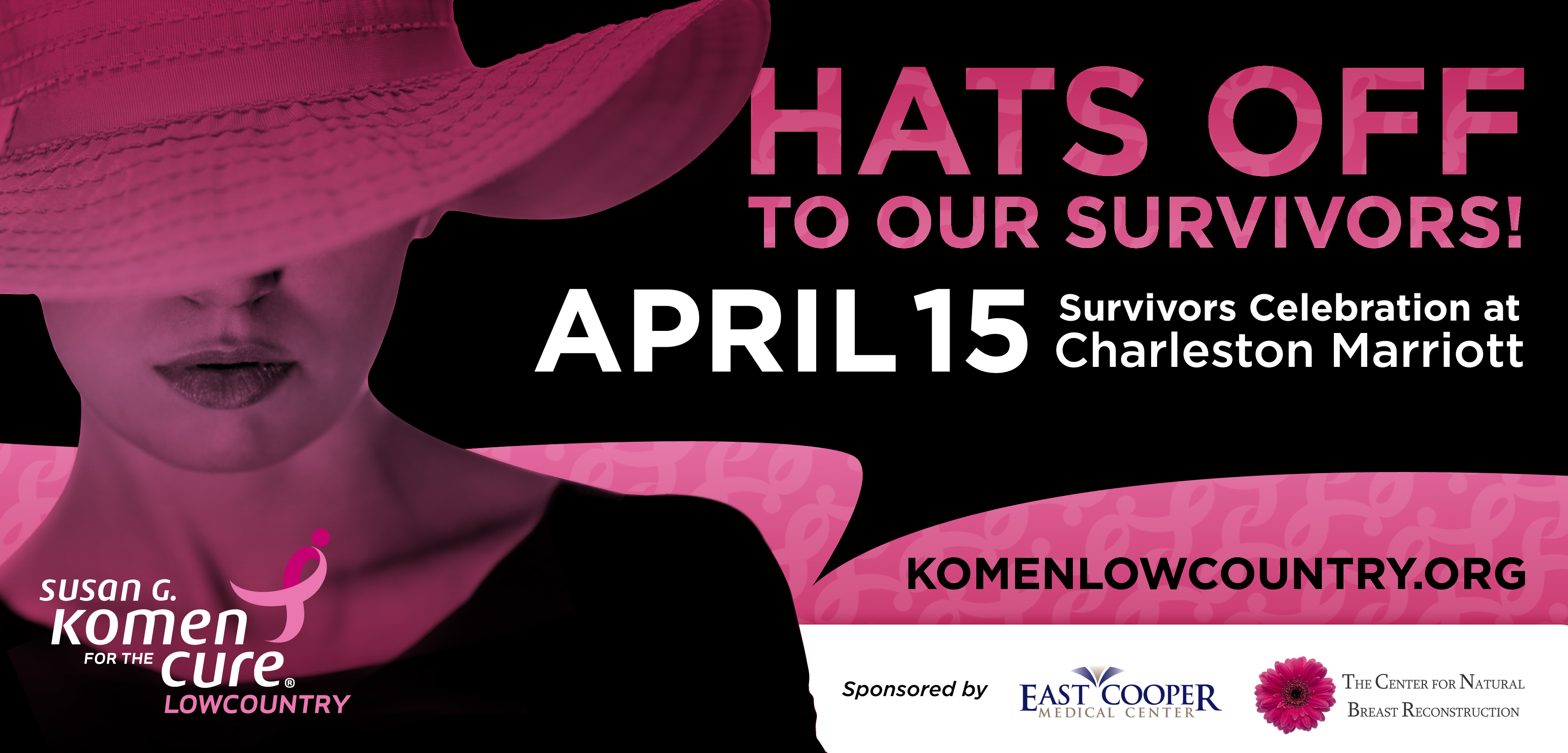
2012 Survivor Celebration

We are thrilled to be a part of  the  2012 Survivor Celebration being held at the Charleston Marriott.  Join us on Sunday, April 15th, for an afternoon of celebration and a hat contest.  The event begins at 3:00pm, with registration beginning at 2:30pm. Contest details coming soon, so start decorating yours now.

For more information or to register click here.


Women’s Empowerment Conference

May 2011

We are delighted to spotlight the upcoming 2011 Women’s Empowerment Conference hosted by the Women’s Empowerment Group on May 21, 2011 at the Technical College of the Lowcountry, Beaufort Campus, Beaufort, SC, happening at 8:00 a.m. – 3:00 p.m.

**Since seating at the event is limited, please pre-register prior to Saturday, May 14. Registration is completely free. Click here to fill out your pre-registration form.

We Know Women Event at the East Cooper Medical Center

May 2011

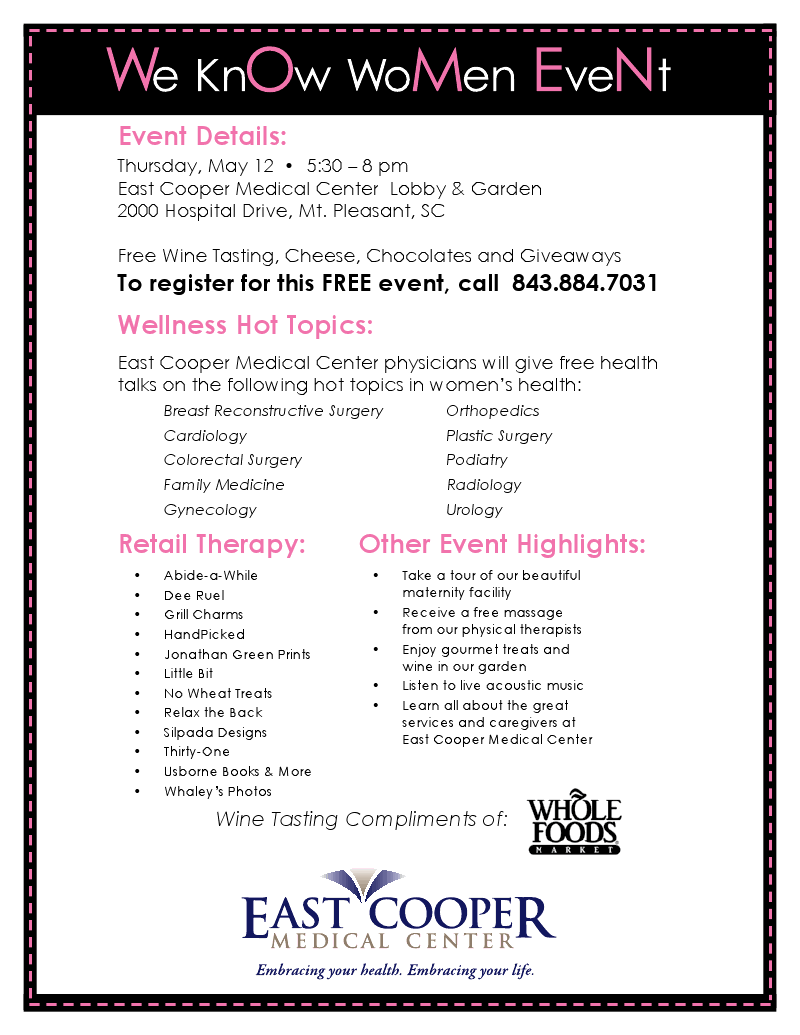
Don’t miss the “We Know Women Event” happening on Thursday, May 12, 2011 from 5:30 – 8 p.m. at the East Cooper Medical Center in Mount Pleasant, SC. The Center for Breast Reconstruction doctors, Dr. Craigie and Dr. Kline, will give a health talk on Breast Reconstruction: State of the Art Technique.

See below for the event’s flyer:

breast cancer event

Please spread the word! If you have any questions about the event, please contact Jenny Hanzel at Jenny.hanzel@tenethealth.com.

Meet our micro-pigmentation specialist

nipple sparing mastectomyOn-Site Tattoo: Creating an Areola for Your New Breast

The final step in your breast reconstruction is this, restoring the natural color of your areola complex utilizing advanced tattoo techniques. While this occurs at the final stage, it is best to think about this step during your first surgical consultation. Some women prefer to leave their new breasts un-marked; others feel the addition of a pigmented areola and nipple is the “icing on the cake.”

Tattooing restores the color to the areola and even helps camouflage scarring on the breast. The procedure is done in-office. It is important to check with your insurance provider, as not all will cover this final part of the procedure.

*******************